


MakerFaire Rome 2026: Call for Makers, Schools and Researchers
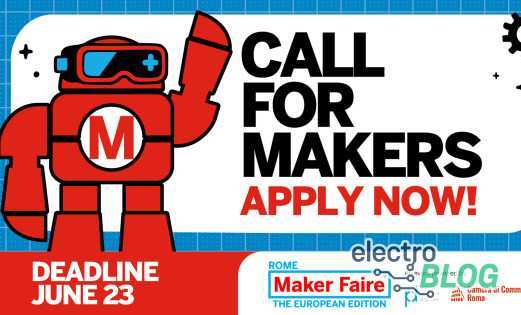
MakerFaire Rome 2026 is now open for applications, with three free calls for makers, schools, universities and research institutes. The 14th edition of Maker Faire Rome - The European Edition runs from 23 to 25 October 2026 at Gazometro Ostiense in Rome, with applications due by 15 June 2026.
The event is aimed at people who can show working ideas in public: hardware makers, robotics teams, IoT builders, student groups, university labs, research teams, startups and creative technologists. Selected projects receive exhibition space at no cost, with basic setup, electricity and Wi-Fi provided where applicable under the official rules.
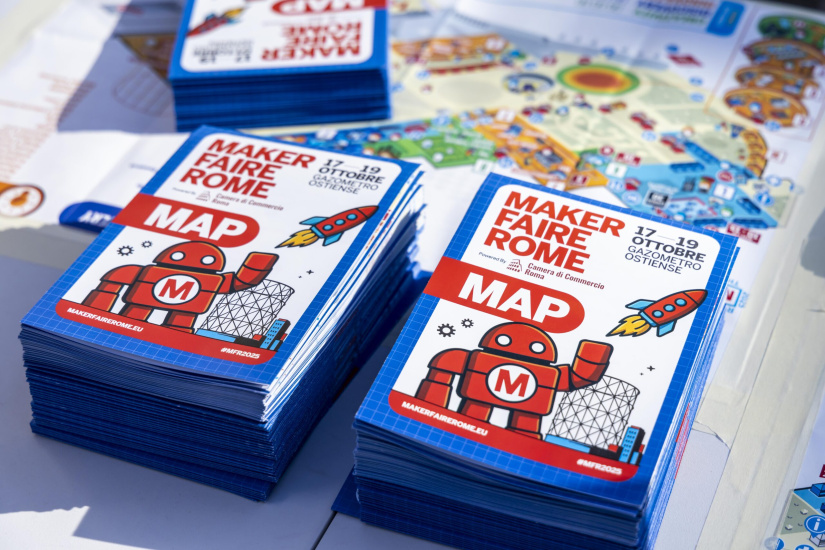
If you have a prototype that can be demonstrated safely and clearly, this is the useful part: MakerFaire Rome gives you a live audience, not just a product page. You can test how people react, explain what your build does, and collect feedback from visitors, companies, researchers, educators and potential partners.
What is MakerFaire Rome?
Maker Faire Rome is the official European edition of Maker Faire, promoted by the Rome Chamber of Commerce and organised through Innova Camera under licence from Make:. It brings together makers, students, researchers, companies and the public for three days of exhibitions, workshops, talks and live demonstrations.
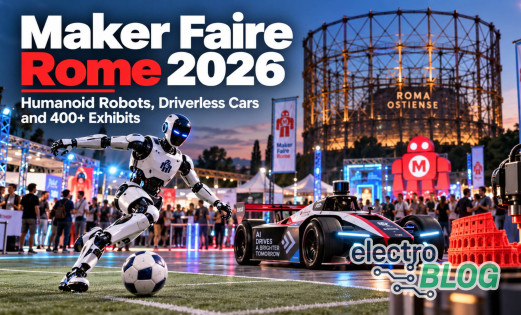
The 2026 edition takes place at Gazometro Ostiense, a former industrial gas plant in the south of Rome. The venue has become part of the event’s identity because it suits the format: large-scale builds, public demos, school projects, university research, startup prototypes and practical workshops can sit next to each other without feeling staged.
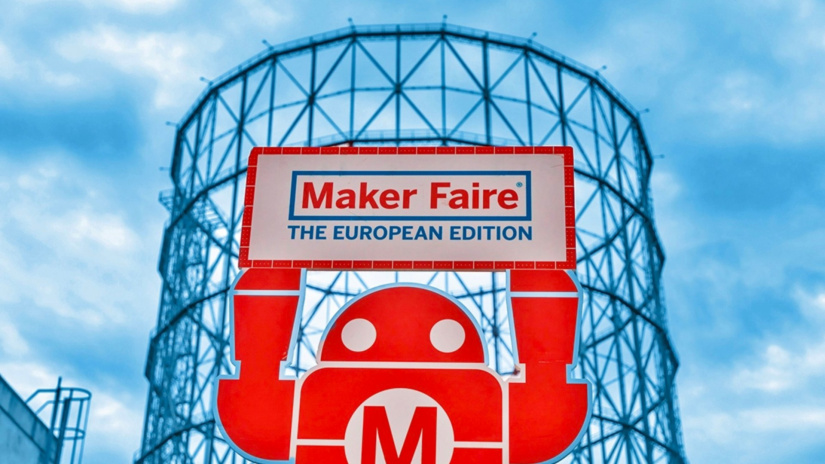
Since 2013, Maker Faire Rome has recorded more than 895,000 cumulative attendances, hosted more than 7,000 exhibitors and featured more than 8,000 projects from over 40 countries. That history matters because it shows the event is not just a weekend showcase. It is a recurring meeting point for Europe’s maker, research and applied technology communities.
MakerFaire Rome 2026 dates, venue and deadline
The event takes place in October, but applications close in June, so makers need to prepare their submissions soon!
| Item | Details |
|---|---|
| Event | Maker Faire Rome - The European Edition 2026 |
| Edition | 14th edition |
| Dates | 23 to 25 October 2026 |
| Venue | Gazometro Ostiense, Rome |
| Application deadline | 15 June 2026 |
| Main calls | Call for Makers, Call for Schools, Call for Universities and Research Institutes |
| Cost for selected exhibitors | Free exhibition space, subject to the official rules |
The three open calls for makers, schools and research teams
MakerFaire Rome 2026 is built around three main calls. Each one is aimed at a different type of exhibitor, but the core requirement is the same: the project needs to be clear enough to review and practical enough to present to a public audience.
| Call | Who Can Apply | Project Themes | Key Benefits | Deadline |
|---|---|---|---|---|
| Makers 2026 | Makers, startups, creative teams worldwide | Robotics, AI, IoT, digital fabrication, sustainability, wearables, agritech, food tech, space tech | Free exhibition space, basic setup, power and Wi-Fi where applicable | 15 Jun 2026 |
| Schools 2026 | Upper secondary school teams aged 14-18 from Italy and the EU | Student STEM projects, creative builds, sustainability and community-focused ideas | Free exhibition space, possible travel and accommodation support for eligible schools | 15 Jun 2026 |
| Universities & Research 2026 | Universities, public research institutes, researchers, doctoral candidates and academic spin-offs | Research prototypes, STEM projects, applied interdisciplinary work and technology transfer | Exhibition space, public feedback, academic and industry networking | 15 Jun 2026 |
You can apply through the official Maker Faire Rome pages: Call for Makers, Call for Schools, and Call for Universities and Research Institutes.
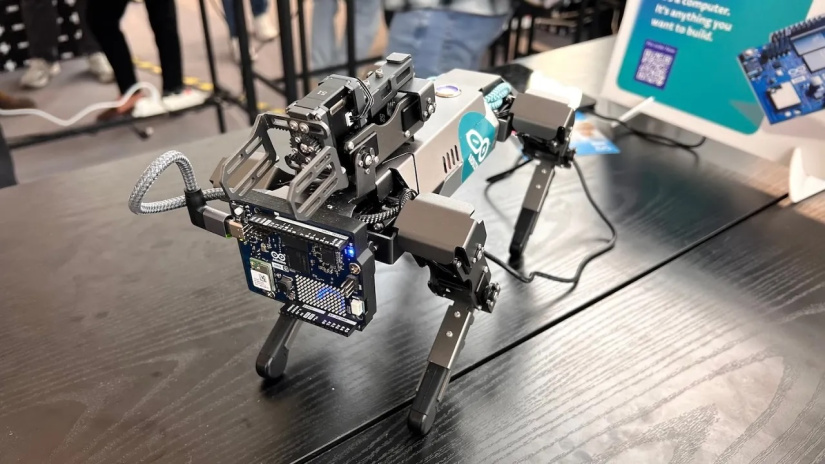
What kinds of projects fit MakerFaire Rome?
The best fit is a project that people can understand by seeing it work. It does not need to be finished as a commercial product, but it should have a clear problem, a working demonstration and enough technical substance to survive questions from visitors.
- Electronics and IoT: sensor networks, connected devices, environmental monitors, automation systems and useful data projects.
- Robotics: mobile robots, educational robots, assistive machines, rovers, manipulators and autonomous systems.
- AI and embedded intelligence: models running at the edge, smart control systems, computer vision and data-driven decision tools.
- Digital fabrication: 3D printing, CNC, laser cutting, custom enclosures, rapid prototyping and maker-friendly production methods.
- Sustainability and energy: agritech, renewable energy, circular economy projects, smart cities and resource monitoring.
- Wearables and assistive technology: accessible interfaces, prosthetics, health-adjacent prototypes and tools that help people work, learn or move.
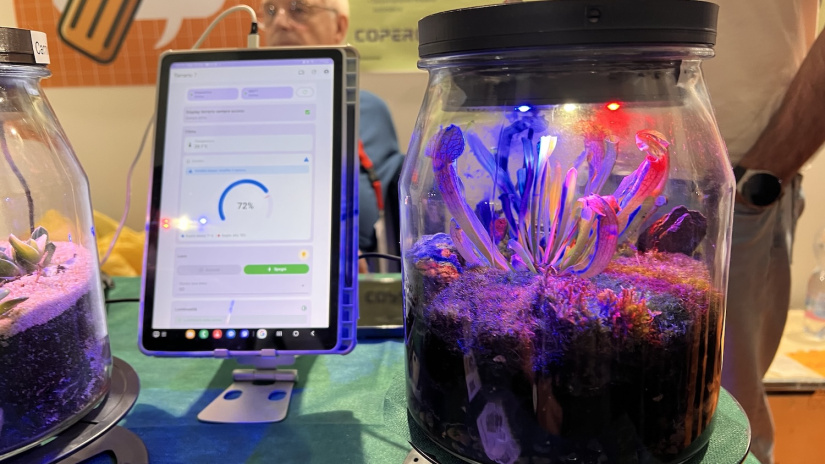
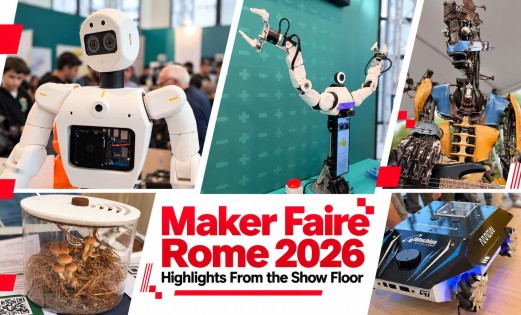
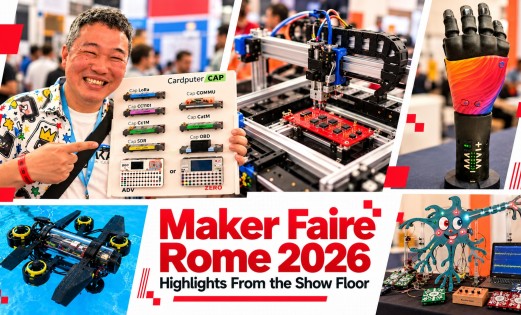
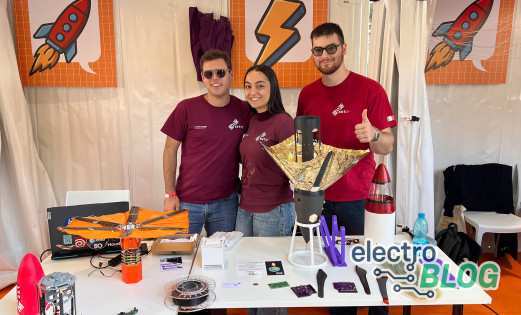
For recent examples of the type of work that appears at the event, see Electromaker’s coverage of Maker Faire Rome 2025 highlights and our report on rovers, tools and satellites at Maker Faire Rome 2025.
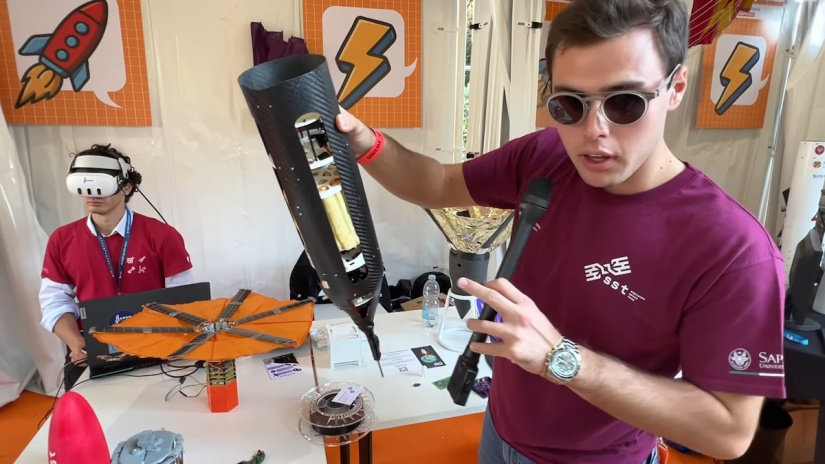
Why showing a prototype in Rome can help your next build
Online launches are useful, but they do not tell you everything. At a public event, people touch the controls, ask unexpected questions, miss details you thought were obvious and notice uses you had not considered.
That matters for makers because a prototype often fails in small, fixable ways: the demo flow is unclear, the enclosure hides the interesting part, the setup takes too long, the power supply is fragile, or the project solves a real problem but explains it badly. A live audience exposes those weak points quickly.
The Maker Faire Rome format is especially useful for projects that need cross-disciplinary feedback. A sensor system might attract farmers, engineers and teachers. A robotics project might interest school groups, component suppliers and researchers. An assistive technology prototype might receive direct feedback from people who understand the real context of use.
Two examples: WSense and GEVI
The strongest reason to apply is not that every project becomes a company. Most do not, and no event can promise that. The real value is that a working idea can meet people who understand the problem it is trying to solve.
WSense is a useful example. Chiara Petrioli’s team worked on underwater communication, where radio does not behave as it does in air. The system uses acoustic and optical signals to connect sensors and infrastructure below the surface, a field often described as underwater Wi-Fi. When WSense appeared at Maker Faire Rome in 2019, it was an early system with practical use cases in ocean monitoring, marine infrastructure, archaeology and energy-related underwater assets. The company has since expanded across Italy, Norway and the UK, raised more than €25 million, and worked with partners including Fincantieri and the Italian Navy.
GEVI is another relevant case for hardware builders. The team developed a vertical-axis wind turbine with blade pitch that adjusts in real time, rather than relying on a fixed blade setup. The aim is to improve performance in changing urban wind conditions, including rooftops and other compact sites where conventional turbines are harder to use. GEVI showed the project at Maker Faire Rome in 2023 and later closed a €2.7 million seed round in October 2025 to move towards production.
The lesson for makers is practical: a live prototype needs more than a clever mechanism or circuit. It needs a clear explanation of the problem, a reliable demo and enough context for visitors to understand where it could be used.
How to prepare a stronger Call for Makers application
A good application should make the reviewer’s job easy. It should explain what the project does, why it matters, what visitors will see and what support the project needs on site.
- Define the problem in plain language. Start with the real need your project addresses. Avoid leading with a parts list.
- Show the working prototype. Include clear images and, where possible, a short video of the project running.
- Explain the live demo. Tell reviewers what visitors will be able to see, touch, test or learn during the event.
- List technical requirements. Include dimensions, power needs, connectivity needs, safety notes and setup time.
- Make the build understandable. Use diagrams, photos or a simple system overview if the project includes hardware, software and cloud services.
- Check the official rules. Each call has its own eligibility and support details, so confirm the requirements before submitting.
For hands-on workshops and public build sessions, review the MakeLab Area information as well as the main calls.
Who should apply?
You should consider applying if your project can be demonstrated clearly and has a specific technical or social purpose. It can be early, but it should not be vague. Reviewers and visitors need to see what it does.
- Beginner makers: apply if your project solves a clear problem and you can show it working reliably.
- Intermediate makers: apply if your prototype combines hardware, software, fabrication or data in a way visitors can test or understand.
- Advanced makers: apply if your system is ready for deeper technical questions from researchers, companies, educators and other builders.
- Schools: apply if the project shows student learning through a working build, not just a presentation board.
- Universities and research institutes: apply if the work can move beyond a paper or lab setting into a public demonstration.
How to apply for MakerFaire Rome 2026
Applications are handled through the official Maker Faire Rome calls. Choose the call that matches your team, prepare your materials and submit before 15 June 2026.
- Choose the right call. Use the Call for Makers, Call for Schools or Call for Universities and Research Institutes.
- Read the rules. Check eligibility, selection criteria, support details and any requirements for your category.
- Prepare your project description. Explain the problem, the solution, the demo and the audience value.
- Add visual material. Use clear images and, where possible, a short video showing the prototype in action.
- Submit technical details. Include space, power, safety, connectivity and setup requirements.
- Submit by 15 June 2026. Late preparation is risky, especially if you still need photos, video or school approvals.
Start from the official Maker Faire Rome website or go directly to the relevant call page.
FAQ
When is MakerFaire Rome 2026?
Maker Faire Rome - The European Edition 2026 takes place from 23 to 25 October 2026 at Gazometro Ostiense in Rome.
When is the Call for Makers deadline?
The deadline for the 2026 calls is 15 June 2026. This applies to the Call for Makers, Call for Schools and Call for Universities and Research Institutes.
Is exhibition space free for selected projects?
Yes. Selected projects receive free exhibition space. Basic setup, electricity and Wi-Fi are included where applicable, subject to the conditions in the official rules.
Who can apply to the Call for Makers?
The Call for Makers is open worldwide to makers, startups and creative teams with projects suitable for public demonstration. Relevant areas include robotics, AI, IoT, electronics, digital fabrication, sustainability, agritech, wearables and creative technology.
Can schools apply?
Yes. The Call for Schools is open to upper secondary school teams aged 14 to 18 from Italy and the European Union. Selected schools exhibit free of charge, and eligible publicly funded schools outside Rome may receive partial travel and accommodation support under the official rules.
What should I include in my application?
Include a clear project description, images, a video if available, details of what visitors will see, and practical notes such as dimensions, power needs, connectivity, setup requirements and safety considerations.
Residing on the south coast of England, Rich has spent the last few years building Electomaker.io from the ground up. He is usually found behind a laptop coordinating the rest of the EM team and occasionally finding time to contribute articles to the blog. When not tapping away at a laptop, he can be found either paddleboarding, at the beach, playing golf (badly), or camping with his family.











Leave your feedback...