





Maker Faire Rome 2025 highlights: the best builds, boards, and ideas
Maker Faire Rome returned to Gazometro Ostiense, 17 to 19 October, and I was lucky enough to return to the much anticipated event. The venue was packed with student teams, startups, and major brands. Arduino and STMicroelectronics ran busy demo areas all weekend.
A headline story framed the show. Arduino unveiled the UNO Q and, days earlier, Qualcomm announced plans to acquire Arduino while keeping the brand independent. The news shaped many demos across the fair.
UNO Q... everywhere!
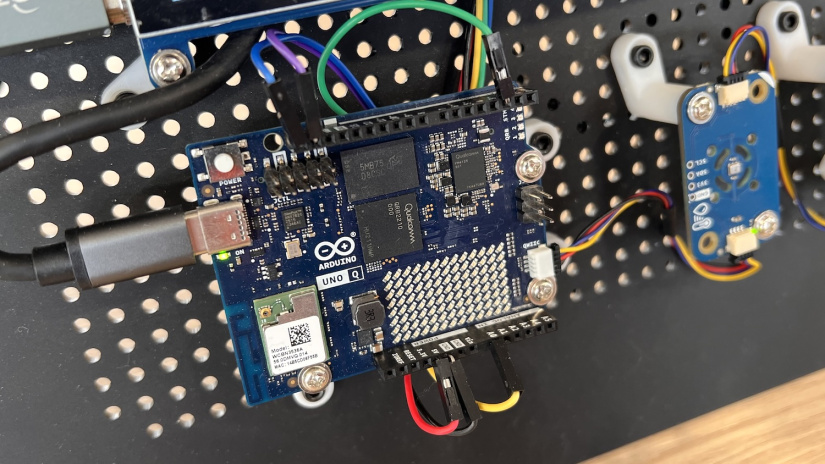
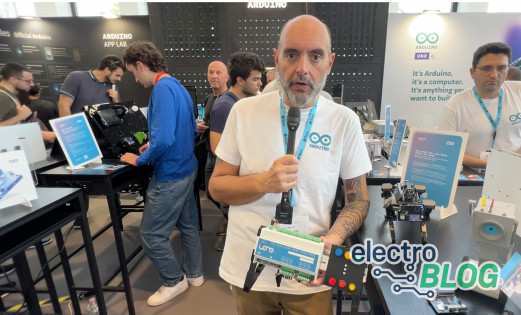
Arduino’s new board was the most talked-about kit on the floor. The UNO Q blends a Linux-capable Qualcomm QRB2210 application processor with an STM32U585 microcontroller in the classic UNO footprint. You get real-time control and high-level processing on one board.
Arduino also introduced App Lab, a workflow that lets you build sketches and Python apps side by side, then deploy to the UNO Q. I saw it driving robots, vision demos, and smart home control.
Demos that stood out
- Robot dog under full remote control using the board’s dual-brain setup and Wi-Fi connectivity. Movement was smooth and responsive.
- Smart home wall showing Home Assistant running on UNO Q with Shelly relays for room lighting and a touchscreen dashboard for local control and energy stats.
- Real-time object detection in App Lab. Python handled perception while a microcontroller sketch managed I/O. A clean example of edge AI and deterministic control on the same platform.
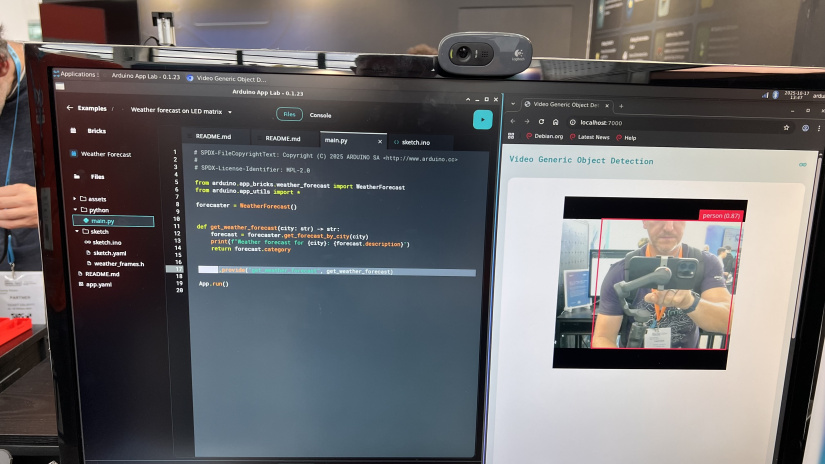
Why it matters: the board removes a lot of glue work. Vision, audio, and networking sit alongside low-latency I/O without a second SBC. If you teach, prototype, or build robots, this is worth a look.
SunCubes: laser power for drones
SunCubes showed me their laser power beaming. A transmitter converts electrical energy to a laser, a receiver on the drone converts it back to electricity. The team tracks alignment in flight to keep the beam on target. The goal is continuous operations and fewer battery swaps.
The startup closed a €1.1M seed round this summer to build an MVP and push field tests. The focus starts with drones, then spills into fixed sensors and cameras.
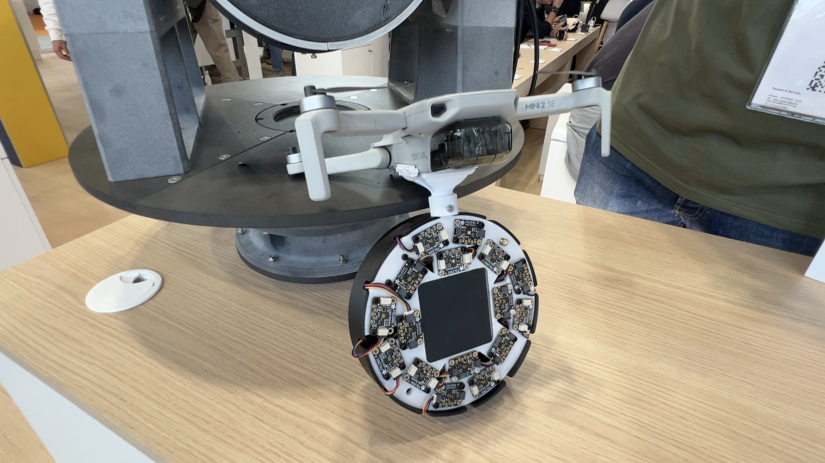
Why it matters: logistics, inspection, and security flights lose time on charging. Beaming power extends mission windows and simplifies pads. Safety and regulations will drive the next phase.
Apogeo Space: PiCo picosatellites for direct-to-sat IoT
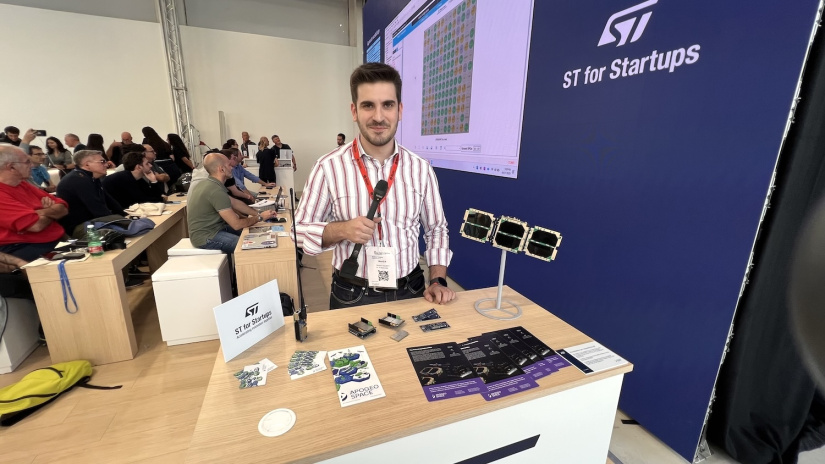
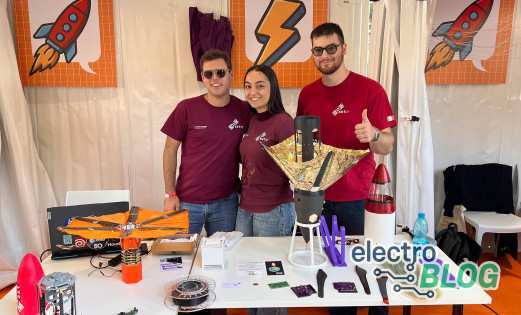
Apogeo Space showcased thier IoT space hardware. PiCo units are tiny 0.3U spacecraft, roughly 10×10×3 cm and under 500 g. They target VHF for device links and UHF for ground communications.
The roadmap calls for about 100 satellites to be launched into space by 2027 to move from periodic passes to continuous coverage. Ten are already in orbit for testing (thanks SpaceX!). The pitch is simple: send small packets from remote devices straight to space.
Use cases span container tracking, remote monitoring, and agriculture where terrestrial coverage is weak.
Robotic foosball: University of Catania with ST
The AI-powered Robotic foosball table was a crowd favourite at this year's event!. A camera under the table tracks the ball, speed, and trajectory. An algorithm predicts future position, then motor controllers drive translation and rotation on each bar. The result is a human vs AI match with quick reactions and clean shots.
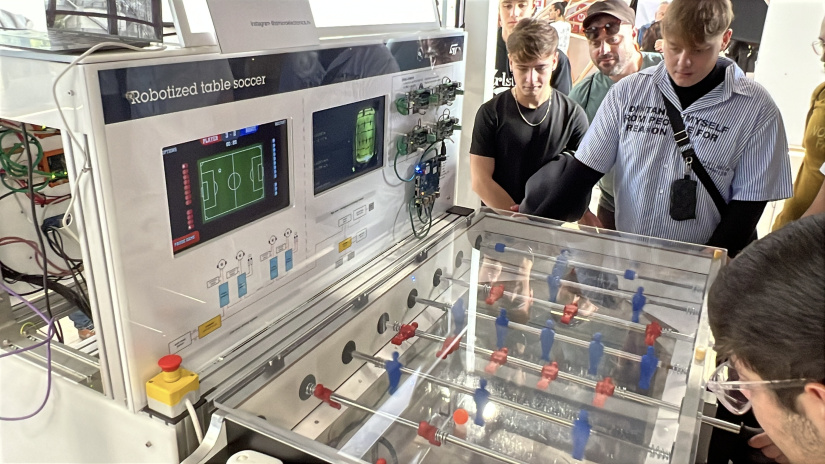
The project comes from ARSLab at the University of Catania with STMicroelectronics.
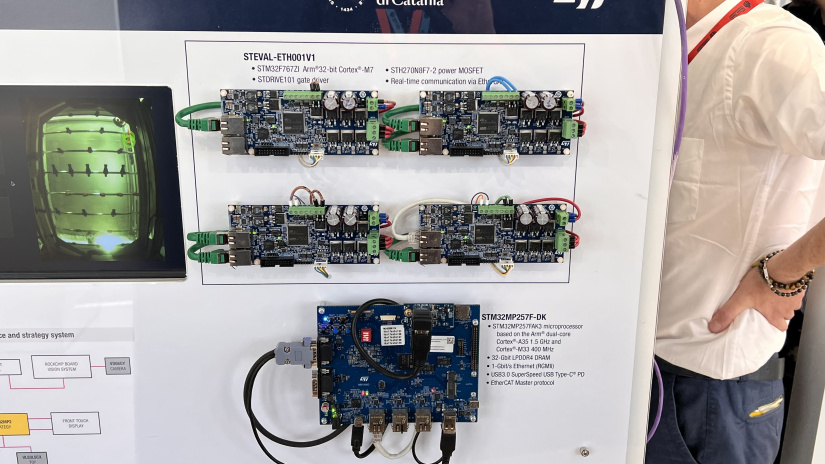
The robot was composed of: VD66GY camera module, STM32MP25x microprocessors, mounted on a dedicated evaluation board and eight STEVAL-ETH001V1 motor control boards. Each of these embeds the STM32F7, the STDRIVE101, and six STH270N8F7-2.
Student rover from Rome
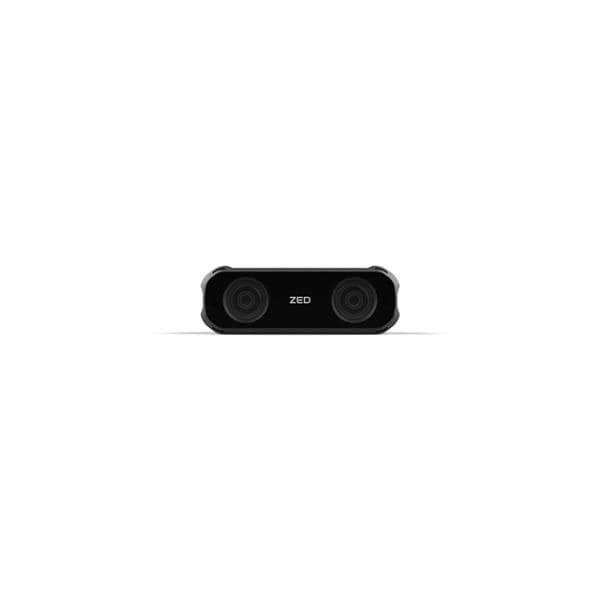
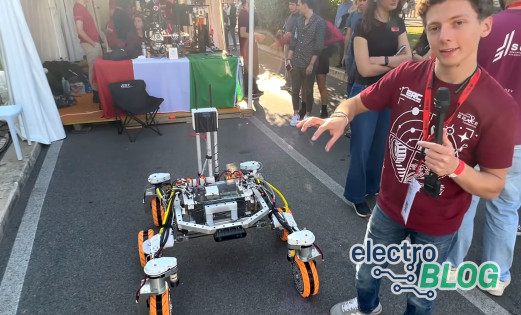
Sapienza Technology Team showed a competition rover built for the European Rover Challenge. The rover runs perception and autonomy on an NVIDIA Jetson Orin Nano, with motor control and low-level I/O on an ESP32-S3. The arm, drill, and stereo cameras support sampling, terrain analysis, and maintenance tasks. Team pages confirm their ERC focus and regular participation.
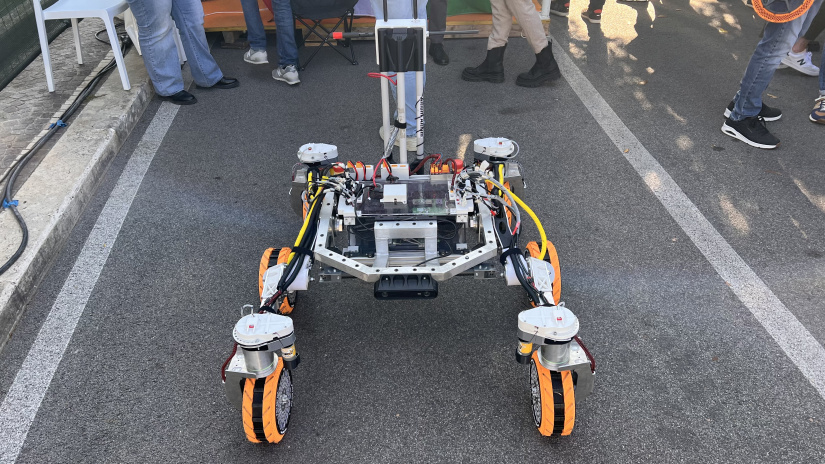
Why it matters: this is a solid, teachable stack. Offload vision and planning to Jetson. Keep motion control on a real-time microcontroller. Many teams can replicate this split with off-the-shelf parts.
PSLab: Open instruments in your pocket
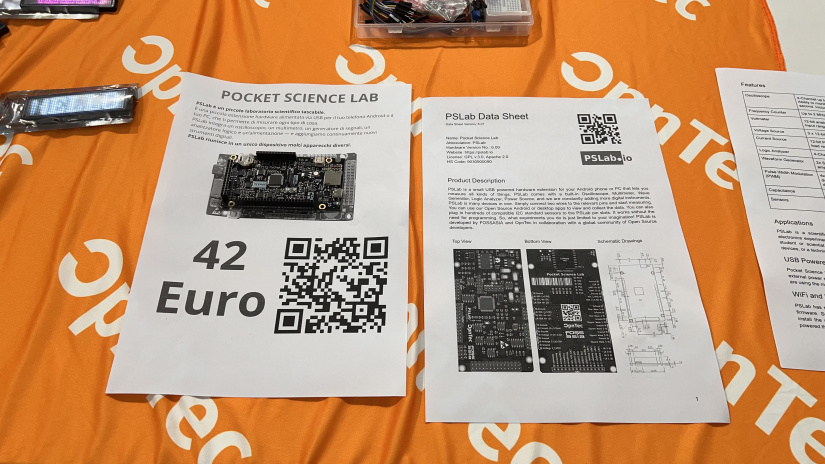
PSLab was one of the first things I saw and they immediately jumped out to me as a great development board for students and labs.
Pocket Science Lab (PSLab) is an open-source toolkit that turns your phone or PC into a full-featured science lab. The companion apps include an oscilloscope, multimeter, logic analyzer, and more. Connect the USB-powered PSLab board to add hundreds of sensors, no coding needed. Measure air quality, water, temperature, radiation, and other data using open hardware standards. Share your results, build new experiments, or extend it with custom firmware and hardware. It’s a complete lab that fits in your pocket.
Good for classrooms and quick field tests where benchtop gear is not practical.
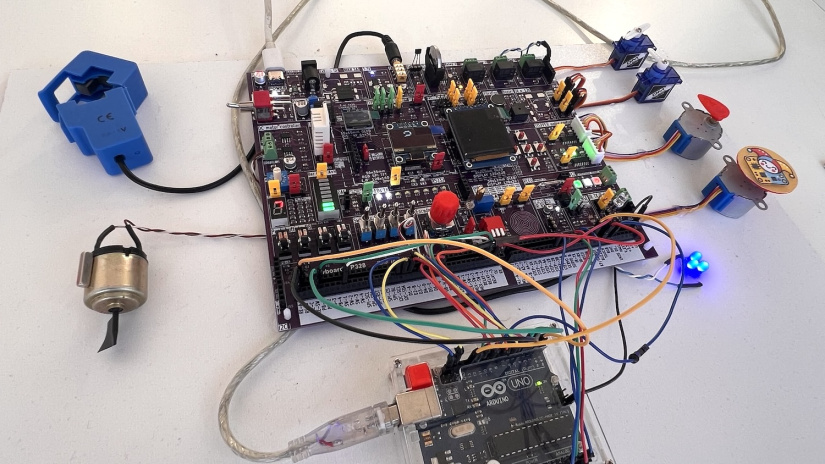
Jollyboard.RP328: the maker’s wildcard
Jollyboard.RP328 is an expansion board that collapses a pile of common breakouts into one platform. It speeds early prototyping by removing a lot of loose wiring and jumper failure points. The board targets makers, teachers, and anyone who wants a single, tidy base for sensors, relays, LEDs, and serial I/O.
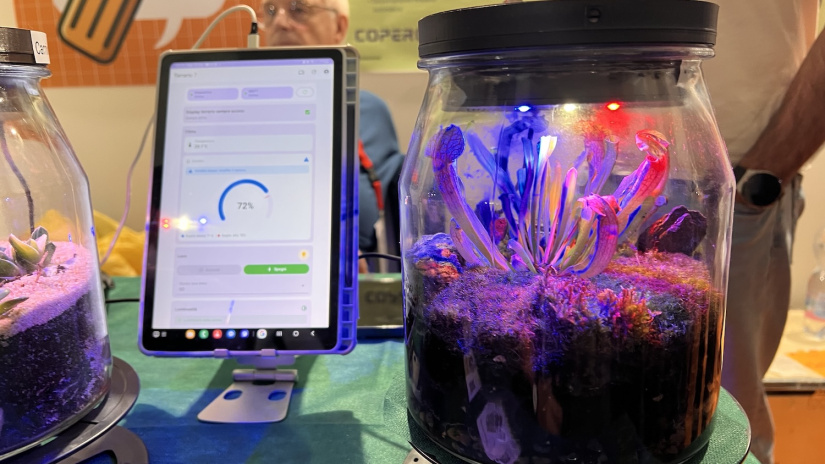
Electronics meets nature
Automazioni 4L showed terrariums lit with tuned LEDs and monitored by sensors in the lid. The goal is stable growth in low-light spaces and better plant health. Temperature, humidity, and light respond to the environment. A clean blend of horticulture and simple embedded design.
DAOS Group’s startup corner
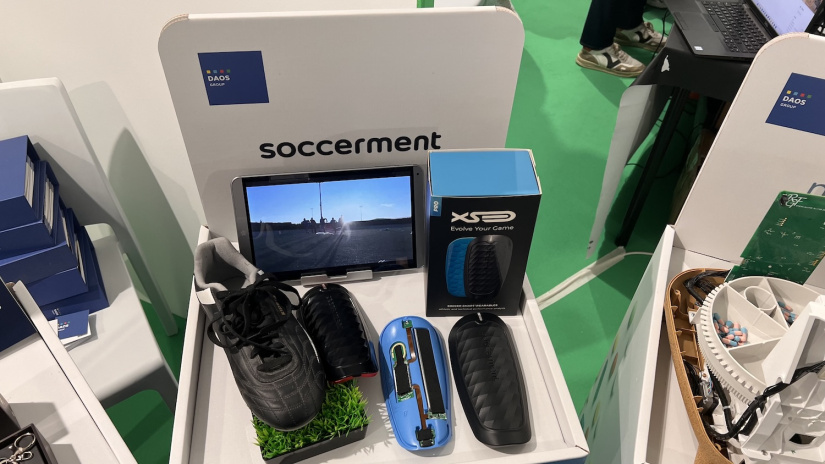
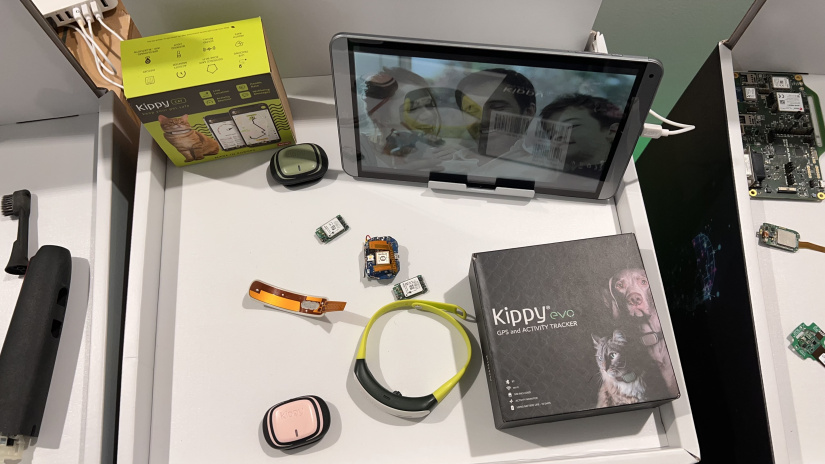
DAOS Group brought a trio of products and prototypes from its portfolio and partners. The common thread is small hardware, smart software, and a path to production.
Soccerment XSEED smart shin guards. Edge analytics turn touches, passes, and sprints into actionable metrics for players and scouts.
Kippy pet tracker. GPS plus activity insights with mobile alerts and geofencing.
Keybop laptop alarm. A student-led prototype that pairs a portable alarm with a phone for alerts when you step away in libraries or labs.
Thats a wrap!
It was great to see more electronic hardware projects at this year's show. Boards like the UNO Q really caught my eye and the student teams working hard on space projects was really inspiring to see. The various startups I spoke to showed clear problems and measurable wins, from drone uptime to low-power IoT in remote areas. That mix is why Maker Faire Rome keeps drawing larger crowds each year. Roll on MFR2026!

Residing on the south coast of England, Rich has spent the last few years building Electomaker.io from the ground up. He is usually found behind a laptop coordinating the rest of the EM team and occasionally finding time to contribute articles to the blog. When not tapping away at a laptop, he can be found either paddleboarding, at the beach, playing golf (badly), or camping with his family.








Leave your feedback...