





Highlights from Maker Faire Shenzhen 2025
Last week (15th November 2025), I travelled to Shenzhen, China to see Maker Faire Shenzhen 2025 first-hand. The event combines the Greater Bay Area International Maker Summit with Maker Faire Shenzhen, bringing together makers, educators, startups, and established companies in one of the most hardware-focused cities on the planet. Watch the interviews from the event here!
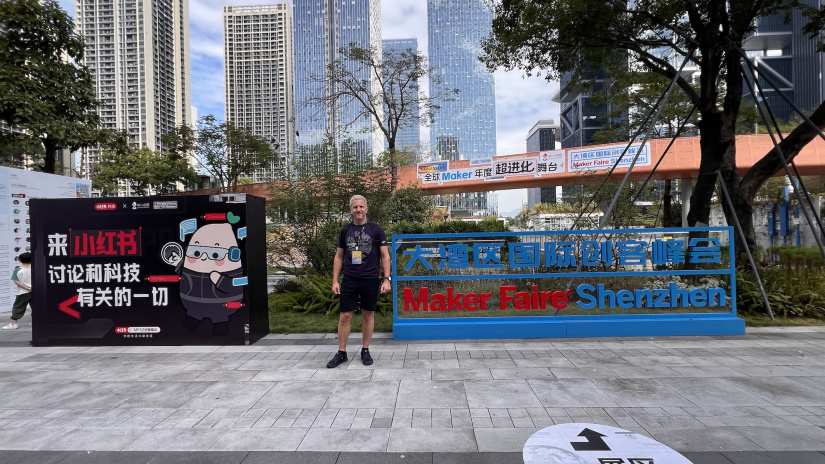
Hosted at the Nanshan Vanke Cloud Design Commune and organised by Chaihuo Maker Space with strong support from Seeed Studio, the two day fair turned the venue into a dense mix of demo stands, forums, and workshops. Across the site, visitors could move from AI powered robots and edge computing platforms to educational kits, open hardware projects, and industry grade prototypes in just a few steps.
Maker Faire Shenzhen sits at the intersection of several key interests: AI hardware, embedded vision, edge computing, robotics, open source development tools, and hands on education. It is a place where early stage project ideas sit alongside production ready modules and where global communities meet Shenzhen’s manufacturing ecosystem.
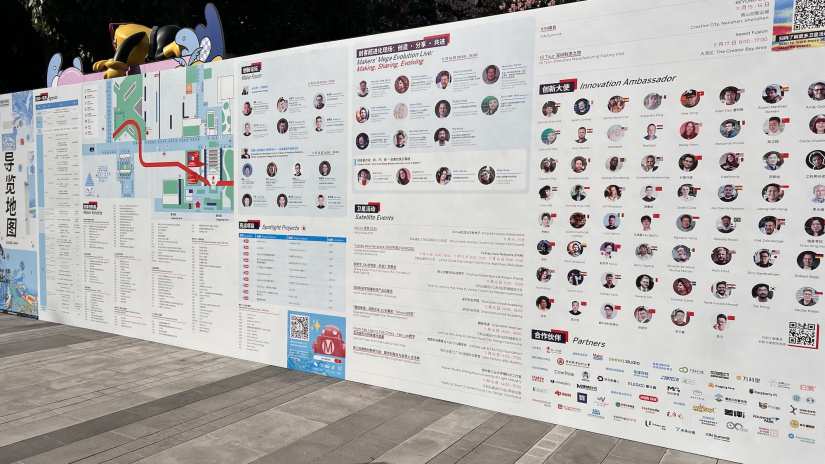
Inside MFSZ25 – Theme, Atmosphere, and Who Turned Up
Maker Faire Shenzhen 2025 brought together a uniquely diverse and energetic mix of global makers, hardware innovators, and AI experimenters. The following sections break down the atmosphere on-site, the event’s overarching theme, and who took part across the two-day exhibition.
Given Shenzhen’s reputation as the electronics capital of the world, it was no surprise that the fair leaned heavily toward hardware. Robotics and AI systems dominated the show floor, humanoid robots, automation modules, edge-AI devices, sensing platforms, experimental tools, and polished production-ready prototypes. Everywhere you turned, AI was embedded into something new.
For me, the Chinese maker community stood out most. The sheer volume of talented, passionate individuals building ambitious hardware, from advanced robotics to playful AI-powered gadgets, was inspiring. Some projects tackled real-world challenges, others were created purely for fun, but all shared a deep curiosity and the determination that drives maker culture worldwide.
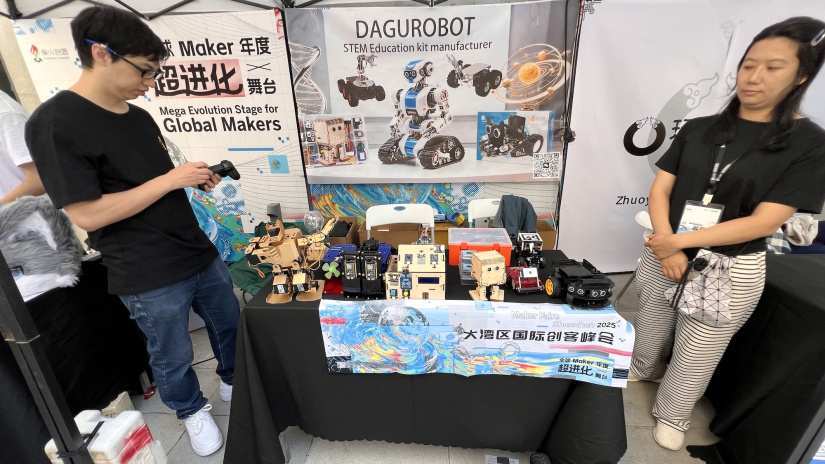
Organised by Chaihuo Maker Space and hosted at the Nanshan Vanke Cloud Design Commune, Maker Faire Shenzhen 2025 delivered two days of hands-on demos, thoughtful discussions, and meaningful encounters with the global maker and Vision AI community. Building on last year’s momentum, the event drew around 30,000 attendees who explored interactive installations, AI-ready hardware, student-led prototypes, and industry showcases throughout the venue.
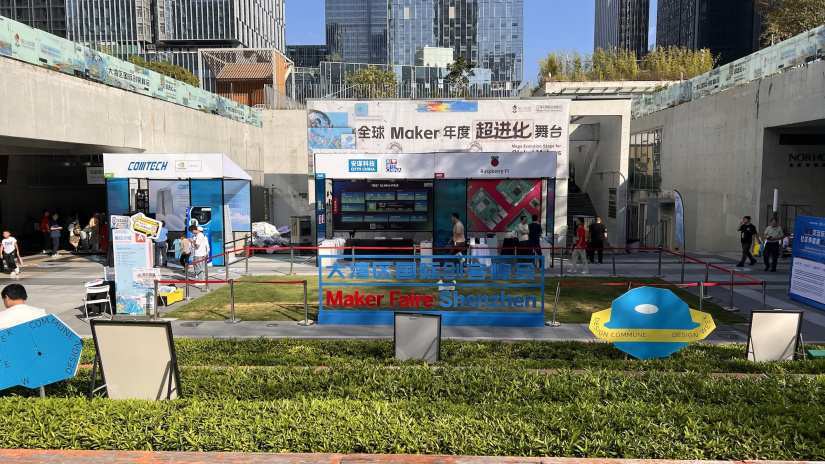
Theme: “AI Without Borders, Rebirth of All Things”
The 2025 edition embraced the theme “AI Without Borders, Rebirth of All Things,” reflecting the growing presence of artificial intelligence across every corner of the event. TinyML applications, edge intelligence, robotics platforms, interactive signage, and smart wearables all demonstrated how AI is moving from labs and data centres into everyday objects.
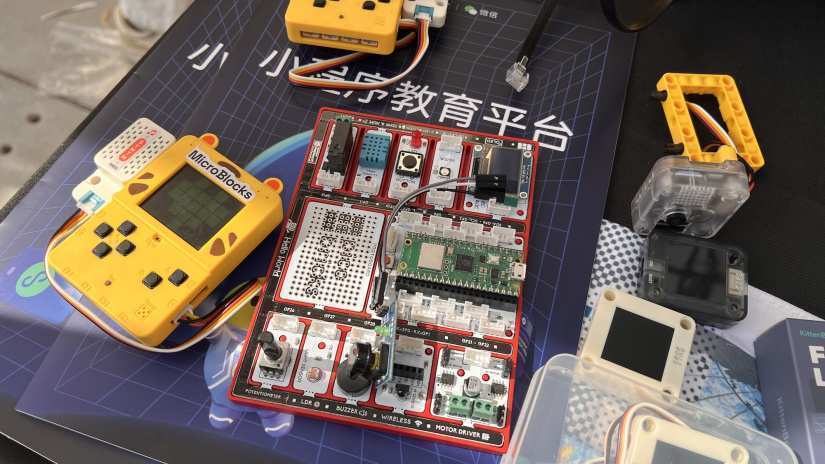
The framing for this year’s theme cast Shenzhen as a natural proving ground, an ecosystem where algorithms and hardware collide. AI seeped into projects much like water permeating soil, influencing everything from hobbyist builds to industry-ready devices. For makers, the event highlighted a strong push toward accessible AI platforms, open-source tools, and hardware designed for creativity, prototyping, and experimentation.
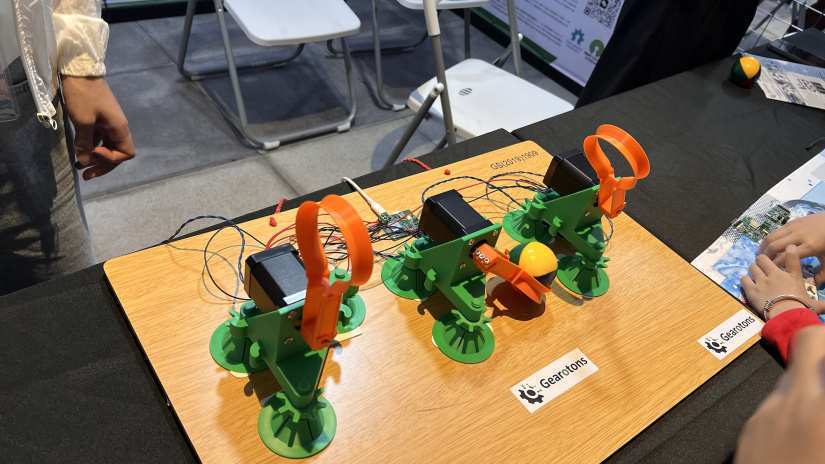
Venue, Schedule, and Visitor Profile
Maker Faire Shenzhen 2025 took place at the Vanke Cloud Design Commune in Nanshan, a venue chosen deliberately to encourage focused engagement rather than casual foot traffic. By situating the fair within a dedicated design and innovation district, the organisers created an environment geared toward collaboration, conversation, and hands-on exploration.
Across the two-day programme, visitors moved between three major zones:
- Maker Exhibit: 10:00–18:00
- Maker Forum: 09:00–18:00
- Workshops: 10:00–18:00
In total, the event recorded over 40,000 visitors, including more than 50 organised professional groups and over 1,000 forum participants from sectors such as education, electronics, manufacturing, and research.
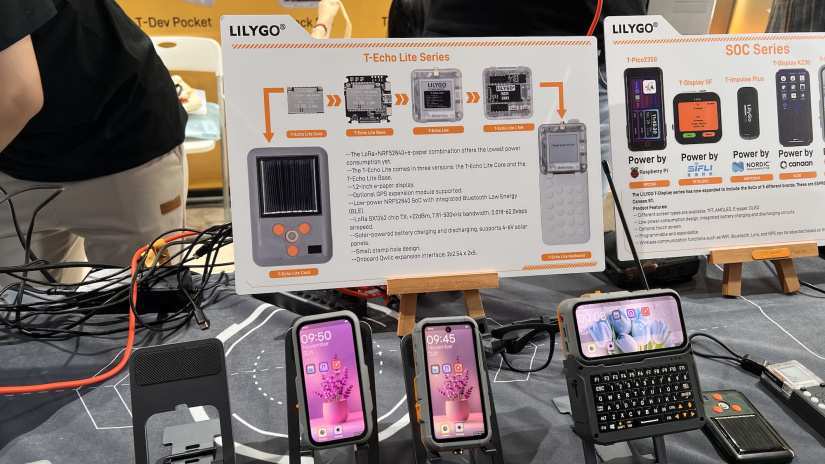
Exhibitors and Innovation Snapshot
Maker Faire Shenzhen 2025 featured 145 exhibitor booths, bringing together makers, companies, research teams, universities, and international groups. While deeper project coverage will be presented in two upcoming Electromaker video articles, this overview highlights the broad scope of innovation represented at the event.
The exhibitor profile included 36 international makers from 22 countries and regions, alongside a strong domestic presence. Industry distribution showed a particularly high representation from:
- Education: 48%
- Smart manufacturing & technology: 29%
- Healthcare, art, maker/DIY, sustainability, consumer electronics: remaining share
Enterprise exhibitors included more than 40 companies working in AI and edge computing, robotics, open-source hardware, 3D printing, and IoT. Nearly 100 additional booths showcased individual, student, and research-driven projects. Teaser examples include expressive open-source robots, modular handheld consoles built on RISC-V and CM4, DIY atomic-scale microscopes, and assistive robotics prototypes, each of which will be explored in depth in later articles.
Innovation Ambassadors and Digital Reach
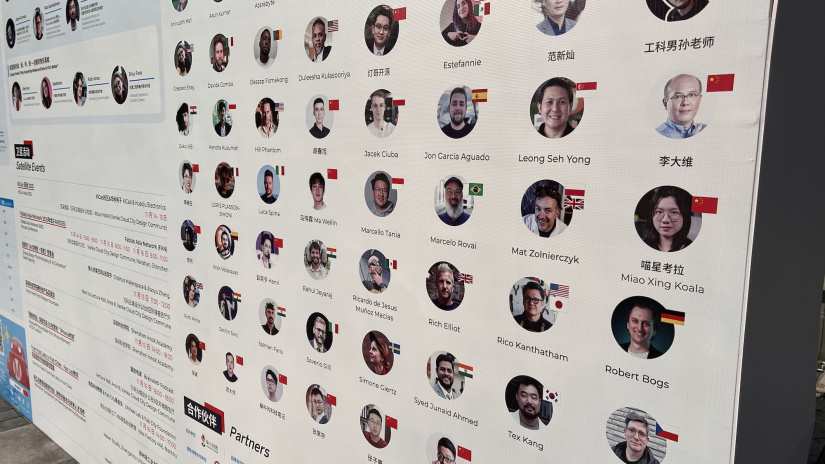
A major driver of the event’s visibility was the Innovation Ambassador programme, supported by Seeed Studio. Around 100 ambassadors, including high-reach tech influencers, hands-on hard-tech specialists, scholars, and community organisers, helped amplify the event across global platforms.
Their combined reach resulted in nearly 20 million online views related to Maker Faire Shenzhen. More than 30 international creators, with a collective audience exceeding 20 million followers, posted content across Bilibili, Instagram, and other platforms. A dedicated collaboration with Xiaohongshu Tech further boosted discoverability and algorithmic visibility throughout the event.
Media and Community Ecosystem
Maker Faire Shenzhen 2025 benefitted from a broad and coordinated media presence. Coverage included 20 mainstream news outlets and 15 leading technology and finance publications, contributing to dozens of articles and features surrounding the event.
On community channels, the organisers maintained an active presence through more than 100 WeChat posts from June to November, generating around 200,000 reads. A live photo stream from the venue added to audience engagement, enhancing both on-site navigation and wider social media sharing.
Watch our POV walk-through of the eventForums, Workshops, and Satellite Events
Beyond the exhibition halls, Maker Faire Shenzhen 2025 extended into a deep programme of talks, hands-on learning, and citywide events. These sessions reinforced the fair’s role as both a technical forum and a cultural gathering point for global makers, engineers, educators, and innovators.
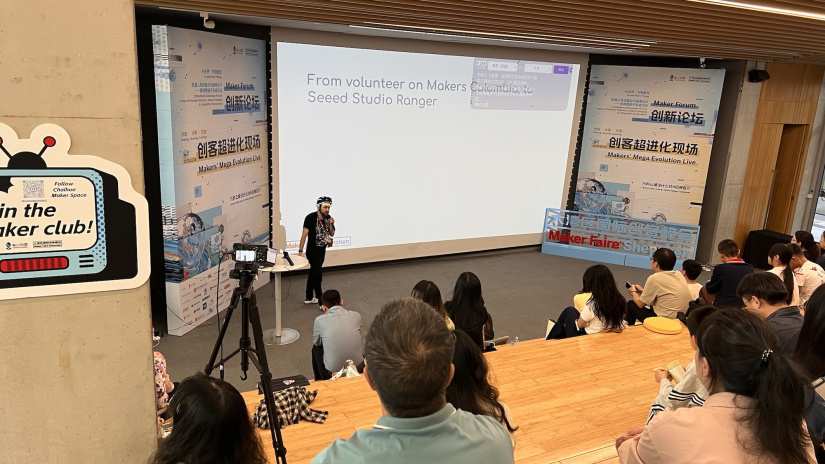
Maker Forum & “Mega Evolution” Live Stage
The Maker Forum served as the event’s main stage for thought leadership, bringing together experts to explore two core themes: “AI Without Borders, Rebirth of All Things” and the “Embodied Intelligence Developer Forum.” Across these sessions, speakers examined how AI is reshaping the physical world through robotics, edge computing, and new forms of human–machine interaction.
In total, the forum featured 30 speakers, with a balanced international profile, 47% from mainland China and 53% from outside the country. Around 20% of the speaker lineup consisted of women, contributing to a more representative mix of perspectives in the conversation around emerging hardware and intelligence systems.
Complementing the formal talks, the Mega Evolution Live stage created space for global makers, educators, engineers, open-source contributors, and content creators to share their personal development journeys. These sessions spotlighted how everyday innovators move from early prototypes to refined products, and how community-driven engineering evolves through collaboration.
Hands-on Workshops
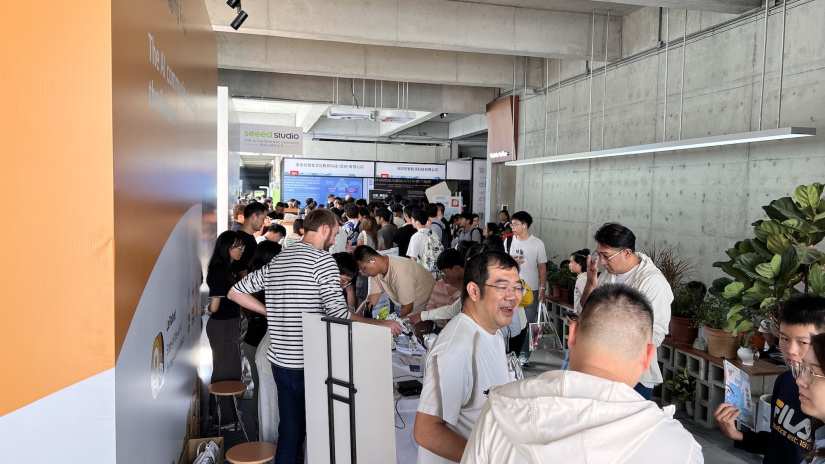
Workshops played a central role at MFSZ25, offering visitors direct, practical experience with a wide range of hardware and AI tools. Over the course of the event, 35 workshops were held across 33 different themes, attracting strong participation throughout both days.
A number of sessions focused on AI and embedded development, including:
- Arduino miniaturisation and Seeed Studio application workflows
- Deep dives into the new Arduino UNO Q
- How to Add AI to Almost Anything, practical steps for integrating edge intelligence
- Training and deploying YOLO models on edge AI cameras
- Teenage Engineering sessions blending synthesisers with maker culture
- The Radio Game using Meshtastic, long-range mesh networking through gameplay
These workshops catered to a wide spectrum of attendees, from beginner makers and educators to experienced embedded developers. The emphasis across all sessions was on accessibility, experimentation, and building confidence with modern AI-enabled hardware.
Citywide Satellite Events
Maker Faire Shenzhen extended well beyond its primary venue through a network of satellite events hosted across the city. These gatherings enabled deeper discussions, specialised workshops, and community meetups centred on the future of fabrication, education, AI hardware, and open-source ecosystems.
Key satellite events included:
- KiCon Asia – A major gathering for the KiCad PCB design community
- Fablab Asia Network Annual Meeting – Regional collaboration across educational and community labs
- Fab City Track – Exploring sustainable urban innovation and education
- AI Civilisation Book Launch with author Zhang Xiaoyu
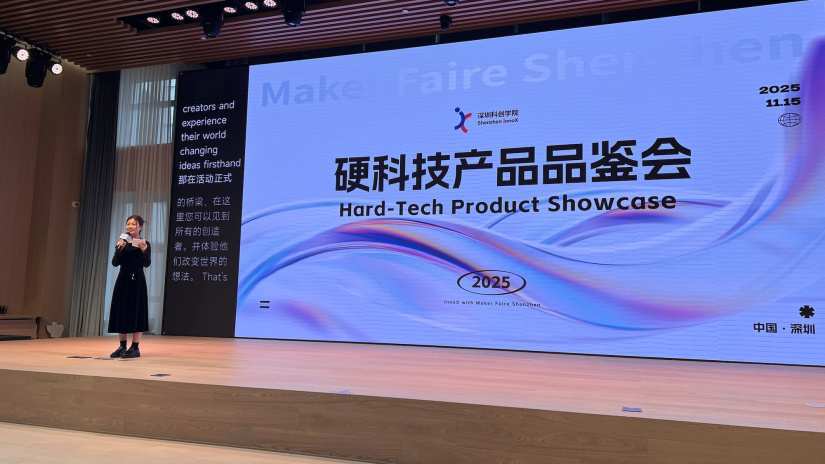
- InnoX Academy Hard-Tech Product Showcase – Early looks at next-generation hardware products
- 3D Creativity Roundtable – Discussing the “iPhone moment” of 3D generation, scanning, and printing
- New Engineering Education Symposium – Interdisciplinary, AI-enabled education frameworks
- XIN Summit – Exploring the future of AI hardware ecosystems and intelligent infrastructure
- Hi Tour Factory Visit – Behind-the-scenes tours of Seeed’s agile manufacturing centre, Foxconn facilities, mould shops, and servo plants
Together, these satellite events expanded the reach of MFSZ25, turning Shenzhen into a multi-venue festival of innovation and giving visitors unprecedented access to the city’s global hardware ecosystem.
Why Maker Faire Shenzhen Matters – and What’s Coming Next
Maker Faire Shenzhen 2025 underscored why the event remains one of the most important gatherings for the global maker and hardware engineering community. Its blend of experimentation, industry engagement, and hands-on exploration makes it a unique window into where hardware innovation is heading next.
Key Takeaways for Makers, Engineers, and Innovators
One of the clearest themes this year was the extent to which artificial intelligence has become woven into every stage of hardware development. From early prototyping to large-scale production, AI now underpins sensing, control, perception, simulation, and even manufacturing workflows. For makers, this means the tools and platforms for AI-enabled projects are more accessible than ever.
Shenzhen continues to act as a uniquely efficient ecosystem, one of the few places in the world where a project can move from concept to prototype to manufacturable product in a matter of days or weeks. The combination of agile manufacturing, open hardware suppliers, and a deeply collaborative engineering culture positions the city as a natural home for events like MFSZ.
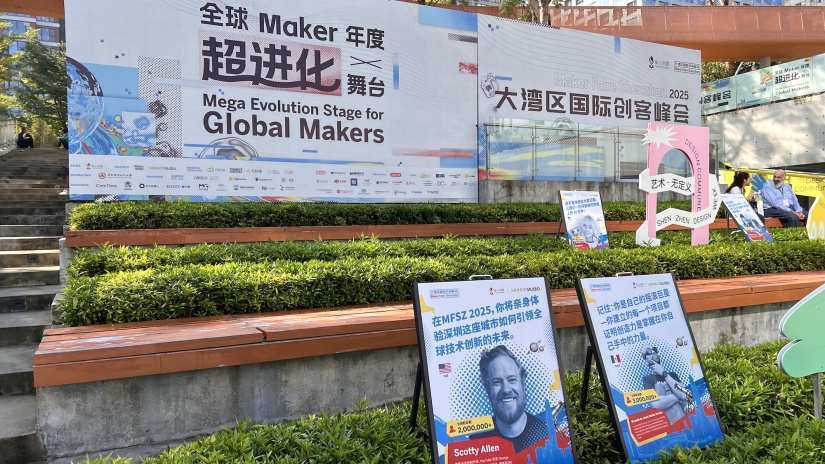
Another defining strength of Maker Faire Shenzhen is its global mix of communities. Fablabs, open-source contributors, university research groups, startups, corporate R&D labs, and independent makers all share the same floorspace. This cross-pollination accelerates ideas and exposes visitors to perspectives they may not encounter in more specialised events.
Ultimately, Maker Faire Shenzhen serves as an early predictor of near-future hardware trends, what technologies are rising, which workflows are shifting, and where the maker movement is steering professional engineering practice next.
Stay tuned on Electromaker for both follow-up pieces, they will bring the energy, projects, and engineering insights of Maker Faire Shenzhen 2025 directly to your screen.


Residing on the south coast of England, Rich has spent the last few years building Electomaker.io from the ground up. He is usually found behind a laptop coordinating the rest of the EM team and occasionally finding time to contribute articles to the blog. When not tapping away at a laptop, he can be found either paddleboarding, at the beach, playing golf (badly), or camping with his family.






Leave your feedback...