





Maker Faire Rome 2026: Humanoid Robots, Driverless Cars and 400+ Exhibits
Maker Faire Rome - The European Edition returns from 23 to 25 October 2026, bringing more than 400 exhibition stands to the Gazometro Ostiense for three days of robotics, artificial intelligence, digital fabrication, research and hands-on technology.
Now in its 14th edition, Maker Faire Rome will bring together makers, start-ups, universities, research centres, schools and technology companies. This year's programme includes 26 secondary schools, 27 universities and research centres and 145 academic and research projects.
Electromaker has been following preparations for the event throughout the year, including the Maker Faire Rome 2026 calls for makers, schools and researchers. If the 2025 edition is anything to go by, visitors can expect a huge variety of working hardware. You can also look back at our Maker Faire Rome 2025 highlights for examples of the projects, boards and robots we found at last year's event.
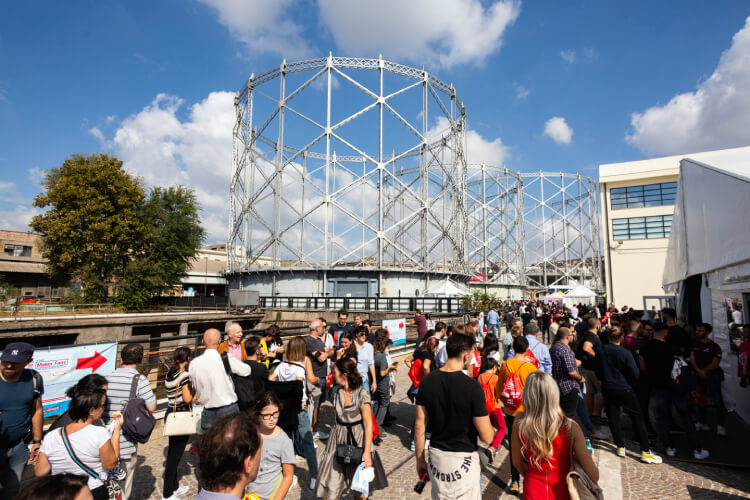
While the event covers everything from agritech and aerospace to design and education, robotics is set to be one of the biggest attractions in 2026. Visitors can expect autonomous humanoid football, driverless racing cars, wearable robotics, bionic hands, experimental robots and plenty of opportunities to interact directly with new technology. The official Maker Faire Rome topic guide provides a broader look at the areas covered by this year's event.
Humanoid robots will play autonomous football
One of the headline additions for 2026 is Italy's first International Italian Open RoboCup Humanoid Soccer tournament. It will run as part of Maker Faire Rome from 23 to 25 October.
University and research teams will compete using five humanoid robots on each side. Once a match starts, the robots operate autonomously, analysing the pitch and deciding how to move and play without direct human control.
The official Humanoid Soccer Tournament page provides more information about the competition and the technologies involved, including computer vision, bipedal locomotion, localisation and autonomous decision-making.

Among the competitors will be the SPQR team from Sapienza University of Rome. SPQR has participated in RoboCup since 1998 and is part of Sapienza's Department of Computer, Control and Management Engineering.
The team also reached the final of the World Humanoid Robot Games in Beijing in August 2026, where it was the only non-Chinese team remaining in the competition during its final three days.
Maker Faire Rome will also showcase an advanced humanoid platform developed with contributions from the SPQR team.
I-RIM 3D brings robotics research onto the show floor
Maker Faire Rome will once again run alongside I-RIM 3D 2026, the eighth Conference on Robotics and Intelligent Machines organised by the Italian Institute of Robotics and Intelligent Machines.
The 2026 scientific programme includes assistive and medical robotics, collaborative robots, Embodied Intelligence, Physical AI and the growing use of robotic agents in industry.
A new I-RIM 3D DEMO programme will make that research more accessible to visitors. Research teams will demonstrate working systems throughout the three-day event, allowing attendees to see prototypes operating outside the laboratory and, in some cases, interact with them directly.
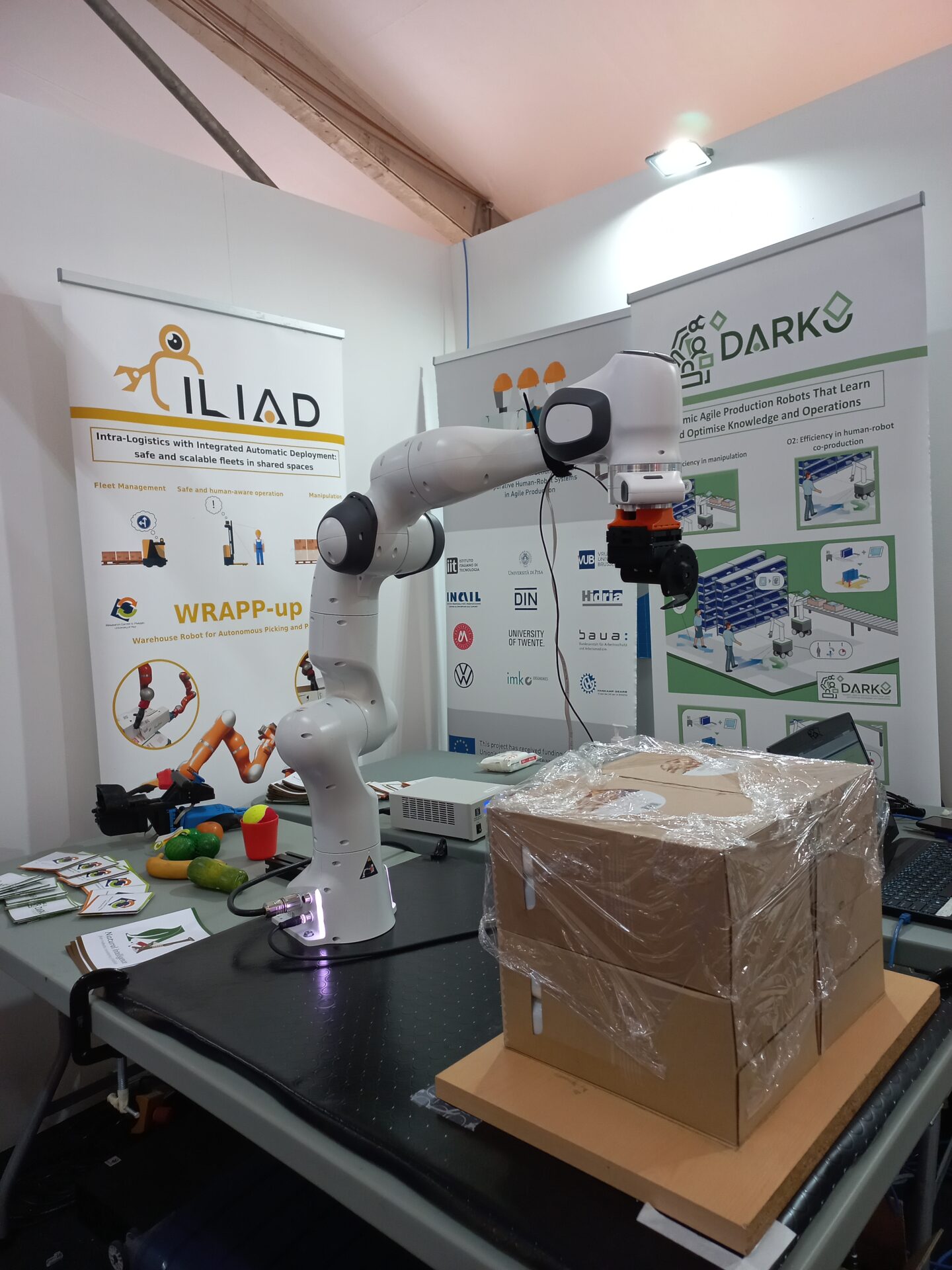
The accompanying I-RIM 3D Exhibition 2026 will showcase projects from universities and research organisations, while RoboPitch will give selected start-ups and research groups an opportunity to present robotics proof-of-concept projects to investors, companies, universities and innovation organisations.
Driverless racing and a 3D-printed bionic hand
Several individual projects should be especially interesting to makers and hardware enthusiasts.
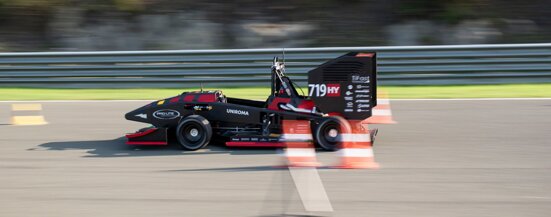
Sapienza Corse will demonstrate the Gajarda AWD Hybrid Driverless, a Formula Student racing car equipped with cameras and autonomous actuators. Its onboard systems allow the vehicle to identify the course and drive without a human behind the wheel.
The Sapienza Corse technical page for Gajarda AWD Hybrid Driverless provides a closer look at its drivetrain, electronics and driverless system, including stereo cameras, differential GPS and computer vision for cone detection.
A 17-year-old Italian maker will also demonstrate a neural headset that captures signals from the body and converts them into commands.
The project is accompanied by a 3D-printed bionic hand capable of reproducing human movement using either computer vision or electromyographic signals.
Another unusual project, Da-Vinci Bicycle, combines physical engineering with virtual reality. Inspired by Leonardo da Vinci's aerial screw, the installation allows visitors to pedal a stationary bicycle that drives a physical mechanism while they experience simulated flight through VR.
A robot that can cook cacio e pepe
Robotics will not be limited to factories, laboratories and racing circuits.
Robby Minichef applies robotic automation to the kitchen. The prototype learns movements and timings from a chef and can reproduce the sequence required to prepare Italian pasta dishes.
The autonomous kitchen robot has been developed by IngEnesi. A detailed Robby Minichef profile from SMAU explains how the machine can handle tasks including adding pasta and ingredients, draining pasta and controlling the cooking process.
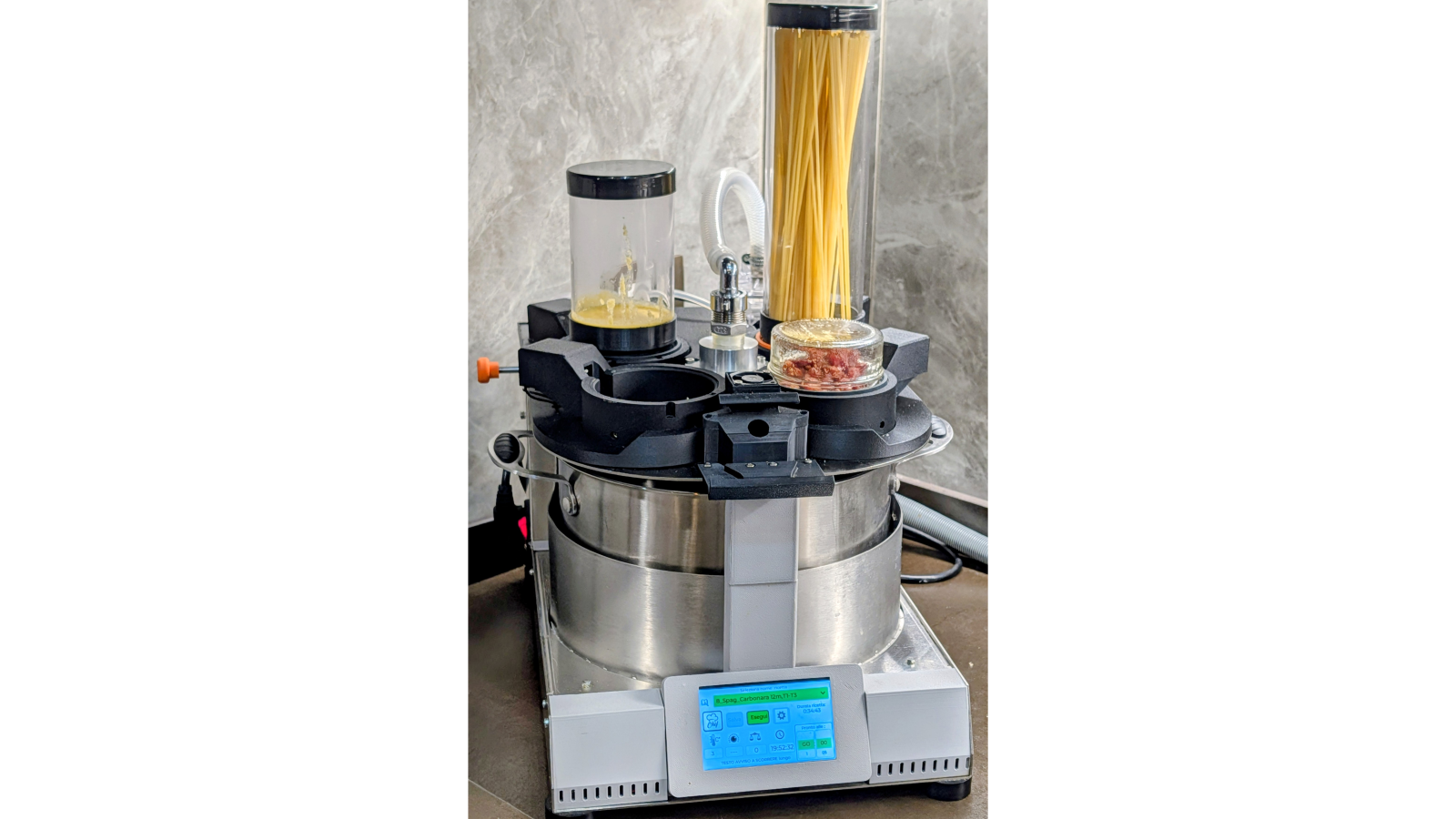
The project is an accessible example of how robot learning can be applied to complex physical tasks that require a sequence of coordinated actions rather than a single repetitive movement.
Wearable robotics and workplace safety
Inail and the Italian Institute of Technology will present several projects exploring how robotics, wearable devices and immersive technology could improve workplace safety and training.
The SIDE haptic exoskeleton, developed through Inail research, can reproduce forces and physical interactions inside virtual and augmented environments. The Italian Ministry of Labour has published a detailed overview of SIDE and other Inail research prototypes.
One proposed application is training for dangerous environments. Workers could practise tasks associated with confined or potentially contaminated spaces while receiving physical feedback without being exposed to the real-world hazard.
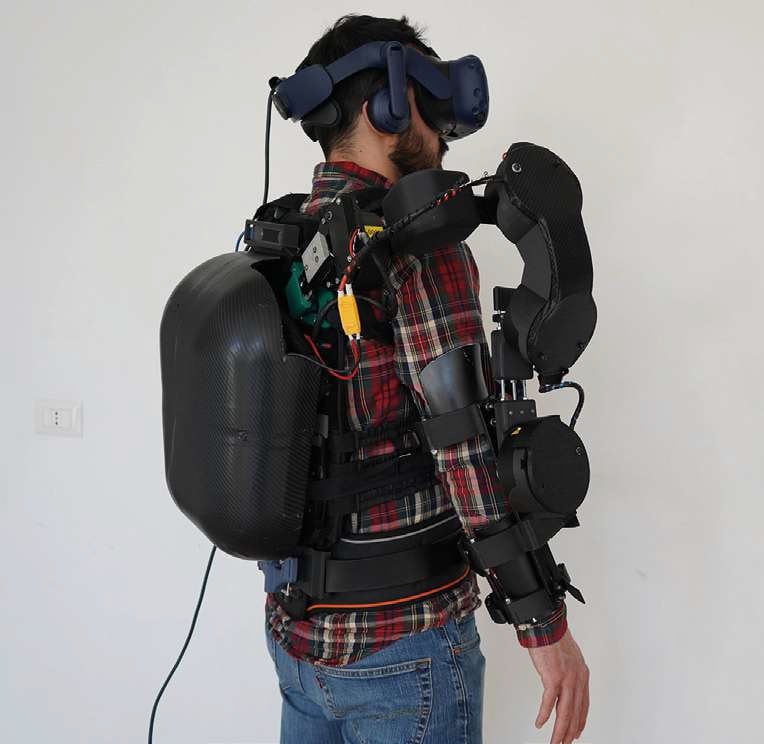
IIT and Inail will also demonstrate XoTrunk and FleXoTrunk, wearable prototypes designed to support the lower back during manual handling.
Another wearable project combines automated fall detection with an airbag. The system is designed to distinguish a genuine fall from everyday movement and then deploy rapidly around areas including the torso, sides, shoulders and neck.
From dark matter to 3D-printed boats
Maker Faire Rome's broader programme includes plenty of projects that sit outside traditional robotics.
The Gran Sasso Science Institute will present Seeing the Invisible, an interactive introduction to dark-matter research featuring microscopy, a cloud chamber and demonstrations connected with the DarkSide-20k experiment at the Gran Sasso National Laboratory.
Maker Faire Rome has previously taken a closer look at the project in its feature on photonic sensors and the search for dark matter.

At the opposite end of the technology spectrum is P3DALO, a five-metre inflatable pedal boat created by a maker from Sardinia.
Its paddlewheel and many of its structural components are produced using a standard desktop 3D printer. The modular boat can also be disassembled so that it can be transported in an ordinary car.
3D printing, food technology and farming in space
Agricultural and food technology also feature prominently in the 2026 programme. The Maker Faire Rome Agrifood area brings together projects spanning food production, agriculture, sensing and new manufacturing technologies.
CREA will demonstrate projects involving food design, software-controlled micromalting and 3D food printing.
ENEA will look at food production in extreme environments, including research with potential applications in space agriculture, cellular agriculture and plant biotechnology.
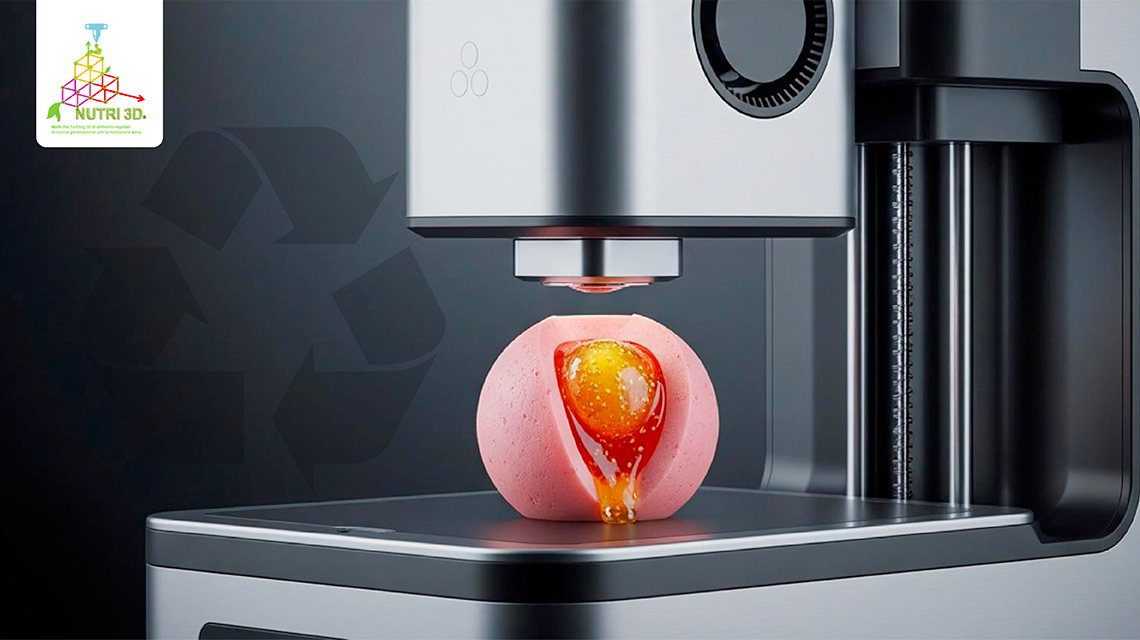
ENEA is already developing sustainable, customisable 3D-printed foods through the NUTRI3D research project, including multilayer food products and so-called honey pearls.
CNR's FoodEye project uses spectroscopy to analyse characteristics of food, including nutritional properties, geographical origin and signs of contamination or counterfeiting.
Other projects include digital tools for planning agricultural treatments, IoT and Earth observation technology for tree management and ultrasound systems designed to improve fermentation processes.
Advanced manufacturing meets Italian craftsmanship
The new AvantCraft exhibition will examine what happens when digital fabrication, robotics and artificial intelligence are combined with traditional Italian craftsmanship.
Maker Faire Rome has explored the wider idea in its feature on how advanced technology is changing craft, design and small-scale manufacturing.
The exhibition covers precision engineering and mobility, ceramics, glass, inlay, fashion, jewellery and biomaterials.
Visitors will see examples ranging from titanium bicycles and 3D-printed ceramics to hand-set titanium jewellery, large-scale embroidery and materials manufactured from waste.
The Dallara Stradale will also be on display as an example of advanced composite engineering being combined with specialist manual assembly and technical skills.

Hands-on technology and maker education
Direct participation remains an important part of Maker Faire Rome. The event's Education & Kids programme is built around workshops, demonstrations, gaming and learning by doing.
The Educational and Gaming area will include robot battles, circuit printing, augmented reality, driving simulators, live chemistry demonstrations and activities linked to the European Space Agency.
Maker Camp, an Official Minecraft Partner and Minecraft Education Partner in Italy, will also run activities using Minecraft to explore coding and problem-solving.

The 2026 edition of STEAM in Minecraft has already attracted 417 registered classes from primary and secondary schools across Italy.
Arduino and hardware brands return for 2026
Arduino, DigiKey, MAIRE, STMicroelectronics and Unidata are listed as Gold Partners for Maker Faire Rome 2026.
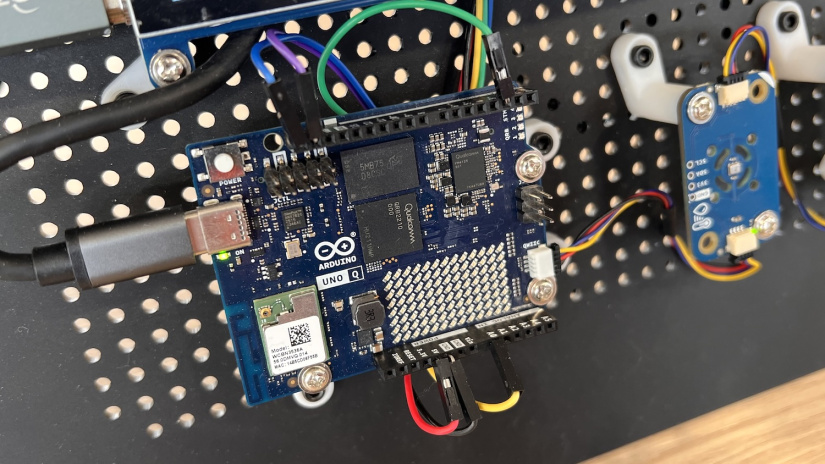
Arduino has already previewed one of its 2026 demonstrations, a handheld retro console built around the Arduino UNO Q. The open-source project combines the Linux-capable side of the UNO Q with its real-time microcontroller to handle gaming, display, audio and physical controls.
Arduino hardware was also one of the major themes of last year's event. Electromaker covered the board in detail in our Arduino UNO Q at Maker Faire Rome 2025 feature, including robotics, computer vision and smart-home demonstrations.
A DeLorean joins the technology exhibits
Not everything at Maker Faire Rome is cutting-edge research.
A DeLorean DMC-12 will travel to the event from the Enter Technikwelt Solothurn museum in Switzerland. The museum's own opening event featured its DeLorean arriving inside the exhibition hall.

Designed by Giorgetto Giugiaro and made famous around the world by Back to the Future, the car adds another engineering icon to a programme already packed with autonomous vehicles, robots and experimental machines.
Maker Faire Rome 2026 dates and location
Maker Faire Rome - The European Edition takes place from 23 to 25 October 2026 at the Gazometro Ostiense in Rome.
Additional activities will also take place at the nearby Istituto Superiore Antincendi.
The event is organised by the Rome Chamber of Commerce through Innova Camera and is built around three core areas: Innovation, Creativity and Discovery. The official Maker Faire Rome website provides the latest programme and visitor information.

Tickets are available exclusively online. The official Maker Faire Rome 2026 ticket page provides ticket categories and visitor information.
With autonomous humanoid football, driverless racing, research robots, wearable technology, 3D printing and hundreds of maker projects all under one roof, Maker Faire Rome 2026 looks set to offer plenty for anyone interested in seeing how emerging technology works outside the laboratory.

Residing on the south coast of England, Rich has spent the last few years building Electomaker.io from the ground up. He is usually found behind a laptop coordinating the rest of the EM team and occasionally finding time to contribute articles to the blog. When not tapping away at a laptop, he can be found either paddleboarding, at the beach, playing golf (badly), or camping with his family.










Leave your feedback...