




Maker Faire Rome 2026: New Call Deadline and MakeITcircular Prize
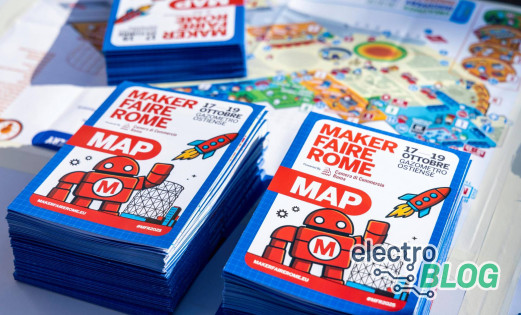
Maker Faire Rome 2026 has extended the application deadline for its three main calls to 30 June 2026, giving makers, schools, universities and research institutes more time to submit projects for the 14th edition of the event.
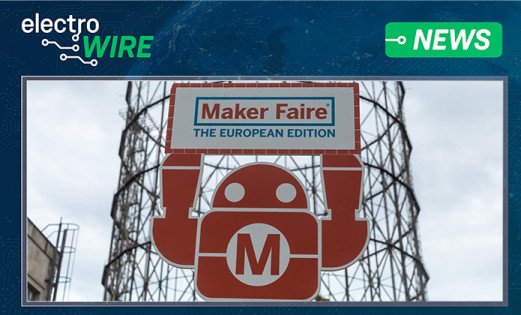
The update applies to the Call for Makers, the Call for Schools, and the Call for Universities and Research Institutes. Maker Faire Rome - The European Edition takes place from 23 to 25 October 2026 at Gazometro Ostiense in Rome.
The organisers have also opened MakeITcircular 2026, a circular-economy contest for projects focused on reuse, repair, recycling, eco-design, durability, resource efficiency and reduced environmental impact. The contest is open until noon CEST on 1 October 2026, with a top prize of 3,000 euros.
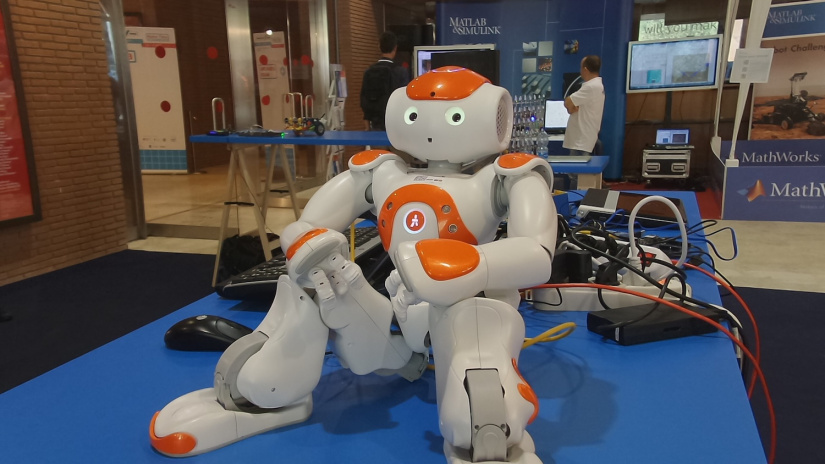
Maker Faire Rome 2026 deadline extended: key details
The original application deadline was 15 June 2026. The new 30 June deadline gives project teams extra time to prepare stronger submissions, especially if they still need to record a prototype demo, confirm technical requirements or improve how the project is explained.
| Item | Details |
|---|---|
| Event | Maker Faire Rome - The European Edition 2026 |
| Edition | 14th edition |
| Event dates | 23 to 25 October 2026 |
| Venue | Gazometro Ostiense, Rome |
| Updated call deadline | 30 June 2026 |
| Calls covered | Call for Makers, Call for Schools, Call for Universities and Research Institutes |
| MakeITcircular deadline | Noon CEST, 1 October 2026 |
What is Maker Faire Rome?
Maker Faire Rome - The European Edition is a public innovation event dedicated to technology, creativity and hands-on experimentation. It is organised by the Rome Chamber of Commerce through Innova Camera, its in-house company, under licence from Make:.
The event brings together makers, startups, schools, universities, research centres, companies, institutions and the public. Projects can range from early prototypes and student builds to research demonstrations, robotics systems, digital fabrication projects, sustainability tools and applied AI ideas.
The organisers describe Maker Faire Rome as the Human-Centred Innovation Fair. In practice, that means projects need to do more than look technically interesting. They should show a clear use, a practical problem and a way for visitors to understand or interact with the idea.
“Maker Faire Rome has been building something rare: a space where experimentation becomes visible, where talent meets opportunity, and where Rome stands out as a leading innovation ecosystem,” said Lorenzo Tagliavanti, president of the Rome Chamber of Commerce.
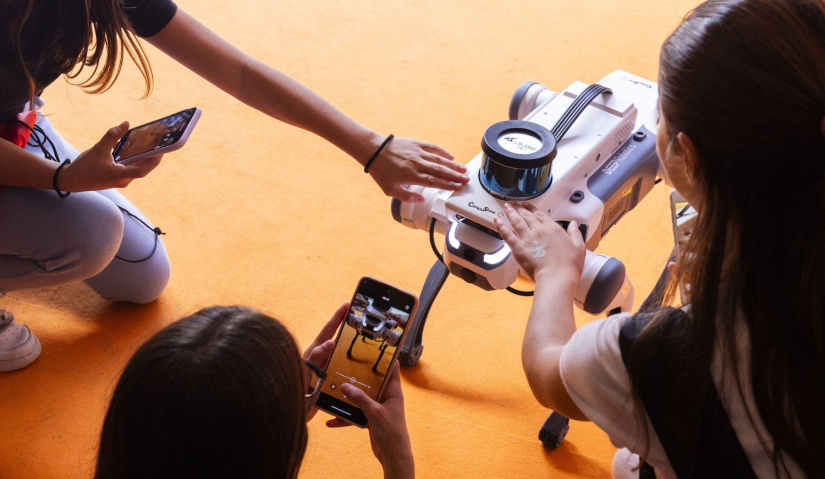
The three Maker Faire Rome 2026 calls
The deadline extension applies to all three open calls. Each call is aimed at a different type of exhibitor, but all selected projects need to be suitable for public presentation at the fair.
| Call | Who Can Apply | Project Themes | Key Benefits | Deadline |
|---|---|---|---|---|
| Makers 2026 | Makers, startups, creative teams and applied innovation projects from around the world | Robotics, AI, IoT, digital fabrication, sustainability, wearables, agritech, food technology and space technologies | Free exhibition space for selected projects, with options for project exhibitions, talks and workshops | 30 Jun 2026 |
| Schools 2026 | Schools presenting student-led projects | STEM, classroom engineering, creativity, sustainability and student innovation | Free exhibition space for selected schools, with possible travel and accommodation support under the rules | 30 Jun 2026 |
| Universities & Research 2026 | Universities, doctoral candidates, academic teams, public research institutes and research centres | Research prototypes, STEM projects, applied interdisciplinary work and technology transfer | Public visibility, prototype presentation and connections with companies, startups and industry professionals | 30 Jun 2026 |
Applications are assessed under the official rules and call-specific criteria. The organisers look at areas such as prototype functionality, creativity, originality, visitor interaction, novelty, technical and logistical feasibility, and safety.
Call for Makers: what kind of projects fit?
The Call for Makers is the broadest route into Maker Faire Rome 2026. It is designed for makers, startups and creative teams with projects that can be shown, explained and discussed with a public audience.
A strong submission should show what the project does, why it matters and how visitors will experience it. That does not mean the project needs to be a finished commercial product. It does need a clear working idea, a practical demonstration and enough detail for reviewers to understand how it will be presented on site.
- Robotics: rovers, autonomous systems, educational robots, assistive machines and robotic tools.
- Artificial intelligence: computer vision, edge AI, data tools, generative systems and human-facing AI applications.
- Internet of Things: sensing, monitoring, automation, smart infrastructure and connected devices.
- Digital fabrication: 3D printing, CNC, laser cutting, custom manufacturing and rapid prototyping.
- Sustainability: resource efficiency, environmental monitoring, circular economy and low-waste design.
- Wearables and interfaces: assistive technology, interactive systems, health-adjacent tools and creative devices.
For a sense of the projects that appear at the event, see Electromaker’s coverage of Maker Faire Rome 2025 highlights and our report on rovers, tools and satellites at Maker Faire Rome 2025.
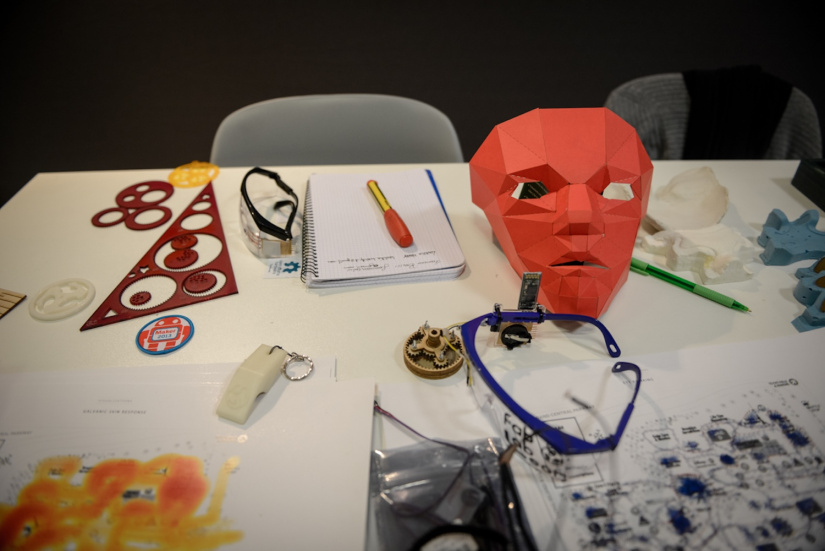
MakeLab workshops: useful for hands-on demos
Maker Faire Rome also includes the MakeLab Area, which focuses on workshops and practical learning. This is useful if your project works best when visitors build something, test a method or take part in a guided activity.
A good workshop should have a clear outcome and realistic timing. For example, a microcontroller workshop should be simple enough for visitors to complete during the session, while a fabrication workshop should account for tools, materials, supervision and safety.
MakeITcircular 2026: circular economy projects and a 3,000 euro prize
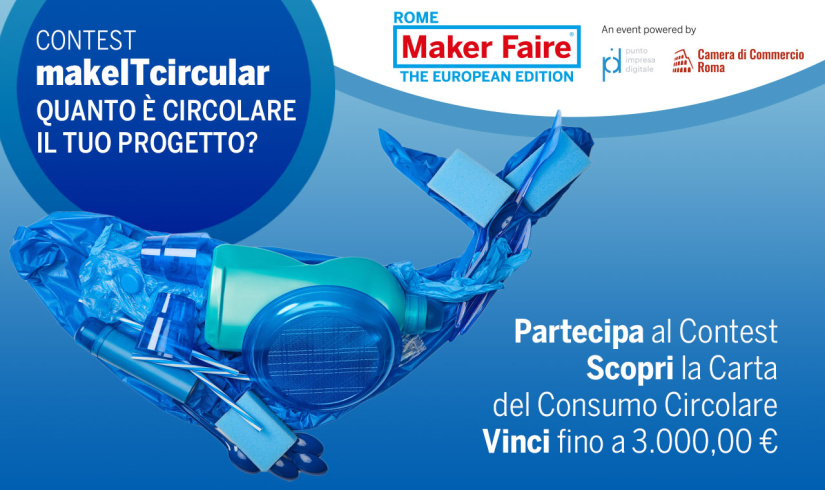
MakeITcircular 2026 is a separate contest linked to Maker Faire Rome. It focuses on projects that support the circular economy through reuse, repair, recycling, eco-design, durability, resource efficiency and reduced environmental impact.
The contest is now in its sixth edition and follows the Circular Consumption Charter, which promotes more responsible production and consumption. Projects submitted to the Circular Economy category of the 2026 Call for Makers are entered automatically into MakeITcircular.
| MakeITcircular Item | Details |
|---|---|
| Contest focus | Circular economy, reuse, repair, recycling, eco-design, durability, resource efficiency and reduced environmental impact |
| Application deadline | Noon CEST, 1 October 2026 |
| Top prize | 3,000 euros |
| Honourable mentions | Two honourable mentions of 1,000 euros each |
| Who can enter | Individuals aged 18 and over, plus eligible companies, public and private bodies, associations, foundations and other legal entities based or resident in Italy |
| Automatic entry | Projects submitted to the Circular Economy category of the 2026 Call for Makers are entered automatically |
| Assessment criteria | Alignment with circular consumption principles, environmental impact, feasibility and technical maturity |
What makes a strong circular-economy project?
A circular-economy project should show how a product, system or process reduces waste or extends the useful life of materials. Simply adding recycled material to a build may not be enough. The stronger idea is to show the practical mechanism that makes the project more sustainable.
- Repairability: parts can be replaced, serviced or upgraded without discarding the whole system.
- Reuse: components, materials or products are used again in a practical and repeatable way.
- Recycling: useful materials are recovered and returned to use.
- Eco-design: the project reduces material use, energy demand or environmental impact from the start.
- Durability: the design lasts longer and avoids short replacement cycles.
- Resource efficiency: the project reduces water, power, raw materials or consumables while still solving a real problem.
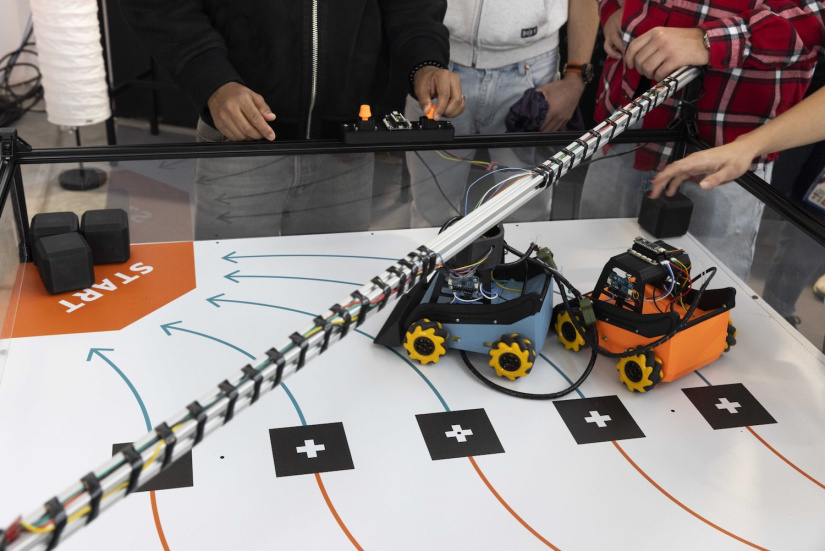
For makers, this is a useful design challenge. A modular enclosure, repairable sensor system, reclaimed-material product, low-power monitoring platform or reuse-focused hardware tool can be more convincing when visitors can see how it is built and maintained.
How to use the extra time before 30 June
The extended deadline is most useful if teams use it to make the application clearer. A good submission should explain the project quickly, prove that the prototype works and show how it will engage visitors at the fair.
- Clarify the problem. Start with the user need or real-world issue before listing hardware or software.
- Show the prototype working. Record a short video or add clear images that show the system in action.
- Explain the visitor interaction. State what people will see, test, touch or learn at the stand.
- Check the technical requirements. Confirm space, power, mounting, connectivity, setup time and transport needs.
- Plan for reliability. Prepare an offline mode if the demo depends on Wi-Fi, cloud APIs or external services.
- Review safety. Cover moving parts, hot surfaces, exposed wiring, high-current sections and unstable structures.
If your prototype still needs boards, sensors, displays, tools or accessories before submission, browse the Electromaker shop for maker hardware and development parts.
Common application issues to avoid
A weak application can make a strong project harder to understand. Before submitting, check that the project is described as a working public demo, not just an idea or a parts list.
| Problem | Why It Matters | Practical Fix |
|---|---|---|
| The summary starts with a parts list | Reviewers may not understand the problem or public value | Start with the need, then explain how the build solves it |
| No clear demo is shown | The project can look theoretical, even if it works | Add a short video or photos showing the prototype in use |
| Visitor interaction is vague | The project may not feel suitable for a public exhibition | Explain what visitors will see, touch, test or learn |
| Technical requirements are missing | The project may look difficult to host safely | List dimensions, power needs, setup time, connectivity and safety notes |
| Circular-economy claims are too broad | The environmental benefit may be hard to assess | Explain the repair, reuse, recycling, durability or resource-saving mechanism |
Why makers should pay attention
Maker Faire Rome has recorded more than 895,000 visitors and more than 7,000 exhibitors over 13 years. For makers, that scale matters because it puts working prototypes in front of people who can test, question and understand them.
That kind of public feedback is difficult to get from a project page alone. A visitor might notice that your interface is unclear, that your demo needs a simpler reset process, or that your circular-economy idea has a use case you had not considered. For student and research teams, the event can also turn a lab project into a clearer public explanation.
The deadline extension gives teams a short but useful window to improve the application before 30 June. For circular-economy projects, MakeITcircular adds another reason to prepare a clear submission, especially if the project is built around repair, reuse, recycling or reduced environmental impact.
How to apply
Applications for the three Maker Faire Rome 2026 calls are open until 30 June 2026. MakeITcircular 2026 applications are open until noon CEST on 1 October 2026.
- General calls page: Apply through the Maker Faire Rome open calls
- Call for Makers: Submit a maker project
- Call for Schools: Submit a school project
- Call for Universities and Research Institutes: Submit a university or research project
- MakeITcircular: Enter the circular-economy contest
FAQ
These are the main questions for makers, schools, research teams and circular-economy projects after the deadline extension.
What is the new Maker Faire Rome 2026 application deadline?
The new application deadline is 30 June 2026. The extension applies to the Call for Makers, Call for Schools and Call for Universities and Research Institutes.
When is Maker Faire Rome 2026?
Maker Faire Rome - The European Edition 2026 takes place from 23 to 25 October 2026.
Where is Maker Faire Rome 2026 held?
The 2026 event takes place at Gazometro Ostiense in Rome.
Who can apply for the Call for Makers?
The Call for Makers is open internationally to makers, startups, creative teams and applied innovation projects. Suitable themes include robotics, AI, IoT, digital fabrication, sustainability, agritech, wearables, food technology and space technologies.
What is MakeITcircular 2026?
MakeITcircular 2026 is a Maker Faire Rome contest for circular-economy projects. It focuses on reuse, repair, recycling, eco-design, durability, resource efficiency and reduced environmental impact.
What is the MakeITcircular 2026 prize?
The winning project receives 3,000 euros. Two honourable mentions receive 1,000 euros each.

Residing on the south coast of England, Rich has spent the last few years building Electomaker.io from the ground up. He is usually found behind a laptop coordinating the rest of the EM team and occasionally finding time to contribute articles to the blog. When not tapping away at a laptop, he can be found either paddleboarding, at the beach, playing golf (badly), or camping with his family.





Leave your feedback...