





Arduino Uno Q: Qualcomm-Powered AI and Real-Time Control
The Arduino Uno Q takes center stage as this week’s Product of the Week, marking a clear shift in how far the Arduino platform is willing to push embedded development. This is not a familiar board with minor refinements or incremental improvements. Instead, it represents one of the most ambitious and advanced releases Arduino has produced to date.
The involvement of Qualcomm immediately raises expectations. By bringing mobile-grade processing, AI capability, and serious embedded performance into the classic Uno form factor, the Uno Q feels designed for a future shaped by intelligent systems and connected machines. With robotics, AI, and local decision-making now firmly in focus, the key question becomes unavoidable. What truly makes the Arduino Uno Q different from every Arduino that came before it?
What Makes the Arduino Uno Q a First of Its Kind
The Arduino Uno Q represents a shift in direction rather than a simple step forward. Instead of refining an existing formula, it introduces a new category within the Arduino ecosystem by combining capabilities that are usually spread across multiple devices. This approach moves the Uno Q beyond incremental upgrades and into a space where versatility and performance are built into the platform from the start.
What defines this new category is the fusion of embedded Linux, AI acceleration, and true real-time microcontroller control. High-level applications and intelligent processing can run alongside deterministic hardware tasks without competing for resources. This balance allows the board to handle complex software workloads while still delivering the precise timing and reliability expected from an embedded control system.
As a result, the Arduino Uno Q does not fit neatly into the definition of a traditional single board computer or a classic microcontroller board. It remains approachable for learners and educators, while offering the depth, flexibility, and performance required for serious development, prototyping, and real-world deployment.
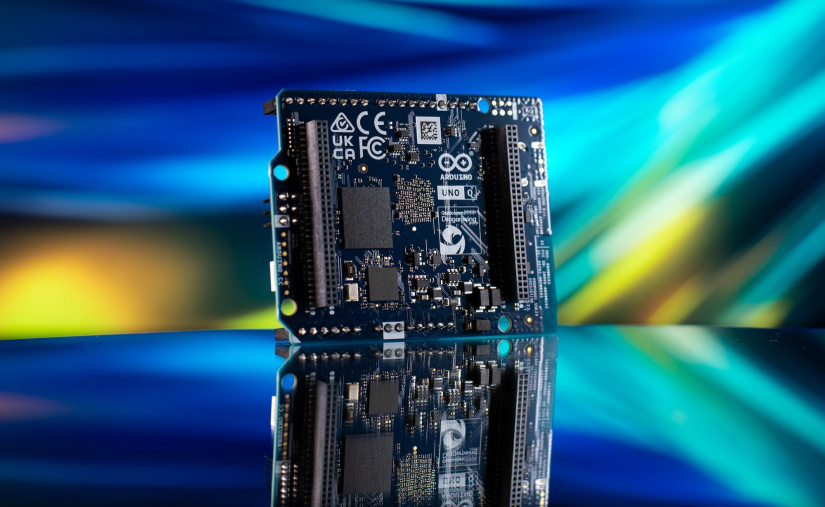

Qualcomm at the Core: High-Performance, Low-Power Computing
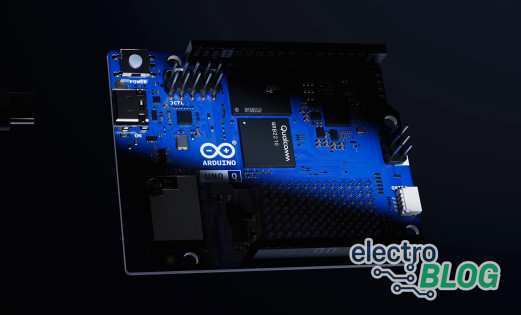
At the heart of the Arduino Uno Q is the Qualcomm QRB2210 system-on-chip, a processor that immediately redefines expectations for an Arduino-compatible board. Built around a quad-core ARM Cortex-A53 architecture running at up to 2 GHz, it provides the computational headroom required to run a full embedded Linux environment, manage multiple applications, and handle demanding workloads without feeling constrained.
Beyond raw CPU performance, the QRB2210 brings integrated graphics support and hardware acceleration designed for AI and data-intensive tasks. This allows the Uno Q to perform local processing, run inference workloads, and support visual output without relying on external hardware or constant cloud connectivity. Intelligent applications that would previously sit outside the scope of a typical Arduino project now feel entirely achievable on a single platform.
What makes this especially compelling is the focus on efficiency. Drawing on Qualcomm’s experience in mobile and edge devices, the QRB2210 delivers strong performance while maintaining low power consumption. Compared to the microcontrollers that have traditionally powered Arduino boards, this represents a significant leap forward, offering desktop-class embedded computing in a compact form factor suited to real-world, power-conscious deployments.
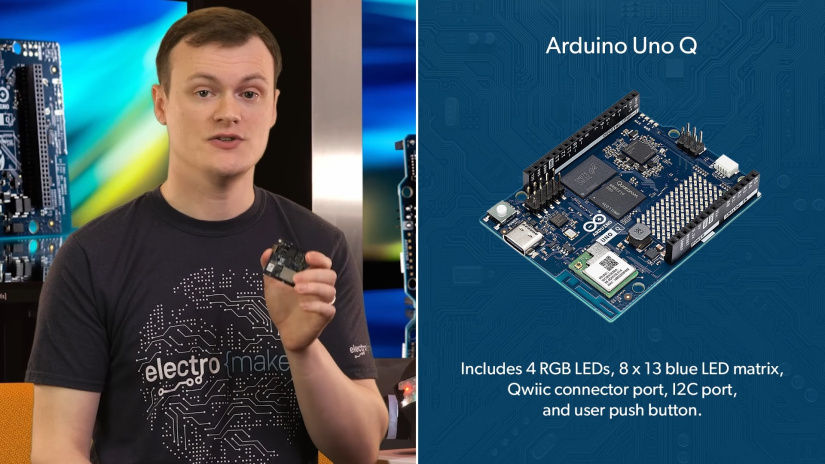
Dual-Architecture Design: Linux Meets Real-Time Control
Complementing the Qualcomm processor is an STM32U585 ARM Cortex-M33 microcontroller, and this secondary processor is what gives the Arduino Uno Q its real-time credibility. While embedded Linux excels at running applications and managing complex systems, it is not designed for deterministic timing. By offloading time-critical tasks to a dedicated microcontroller, the Uno Q preserves the precise, predictable behavior that has always been central to the Arduino platform.
- Precise motor and actuator control
- Deterministic sensor sampling and data acquisition
- Real-time signal monitoring and response
- Low-latency control loops for automation and robotics
Memory, Storage, and Onboard Hardware
The Arduino Uno Q is designed to feel complete straight out of the box, with memory, storage, and onboard components chosen to support both advanced software and hands-on experimentation. Rather than relying on external add-ons to become usable, the board integrates the essentials needed to start developing immediately.
- 2 GB of LPDDR4 system memory supporting multitasking and Linux-based applications
- 16 GB onboard eMMC storage for the operating system, applications, and user data
- Integrated RGB LEDs for visual feedback and status indication
- Built-in 8×13 blue LED matrix for basic graphics and user interaction
- User push button for direct input without additional hardware
- Quick connector port for fast expansion and prototyping
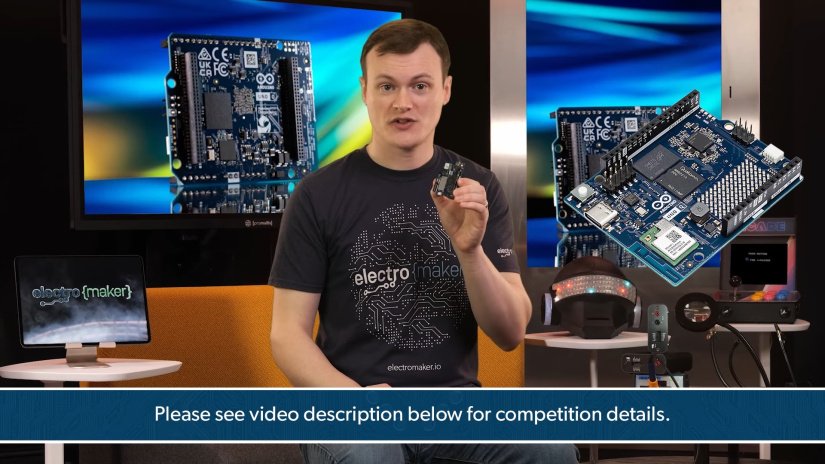
This combination of memory, storage, and onboard hardware removes much of the friction typically associated with getting started on advanced development boards. With the operating system and storage already in place, there is no need to source SD cards or external drives before beginning a project. The built-in LEDs, display matrix, and user controls allow for immediate experimentation, making it easy to test ideas, create simple interfaces, and start building without adding extra components.
Connectivity and Expansion Options
Despite its advanced internal architecture, the Arduino Uno Q remains familiar and approachable when it comes to connectivity and expansion. The board is designed to integrate smoothly into existing workflows, offering modern interfaces while preserving compatibility with the Arduino ecosystem that many users already know.
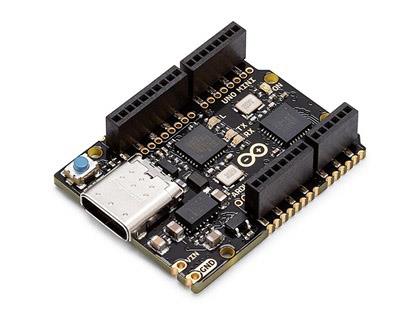
- USB-C connector providing power delivery, display output, and support for keyboards and mice
- Integrated Wi-Fi 5 for fast and reliable wireless networking
- Bluetooth 5.1 support for short-range communication and peripheral connectivity
- Classic Arduino Uno form factor enabling use with a wide range of existing shields
It is important to note that the Arduino Uno Q operates using 3.3 V logic rather than the 5 V levels found on some older Arduino boards. While many modern shields and peripherals are compatible, users should check voltage requirements carefully to ensure proper operation and avoid potential hardware issues.

What Can You Build With the Arduino Uno Q
With this level of performance and flexibility, a better question than what you can build with the Arduino Uno Q might be what you cannot. By bridging the gap between microcontroller projects and embedded Linux systems, the Uno Q opens up a wide range of applications that span learning, experimentation, and professional development.
- AI-assisted IoT platforms that analyze data locally before sending it to the cloud
- Smart cameras capable of motion detection, object recognition, or basic vision processing
- Predictive maintenance systems that monitor equipment and identify potential failures early
- Intelligent sensing solutions that process environmental data in real time
- Educational and hobbyist projects that scale naturally into professional prototypes
Robotics, Automation, and Edge AI Applications
The Arduino Uno Q truly comes into its own in systems where intelligent decision-making and precise hardware control need to work together seamlessly. By combining AI-capable Linux processing with a dedicated real-time microcontroller, the board allows complex logic, planning, and user interfaces to run alongside timing-critical control without interference. This architecture is especially valuable in robotics and automation, where even small delays can have a noticeable impact on performance.
In practice, Linux can manage high-level behavior such as navigation logic, state machines, or user interaction, while the STM32 microcontroller takes responsibility for motors, sensors, and fast control loops. This separation ensures consistent timing and responsive behavior, even when the system is under heavy computational load. By keeping decision-making and control local to the device, the Uno Q reduces latency and minimizes reliance on cloud connectivity, making it well suited to autonomous systems that need to operate reliably in real-world environments.
Why the Arduino Uno Q Represents the Future of Embedded Development
The Arduino Uno Q stands as a clear bridge between two worlds that have traditionally been kept separate. On one side are classic microcontrollers, valued for their simplicity, reliability, and real-time control. On the other are embedded Linux systems, chosen for their processing power and flexibility. By bringing these approaches together on a single, Arduino-compatible platform, the Uno Q reflects where embedded development is heading rather than where it has been.

Residing on the south coast of England, Rich has spent the last few years building Electomaker.io from the ground up. He is usually found behind a laptop coordinating the rest of the EM team and occasionally finding time to contribute articles to the blog. When not tapping away at a laptop, he can be found either paddleboarding, at the beach, playing golf (badly), or camping with his family.















Leave your feedback...