





Red Pitaya Gen 2: the next generation is here - whats new?
When a project moves beyond simple code and into the real world of signals, timing, and control, the hardware you choose starts to matter very quickly. Engineers and makers working with analog inputs, fast digital lines, or RF systems often discover that general purpose single board computers are not designed for that kind of work.
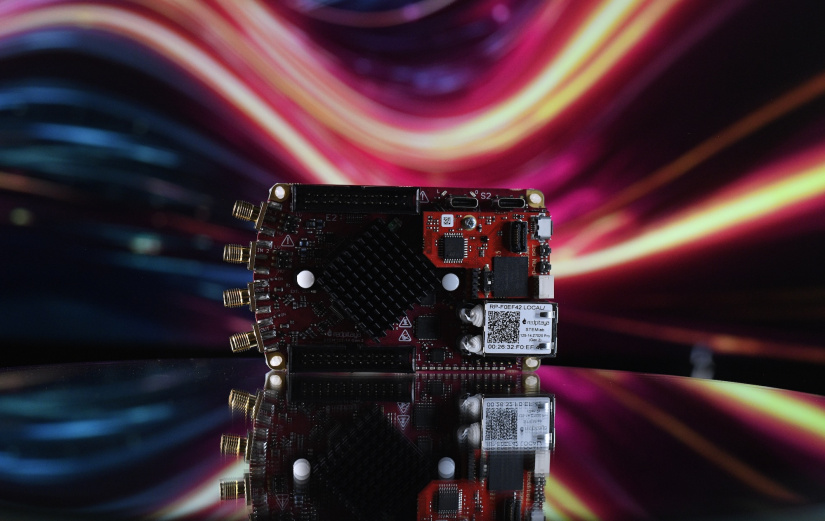
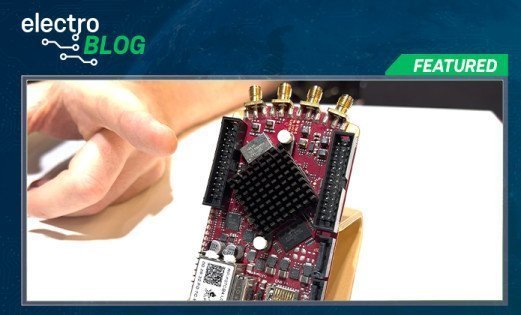
The Red Pitaya Pro Z7020 Gen 2 is built for exactly those situations. It is a compact measurement, signal processing, and control platform that combines FPGA logic, dual core ARM processing, and a high speed analog front end on a single board. Rather than behaving like a small desktop computer, it acts more like adaptable lab equipment that can be reshaped through software to suit different tasks.
This second-generation board builds on earlier Red Pitaya designs, improving signal quality, expanding memory, and updating connectivity to better match modern engineering workflows. Aimed at engineers, researchers, and advanced makers, it offers a practical way to work directly with real time data and hardware. For projects that need onboard storage or specific boot options, Red Pitaya offers an optional QSPI and eMMC add on module, this storage module is not included as part of the standard board. To understand where this platform fits and what it is capable of, it helps to first look at what the Red Pitaya Pro Z7020 Gen 2 actually is and how it differs from typical development boards.
What Is the Red Pitaya Pro Z7020 Gen 2?
The Red Pitaya Pro Z7020 Gen 2 is a development platform designed around the idea that measurement, control, and signal processing should be flexible and software driven. At its core is a Zynq 7020 system on chip, which combines a dual core ARM processor with FPGA logic, allowing tasks that require precise timing or real time response to run alongside higher level software. This architecture makes it well suited to applications that need to interact directly with the physical world rather than simply process data after the fact.
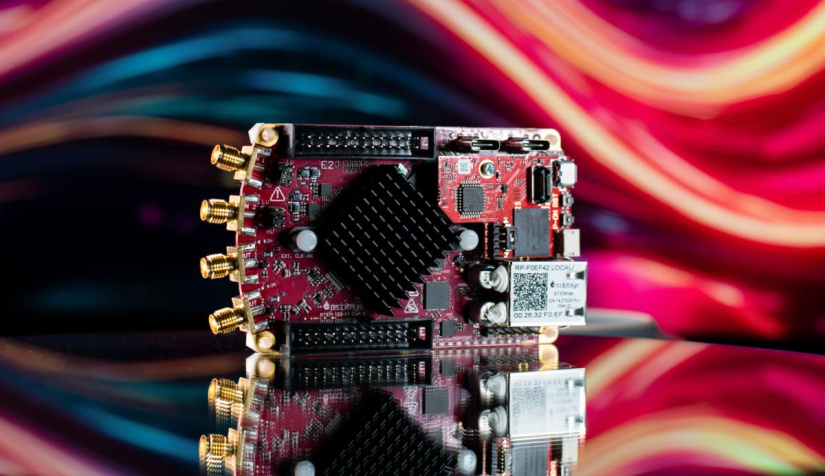
Alongside its processing capability, the board includes a high speed analog front end that enables accurate signal generation and capture. This allows it to function as a multi purpose measurement tool for tasks such as data acquisition, diagnostics, and system testing, all within a compact form factor. Instead of relying on fixed function hardware, much of its behavior can be defined in software, giving engineers the freedom to adapt the platform to different projects without changing the underlying hardware. If your application needs onboard flash storage or a specific boot configuration, you can add the optional QSPI and eMMC module to expand storage and boot options.
Compared to typical single board computers, which are optimized for general computing and user interfaces, the Pro Z7020 Gen 2 focuses on deterministic behavior and direct hardware access. It is managed through a browser based interface, so tools, visualizations, and control panels can be accessed remotely without installing dedicated software, making it easier to work across different development environments while keeping the hardware in one place. In deployments where the device needs to boot reliably as a standalone unit, the optional QSPI module can be used as part of the boot and storage setup.

What Has Changed in Gen 2?
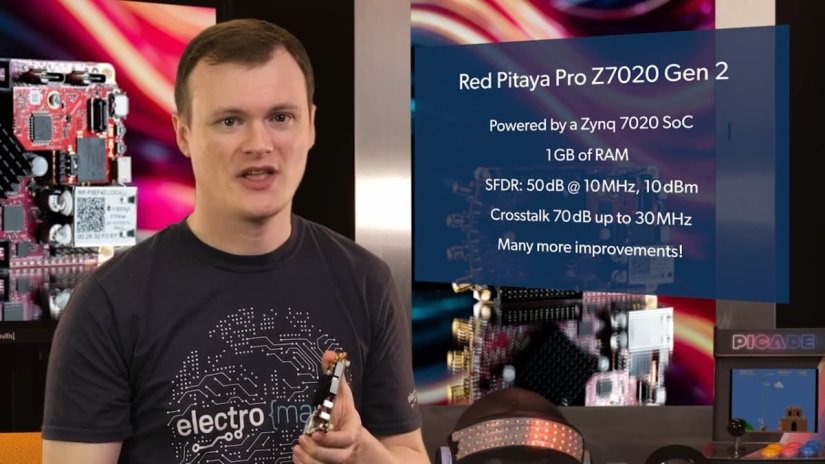
The second generation of the Red Pitaya Pro Z7020 focuses on refining performance and expanding flexibility rather than changing the core concept of the platform. The updates are aimed at improving signal quality, increasing available resources, and making the board easier to integrate into modern development setups. Gen 2 also supports optional storage expansion through the QSPI and eMMC add on module for users who need onboard storage or specific boot configurations.
Improved Memory and Signal Performance
One of the most noticeable updates in the Gen 2 Pro model is the improvement in both memory capacity and analog signal performance. These changes directly affect how the board behaves in demanding measurement, data capture, and diagnostic applications.
- 1 GB of system RAM on the Pro Z7020 model, providing more headroom for complex applications and data processing
- Improved spurious free dynamic range, helping deliver cleaner signal measurements
- Reduced overall noise for more reliable analog performance
- Improved channel isolation, which is especially important when working with multiple signals at once
Updated Connectivity and Expansion
Connectivity and expansion have also been revised to better match current engineering workflows. By updating interfaces and synchronization options, the Gen 2 platform becomes easier to deploy in both standalone and multi board setups. For users who need onboard flash storage or more flexible boot options, the optional QSPI and eMMC add on module can be added as part of the overall system configuration.
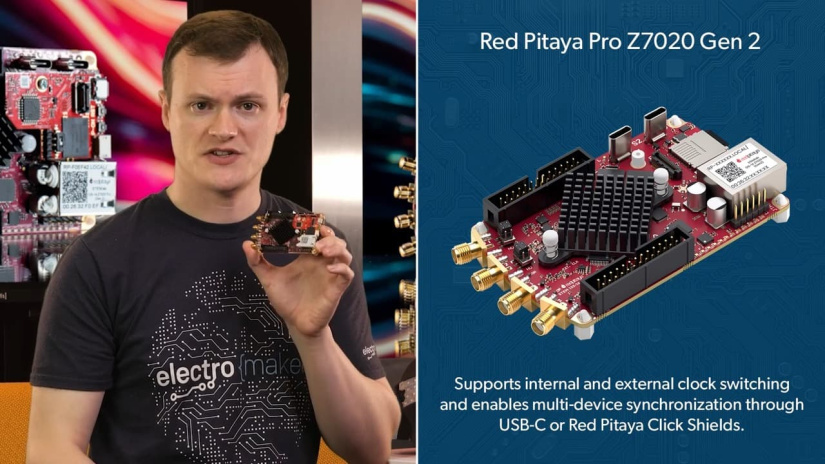
- Removal of SATA in favor of USB C, offering faster data transfer, longer cable runs, and better availability
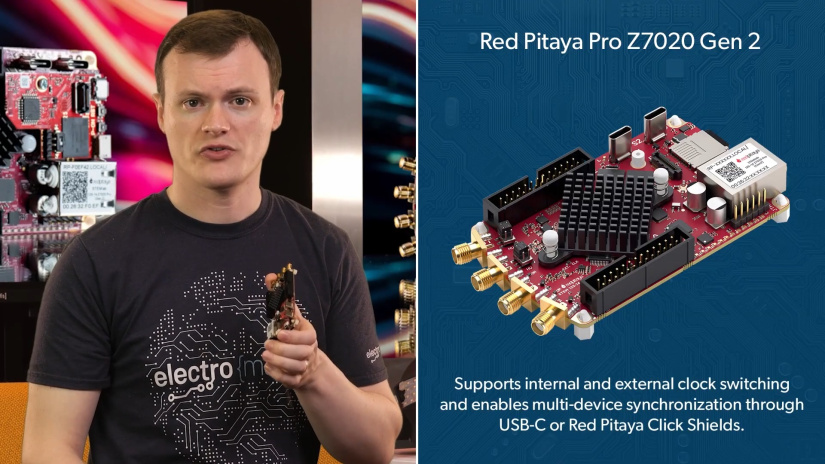
- Support for internal and external clock selection, allowing more precise timing control
- Multi board synchronization for applications that require coordinated signal generation or capture
- E3 connectors that enable external booting and additional high speed expansion
Hardware Architecture and Core Specifications
The Red Pitaya Pro Z7020 Gen 2 combines processing, programmable logic, and analog hardware into a compact platform designed for measurement and control tasks. Its architecture balances flexibility with performance, making it suitable for both laboratory use and embedded system integration. Storage and boot options can be expanded using the optional QSPI and eMMC add on module, which is not included with the standard board.
- System on chip: Xilinx Zynq 7020 combining dual core ARM processing with FPGA logic
- Memory: 1 GB RAM on the Pro Z7020 model for demanding applications
- Analog front end: High speed inputs and outputs designed for accurate signal capture and generation
- Connectivity: USB C and Ethernet for data transfer, control, and networking
- Expansion: E3 connectors supporting external boot options and high speed expansion
- Storage support: Optional QSPI and eMMC add on module for flexible boot and storage configurations
- Onboard controller: Integrated STM microcontroller for system management and control tasks
Software Environment and Open Source Support
The Red Pitaya Pro Z7020 Gen 2 is built around a software defined approach that allows much of its functionality to be shaped through code rather than fixed hardware. It runs the Red Pitaya operating system and is managed through a browser based interface, giving users access to measurement tools, configuration options, and custom applications without installing dedicated software. This setup makes it easy to work locally or remotely while keeping full control over both the processing system and the FPGA fabric. In setups that use the optional QSPI module, onboard storage can support specific boot workflows and more self contained deployments.
- Browser based control interface for remote access and visualization
- Compatibility with existing Red Pitaya applications and workflows
- Support for Python and MATLAB for scripting and data analysis
- SCPI support for instrument style control and automation
- Custom FPGA development for real time and hardware accelerated tasks
Measurement, Signal Capture, and Lab Replacement Use Cases
The Red Pitaya Pro Z7020 Gen 2 is often used in situations where traditional bench equipment would normally be required. Its combination of FPGA processing and analog inputs allows it to perform tasks such as signal capture, waveform generation, and real time analysis in a single device. For development, diagnostics, and experimentation, this can reduce the need for separate oscilloscopes, logic analyzers, or signal generators, especially when flexibility matters more than fixed instrument controls.
Because much of the platform is software defined, the same hardware can shift between roles depending on the application. One moment it may be capturing data for analysis, the next it may be acting as a control interface or monitoring system. If the system is configured with the optional QSPI and eMMC module, it can also support more standalone or embedded installations where onboard storage and predictable boot behavior are important.
Browser based access also plays a key role in how the board is used. Measurement tools and visualizations can be accessed remotely, allowing the hardware to remain connected in a lab, test rig, or enclosure while engineers interact with it from elsewhere. This approach supports distributed workflows and makes it easier to integrate the platform into automated test setups or long running experiments.
Low Power and Embedded System Applications
In embedded systems, power consumption and real time behavior often matter more than raw processing speed. The Red Pitaya Pro Z7020 Gen 2 is well suited to these environments because it combines programmable logic with an ARM processor, allowing time critical tasks to run at the hardware level rather than relying on a general purpose operating system alone. This makes it a practical choice for applications where predictable timing and direct control of inputs and outputs are required. In embedded deployments that need onboard flash storage and consistent boot configuration, the optional QSPI module can be added as part of the system setup.
Compared to typical single board computers, which are designed primarily for user interfaces and high level software, the Pro Z7020 Gen 2 offers far greater control over low level behavior. This is particularly useful in robotics, astronomy systems, and embedded control projects, where precise signal handling and synchronization are essential. Its compact form factor and efficient design also make it easier to integrate into existing systems that need to add measurement or control capability without a significant increase in power or space requirements.
Optional QSPI and eMMC Add-On Module
For projects that require local boot media, onboard storage, or controlled power management, Red Pitaya offers an optional QSPI and eMMC add-on module for the Pro Gen 2 platform, including the Pro Z7020 Gen 2. The module connects via the E3 expansion interface and is not included with the base board.
It provides QSPI flash and eMMC storage, allowing flexible boot configuration and local data storage. This is useful in embedded or industrial deployments where external storage is not practical or where consistent boot behavior is required.
The module also adds power management features, including a physical power button for power on, power off, and safe shutdown. An onboard STM microcontroller handles power sequencing, boot source selection, and watchdog functionality for reliable operation in unattended setups.
Powered directly from the Red Pitaya board, the module requires no additional supply and exposes high speed GPIO lines connected to the Zynq FPGA. Firmware is open source and Arduino compatible, allowing customization of power and boot behavior.
Industrial and Extended Temperature Applications
The Red Pitaya Pro Z7020 Gen 2 is designed to operate beyond typical lab conditions, making it suitable for use in industrial and field environments. It supports an operating temperature range from minus 40 to 85 degrees Celsius, allowing it to function reliably in locations where heat, cold, or fluctuating conditions would be a concern for standard development boards.
This extended temperature support makes it easier to integrate the platform into industrial monitoring, automation, and control systems. It can be used alongside existing equipment such as PLCs or embedded within larger machines, where stable operation and consistent signal performance are essential. In installations where the device needs to be more self contained, the optional QSPI and eMMC add on module can provide onboard storage and support the desired boot configuration.
Practical Project Ideas
The flexibility of the Red Pitaya Pro Z7020 Gen 2 makes it suitable for a wide range of real world projects where measurement, control, and signal processing are required.
- Automated test rigs for hardware validation and production testing
- RF experimentation and signal analysis for research or development work
- Custom data acquisition systems for scientific and industrial monitoring
- Embedded control platforms for industrial automation and machinery
- Portable lab setups for field testing, education, or remote diagnostics
Why the Red Pitaya Pro Z7020 Gen 2 Makes Sense for Engineers and Makers
The Red Pitaya Pro Z7020 Gen 2 offers a balance of flexibility and control that suits engineers and makers working with real world signals. By combining programmable logic, processing, and analog hardware on a single platform, it allows users to move easily between measurement, analysis, and control tasks without changing tools or hardware.
Its compact design and software driven approach make it practical for both professional and experimental use. Engineers can integrate it into test setups or embedded systems, and add the optional QSPI and eMMC storage module when the application needs onboard storage or specific boot behavior.
Quick Specifications Recap
| Specification | Details |
|---|---|
| System on chip | Xilinx Zynq 7020 |
| Processor | Dual core ARM Cortex A9 |
| FPGA | Integrated programmable logic |
| Memory | 1 GB RAM (Pro Z7020) |
| Analog front end | High speed analog inputs and outputs |
| Connectivity | USB C, Ethernet |
| Expansion | E3 connectors |
| Storage support | Optional QSPI and eMMC add on module |
| Software | Red Pitaya OS with browser based interface |
| Operating temperature | Minus 40 to 85 degrees Celsius |
Final Thoughts
The Red Pitaya Pro Z7020 Gen 2 brings together measurement, signal processing, and control in a compact platform that suits both development and deployment. By building on earlier Red Pitaya designs and refining performance, connectivity, and reliability, it offers a practical way to work with real time signals without relying on multiple pieces of dedicated hardware. Optional add ons such as the QSPI and eMMC storage module allow the system to be configured for different boot and storage needs.
FAQs
What is the main difference between Red Pitaya Gen 1 and Gen 2?
The Gen 2 platform improves memory capacity, signal quality, connectivity, and expansion options while maintaining compatibility with existing Red Pitaya software and workflows.
Can the Red Pitaya Pro Z7020 Gen 2 replace lab equipment?
It can replace or supplement instruments such as oscilloscopes, signal generators, and logic analyzers for many development and diagnostic tasks, depending on accuracy and bandwidth requirements.
Is the Red Pitaya Pro Z7020 Gen 2 suitable for industrial use?
Yes. It supports an operating temperature range from minus 40 to 85 degrees Celsius, making it suitable for industrial and field environments when integrated correctly.
What programming languages and tools are supported?
The platform supports Python, MATLAB, SCPI, and custom FPGA development alongside the Red Pitaya operating system and browser based tools.
How does browser based access work?
The board hosts a web interface that allows users to control instruments, view data, and manage applications remotely through a standard web browser.
What is the Red Pitaya QSPI and eMMC add on module?
The QSPI and eMMC add on module is an optional expansion for Red Pitaya Pro Gen 2 boards. It provides onboard QSPI flash and eMMC storage, along with power management and configurable boot options that are not included on the base board.



Matt Walker is a key contributor at Electromaker. With extensive experience in digital marketing, he crafts high-impact strategies that boost visibility for tech brands. His campaigns help businesses stay ahead in the fast-moving world of electronics and embedded systems.












Leave your feedback...