





100 TOPS at the Edge - Recomputer J4012 Explained
Some edge computing platforms are designed for experimentation, to explore ideas, or as a gentle introduction to AI at the edge. The ReComputer J4012 sits firmly at the other end of that spectrum. This is not a casual single-board computer built for tinkering or light workloads, but a serious Edge AI computer engineered for demanding, real-world deployments.
GET A DISCOUNT ON ANY JETSON MODULE WITH SEEED STUDIO!
Spend $800, Get $50 off - Use Code JETSON50
Spend $1500, Get $100 - JETSON100
From the outset, the intent behind the ReComputer J4012 is clear. It combines a compact, deployment-ready form factor with the kind of compute capability normally reserved for far larger systems. This is reflected not only in its performance, but also in its price point, which places it squarely in the professional category. The J4012 is designed for users who know exactly what they need from an edge platform and are willing to invest in the hardware required to deliver it.
At the heart of the system is an NVIDIA Jetson Orin NX module, a platform built specifically for low-latency AI inference and energy-efficient performance at the edge. Rather than trying to double as a general-purpose PC, the ReComputer J4012 focuses entirely on what matters for edge workloads. Running AI models close to the data source, responding in real time, and doing so without reliance on remote servers or unpredictable network connections.
This clear focus is what defines the ReComputer J4012. It is a purpose-built AI system designed to solve edge computing problems properly, not a compromise between convenience and capability. For engineers and developers working with vision systems, sensor fusion, or real-time decision making, it represents a deliberate move away from general computing and towards hardware that is built to do one job extremely well.
What Is the ReComputer J4012?
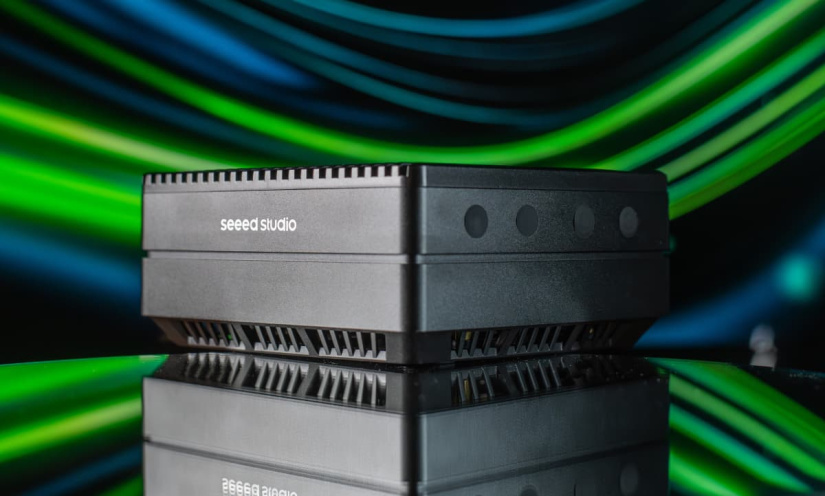
The ReComputer J4012 is a compact, high-performance Edge AI computer designed for running artificial intelligence workloads where latency, reliability, and on-device processing matter. Rather than targeting general-purpose computing or desktop-style use, it is built specifically to handle AI inference and real-time data processing at the edge, close to the source of the data.
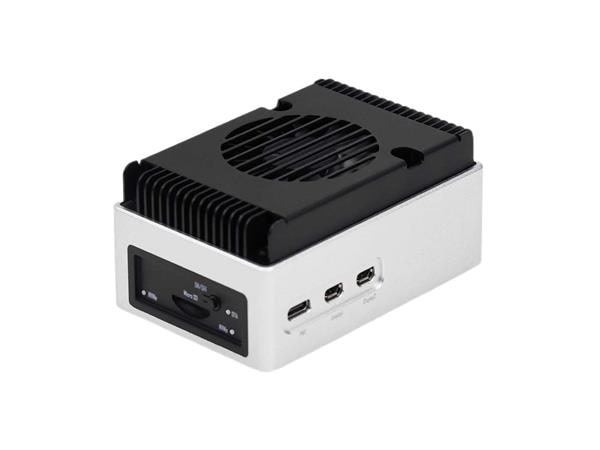
Positioned by Seeed Studio as an industrial-ready AI edge system, the J4012 arrives as a fully integrated solution. The compute module, storage, cooling, and power delivery are all housed within a robust, professional enclosure. This removes the need to assemble components or manage compatibility, allowing developers to focus on deploying AI applications rather than building the platform itself.
Unlike development kits that are intended primarily for evaluation or bench testing, the ReComputer J4012 is designed with deployment in mind. Its small form factor makes it suitable for installation in control cabinets, machinery, or edge enclosures, while its build quality and thermal design support continuous operation in demanding environments. This is hardware intended to leave the desk and become part of a working system.
By combining a purpose-built enclosure with powerful AI compute and a ready-to-run software stack, the ReComputer J4012 bridges the gap between prototyping and production. It offers a practical path from development to real-world edge deployment, without the compromises often associated with piecemeal or consumer-focused platforms.

Built for Edge AI, Not Office Work
The ReComputer J4012 is not designed to replace a desktop computer, nor is it intended for everyday productivity tasks such as document editing, web browsing, or office software. While it runs a full Linux-based environment, using this system as a general-purpose PC would be a misuse of its capabilities and a poor return on the hardware it provides.
The true strength of the J4012 lies in its AI acceleration. Its resources are optimised for running inference workloads, processing large data streams, and making decisions in real time. These are tasks that benefit directly from dedicated GPU and tensor hardware, not from the kinds of features that make a machine comfortable for casual or office use. Graphics output and user interface support exist to enable development and monitoring, not to serve as a daily workstation.
Where the ReComputer J4012 excels is in edge deployment. Running AI models locally removes the dependency on constant cloud connectivity and avoids the latency, bandwidth, and privacy concerns that come with sending data to remote servers. For applications such as computer vision, sensor-driven automation, or real-time analytics, even small delays can be unacceptable. Processing data at the edge ensures faster responses and more predictable system behaviour.
This clear separation of purpose is deliberate. The ReComputer J4012 is built to sit close to cameras, sensors, and machines, quietly doing the heavy lifting that AI workloads demand. It is a specialised tool for a specialised job, and when used in that context, it delivers capabilities that general-purpose systems simply are not designed to provide.
Jetson Orin NX 16 GB AI Accelerator
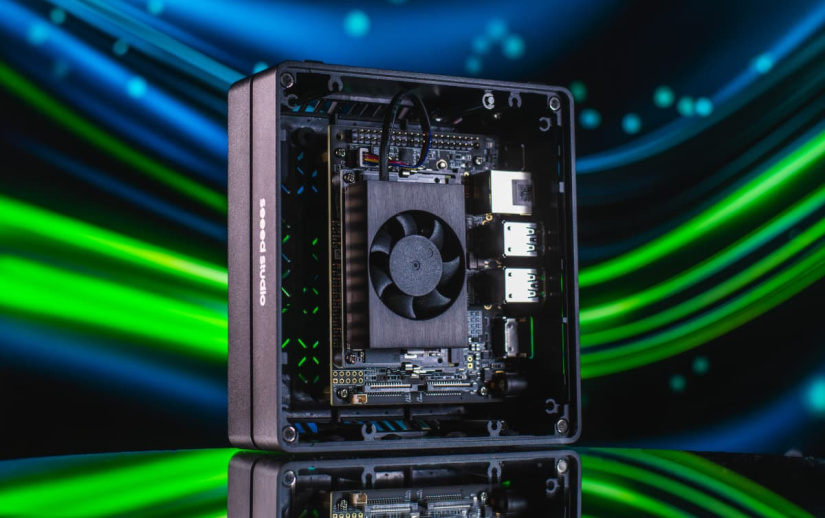
At the core of the ReComputer J4012 is the NVIDIA Jetson Orin NX 16 GB module, a purpose-built Edge AI accelerator designed to deliver high levels of AI performance within a compact and energy-efficient platform. This is the component that defines what the system can do, and why it belongs firmly in the professional edge AI category.
- AI module: NVIDIA Jetson Orin NX 16 GB
- GPU architecture: NVIDIA Ampere
- CUDA cores: 1,024 for massively parallel compute workloads
- Tensor Cores: 32 dedicated units for accelerated deep learning inference
- AI performance: Up to 100 TOPS (INT8) for inference at the edge
This level of compute enables complex AI models to run directly on the device, without relying on remote servers. Tasks such as real-time object detection, image classification, sensor fusion, and decision making can all be performed locally, reducing latency to a minimum. For many edge applications, the ability to react instantly to incoming data is far more important than raw cloud-scale throughput.
The TOPS figure is particularly relevant for inference workloads. It represents how many trillions of operations per second the system can perform when running optimised AI models. Higher TOPS allow more complex models to run faster, or multiple models to operate in parallel, all while maintaining predictable performance. In practical terms, this means smoother real-time processing and more reliable outcomes at the edge.
By integrating NVIDIA Jetson AI technology into a compact, deployment-ready system, the ReComputer J4012 makes high-performance inference accessible outside the data centre. It brings the power of modern AI acceleration directly to the point where data is generated, enabling faster, more resilient, and more efficient edge AI solutions.
CPU, Memory, and Storage Architecture
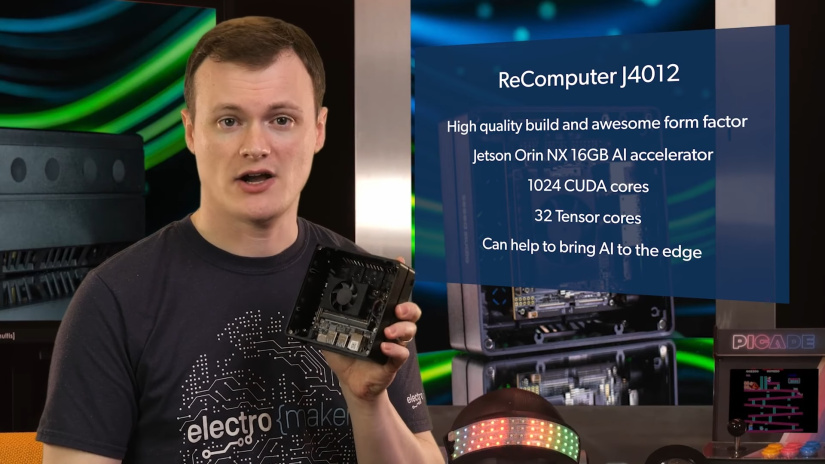
While the AI accelerator defines the headline capability of the ReComputer J4012, the surrounding system architecture plays an equally important role in ensuring consistent and reliable performance. Every component is selected to support sustained edge AI workloads rather than short bursts of consumer-style usage.
At the heart of the system is an ARM Cortex-A78AE CPU running at up to 2.0 GHz. This processor is well suited to coordinating AI pipelines, handling data pre-processing, managing I/O, and running application logic alongside inference workloads. It provides the control and responsiveness required for real-time systems without introducing unnecessary overhead.
The system is equipped with 16 GB of LPDDR5 memory, offering both the capacity and bandwidth needed for modern AI applications. Large vision models, multi-stream video processing, and sensor-rich systems can quickly consume memory, and having sufficient headroom helps maintain stability under load. Rather than chasing extreme specifications, this configuration strikes a practical balance between performance, efficiency, and reliability.
Storage is handled by an integrated 128 GB NVMe SSD, delivering fast and predictable I/O performance. For edge AI workloads, this is particularly important. NVMe storage significantly reduces the time required to load and swap large AI models, datasets, and application assets. This can have a noticeable impact on startup times and system responsiveness, especially in deployments where models are updated or reloaded regularly.
Together, the CPU, memory, and storage architecture of the ReComputer J4012 is designed to prioritise throughput and stability over consumer-focused features. The result is a system that remains responsive and dependable under continuous AI workloads, making it well suited to real-world edge deployments where consistency matters just as much as raw performance.
Software Stack and JetPack SDK
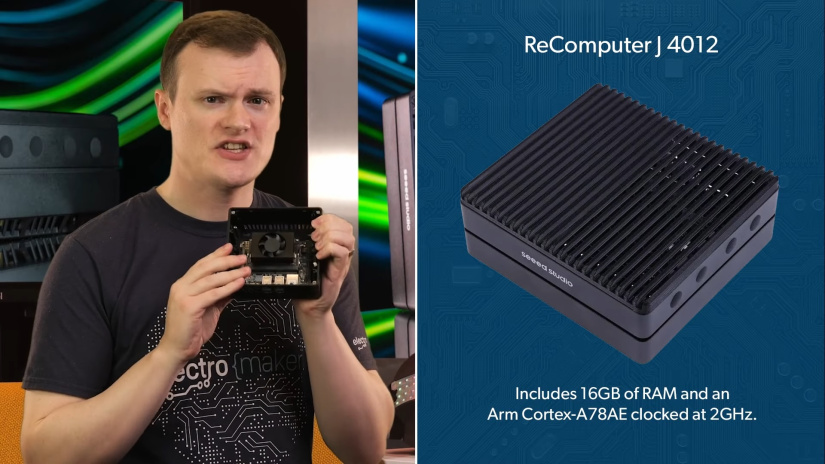
The ReComputer J4012 is supported by a mature and well-integrated software stack that is designed to get AI applications running quickly and reliably. With the NVIDIA JetPack SDK pre-installed, the system removes much of the initial setup work that can slow down edge AI development, allowing engineers to move straight into building and testing their applications.
JetPack provides access to NVIDIA’s core acceleration and AI frameworks, including CUDA for GPU computing, TensorRT for highly optimised inference, and DeepStream for high-throughput video analytics. Together, these tools form a proven foundation for developing and deploying AI workloads at the edge, particularly in vision-based and real-time processing applications.
This integrated approach significantly reduces friction during development. Drivers, libraries, and dependencies are already configured to work with the underlying hardware, minimising compatibility issues and streamlining the deployment process. For teams working to tight schedules, this can make a meaningful difference in how quickly a system moves from concept to deployment.
By building on NVIDIA’s established software ecosystem, the ReComputer J4012 aligns with widely used development workflows and best practices. This ensures that applications developed on the platform benefit from ongoing updates, strong documentation, and broad community support, all of which contribute to long-term maintainability and confidence in production environments.
Physical Design, Thermals, and Operating Environment
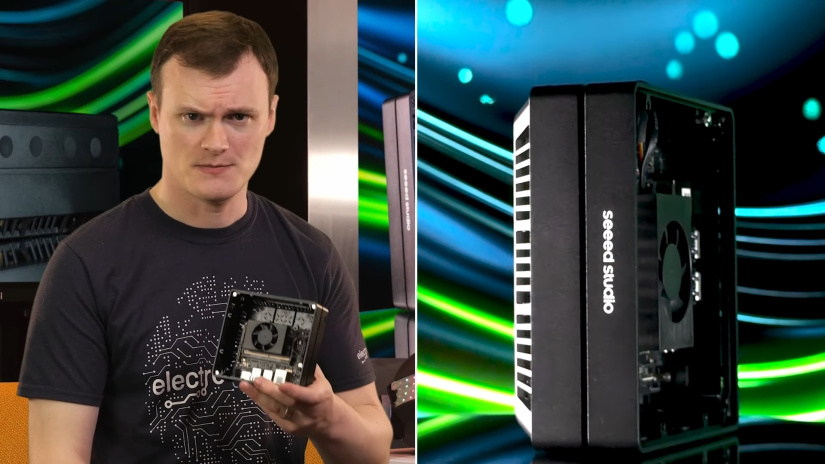
The ReComputer J4012 is designed to move beyond the lab and operate reliably in real-world environments. Its physical construction reflects this focus, combining a compact footprint with a robust enclosure suited to continuous operation in industrial and commercial settings.
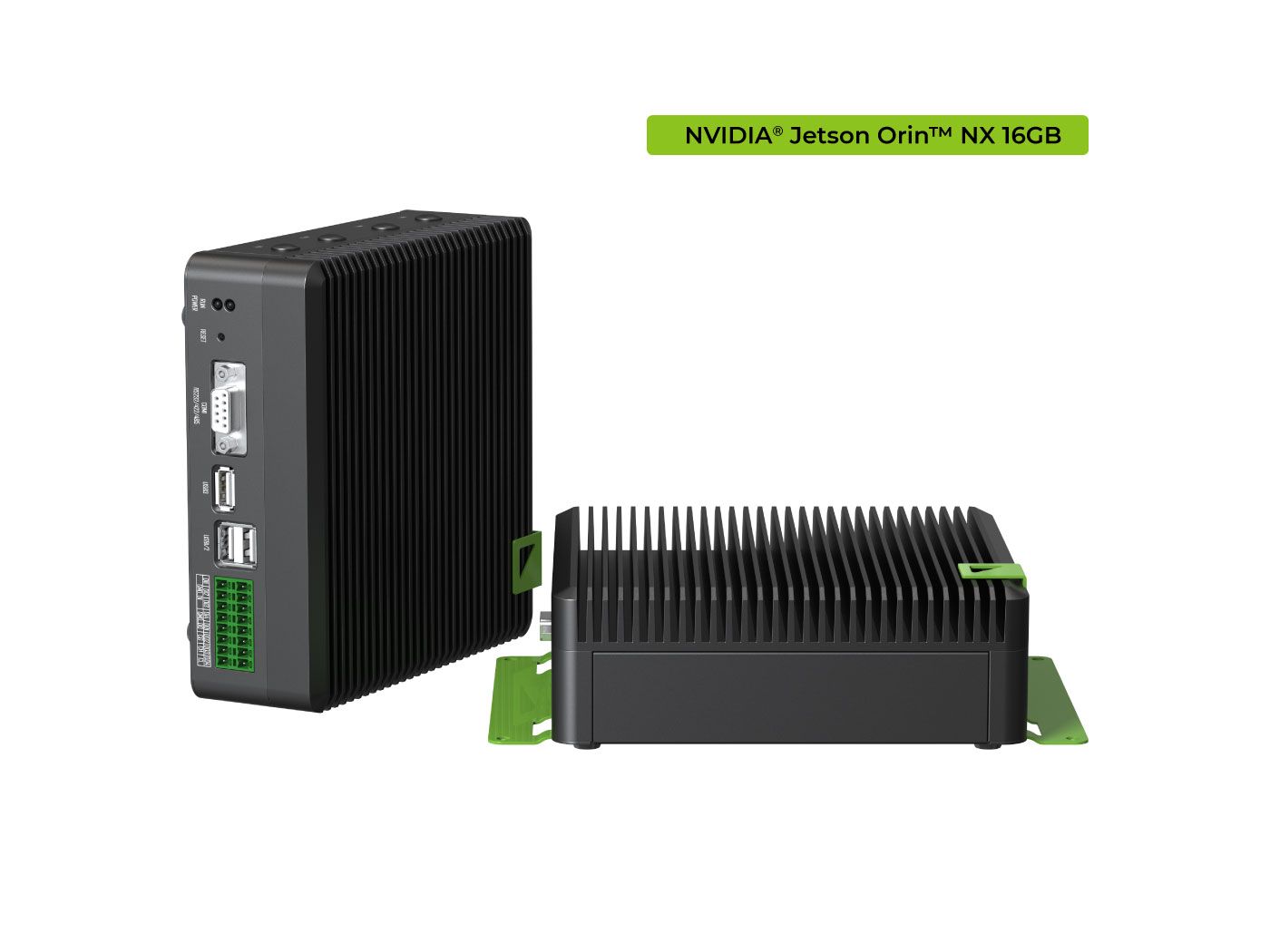
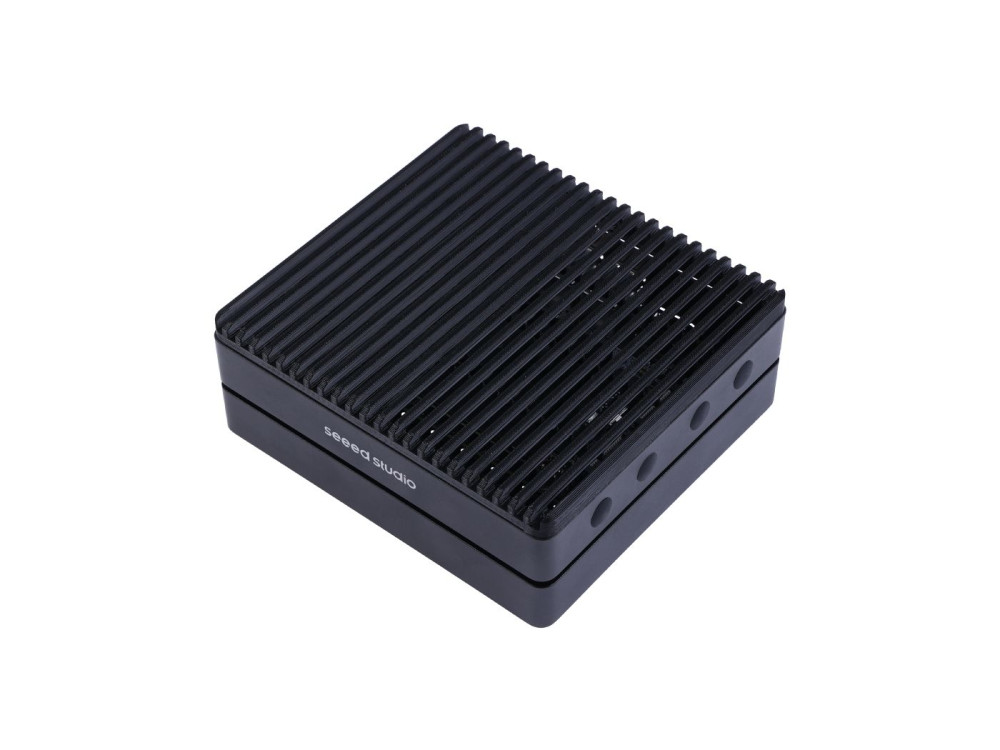
Measuring 130 × 120 × 58.5 mm, the system offers a small form factor that is easy to integrate into machinery, control cabinets, or dedicated edge enclosures. The metal chassis provides both mechanical protection and improved thermal performance, helping to dissipate heat generated by sustained AI workloads.
Thermal management is handled through a carefully designed cooling solution that prioritises stability and reliability. Whether operating with passive cooling or controlled airflow, the system is engineered to maintain consistent performance without excessive noise or reliance on consumer-grade cooling components. This makes it well suited to deployments where access for maintenance may be limited.
The operating temperature range of -10°C to 60°C further reinforces its suitability for non-domestic environments. From industrial floors and warehouses to edge cabinets and distributed installations, the ReComputer J4012 is built to withstand conditions that would challenge typical consumer hardware.
This focus on physical resilience and thermal stability ensures that the system can be deployed with confidence in demanding locations, delivering reliable edge AI performance wherever it is needed.
Connectivity and I/O for Edge Deployment

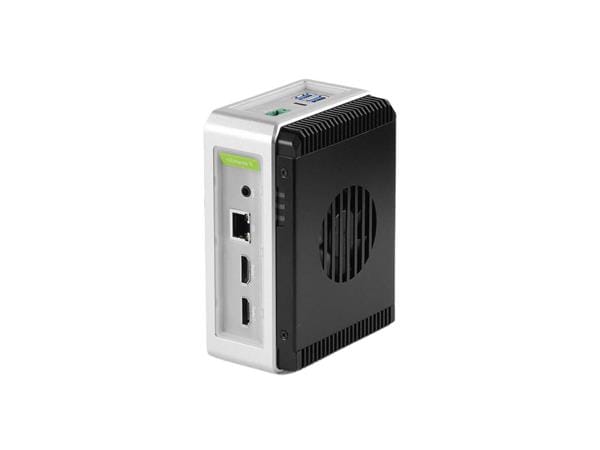
Effective edge AI systems depend on reliable connectivity to the devices and data sources around them, and the ReComputer J4012 is equipped with the interfaces needed to integrate cleanly into real-world deployments. Its I/O selection is focused and practical, providing the connections required for edge workloads without unnecessary consumer-oriented additions.
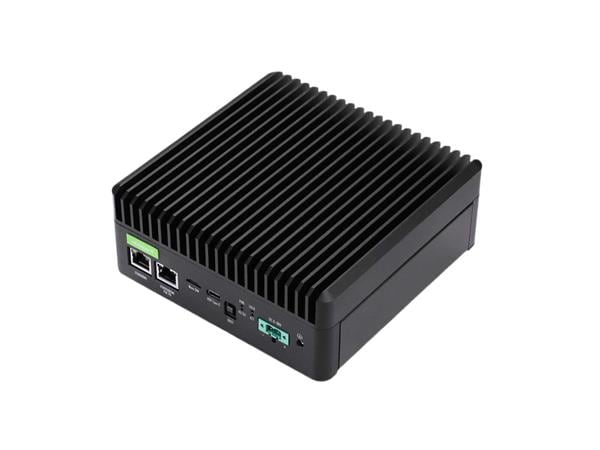
Ethernet connectivity enables stable, high-bandwidth networking for data transfer, system management, and integration with wider infrastructure. This is particularly important in industrial and commercial environments, where wired connections are often preferred for reliability and predictable performance.
The system also includes multiple USB ports for connecting peripherals such as cameras, storage devices, or additional interfaces. These ports make it easy to attach vision sensors, depth cameras, or other external hardware commonly used in AI-driven systems. An HDMI output is provided for setup, monitoring, and debugging, allowing direct access to the system when a display is required.
Rather than aiming to be a minimal I/O platform or a feature-heavy consumer device, the ReComputer J4012 strikes a deliberate balance. Its interfaces are chosen to support sensors, cameras, and automation equipment while keeping the overall design clean and deployment-focused. This approach ensures flexibility where it matters, without cluttering the system with ports that add little value in edge AI applications.
Real-World Edge AI Applications
The hardware and software capabilities of the ReComputer J4012 translate directly into practical outcomes across a wide range of edge AI use cases. Its combination of high inference performance, low latency, and deployment-ready design makes it well suited to applications where decisions must be made quickly and reliably, close to the source of the data.
- Smart security and vision-based access control: The system can run computer vision models that go beyond simple motion detection, enabling identification of specific individuals, objects, or behaviours in real time. This makes it suitable for access control systems, intelligent surveillance, and security applications where fast and accurate responses are required.
- Warehouse robotics and autonomous vehicles: In controlled environments such as warehouses and logistics centres, the ReComputer J4012 can support vision-based navigation, obstacle avoidance, and object recognition. Processing this data locally allows autonomous systems to react immediately to changes in their surroundings.
- Predictive maintenance and industrial monitoring: By analysing live sensor data at the edge, the system can identify patterns that indicate wear, faults, or performance degradation. This enables earlier intervention, reduced downtime, and more efficient maintenance strategies without relying on constant cloud connectivity.
- Digital twins and real-time simulation: The platform can be used to run local simulations alongside live data streams, creating digital representations of physical systems. These digital twins allow engineers to monitor performance, test scenarios, and make informed decisions in near real time.
- Sensor fusion and low-latency decision systems: Combining inputs from multiple sensors such as cameras, lidar, and environmental sensors requires fast processing and predictable timing. The ReComputer J4012 is well suited to fusing these data sources and producing timely outputs for control and automation systems.
Across these applications, the common requirement is dependable, low-latency AI processing at the edge. By handling inference locally, the ReComputer J4012 enables systems that are faster, more resilient, and better suited to environments where immediate response is critical.
Why Edge AI Beats Cloud AI for These Workloads
For many AI applications, where and how data is processed is just as important as the model itself. In workloads that demand fast responses and consistent behaviour, running AI at the edge offers clear advantages over relying on cloud-based systems.
Latency is one of the most critical factors. Sending data to a remote server for processing and waiting for a response introduces delays that can be unacceptable in real-time systems. By performing inference locally, edge AI systems can react immediately to incoming data, enabling faster and more predictable decision making.
Edge processing also removes dependence on continuous network stability. In industrial environments, warehouses, or distributed installations, reliable high-bandwidth connectivity cannot always be guaranteed. Running AI models directly on the device ensures that systems continue to operate even when network connections are limited or unavailable.
Data privacy and sovereignty are increasingly important considerations. Processing sensitive data locally reduces the need to transmit information beyond the deployment site, helping organisations maintain greater control over how data is handled and stored. This can simplify compliance and reduce exposure in regulated or security-conscious environments.
Over time, edge AI can also lead to lower operational costs. Reducing data transfer, cloud compute usage, and ongoing service fees can make a significant difference in long-term deployments, particularly for systems that generate large volumes of data.
The ReComputer J4012 is architected specifically to support this edge-first approach. Its high-performance AI acceleration, fast local storage, and deployment-ready design make it well suited to running demanding AI workloads where low latency, reliability, and local control are essential.
Quick Specifications Recap
| Specification | Details |
|---|---|
| AI module | NVIDIA Jetson Orin NX 16 GB |
| CPU | ARM Cortex-A78AE up to 2.0 GHz |
| Memory | 16 GB LPDDR5 |
| Storage | 128 GB NVMe SSD |
| I/O | Ethernet, USB ports, HDMI output |
| Operating temperature | -10°C to 60°C |
| Physical dimensions | 130 × 120 × 58.5 mm |
GET A DISCOUNT ON ANY JETSON MODULE WITH SEEED STUDIO!
Spend $800, Get $50 off - Use Code JETSON50
Spend $1500, Get $100 - JETSON100
Final Thoughts
The ReComputer J4012 stands as a clear example of what a modern edge AI system should be. It is not designed to blur the line between hobbyist experimentation and professional deployment, but to address edge workloads with the performance, reliability, and focus they demand.
By combining the NVIDIA Jetson Orin NX platform with a balanced system architecture and a deployment-ready design, it delivers low-latency, high-performance AI processing exactly where it is needed. Running inference locally allows systems to respond in real time, operate independently of cloud infrastructure, and maintain predictable behaviour in demanding environments.
For those building edge AI solutions that need to work consistently and at scale, the ReComputer J4012 offers a focused and capable platform that is designed to do one job well, and do it properly.

Residing on the south coast of England, Rich has spent the last few years building Electomaker.io from the ground up. He is usually found behind a laptop coordinating the rest of the EM team and occasionally finding time to contribute articles to the blog. When not tapping away at a laptop, he can be found either paddleboarding, at the beach, playing golf (badly), or camping with his family.


















Leave your feedback...