


NVIDIA Jetson Compared: Choosing the Right Edge AI Module
Artificial intelligence has quietly become a core part of modern embedded systems. From vision processing in cameras to decision making in robots, automation equipment, and industrial inspection systems, AI is now expected to run reliably and in real time. In many of these applications, AI is not an abstract software layer but a practical tool that must interact directly with sensors, motors, and physical environments.
GET A DISCOUNT ON ANY JETSON MODULE WITH SEEED STUDIO!
Spend $800, Get $50 off - Use Code JETSON50
Spend $1500, Get $100 - JETSON100
Running AI in these contexts introduces constraints that do not exist in cloud or desktop computing. Latency, power consumption, and data privacy often make remote processing impractical, especially for machines that move, operate offline, or rely on battery power. This is why embedded and edge AI workloads require dedicated hardware designed to handle parallel computation efficiently while staying within tight thermal and power limits.
This article compares the NVIDIA Jetson family of embedded AI platforms, looking at how each module fits different performance and deployment needs. By examining processing capability, power consumption, form factor, and target applications, the goal is to help you choose the right Jetson platform for your specific edge AI project.
Cloud AI vs Local Inference at the Edge
Cloud-based AI offers access to large-scale computing resources, but it introduces delays that can be problematic in real-world systems. Sending sensor data to a remote data center and waiting for a response adds latency that is highly dependent on network conditions. For applications such as robotics, machine vision, or automation, even small delays can reduce accuracy or affect system safety.
There are also practical concerns around privacy, reliability, and connectivity. Many embedded systems operate in environments where network access is limited or inconsistent. Relying on remote infrastructure means system behavior becomes tied to external connectivity, and sensitive data may leave the device, which is often undesirable in industrial or commercial deployments.
| Factor | Cloud AI | Local Inference |
|---|---|---|
| Latency | Dependent on network | Deterministic, low |
| Connectivity | Required | Optional |
| Data privacy | Data leaves device | Data stays local |
| Power efficiency | Not constrained | Critical |
| Reliability | Network-dependent | Self-contained |
Running AI directly on the device avoids many of these limitations, but it places greater emphasis on efficient hardware design. Robots, vehicles, and industrial machines must process data locally while operating within strict power and thermal limits. This is why edge AI platforms focus on delivering consistent performance with minimal energy consumption, enabling reliable operation without dependence on external infrastructure.
Why NVIDIA Jetson Is Widely Used for Edge AI
NVIDIA Jetson is not a single board but a family of embedded computing platforms designed specifically for edge AI workloads. Each Jetson module integrates CPU, GPU, memory, and dedicated accelerators into a compact form factor, allowing AI to run directly alongside sensors and control systems. This makes Jetson well suited to autonomous machines that require consistent, low-latency processing at the edge.
A key strength of the Jetson platform is its ability to deliver GPU-accelerated performance within relatively low power budgets. By adapting NVIDIA GPU architectures for embedded use, Jetson modules can handle demanding local inference tasks while remaining efficient enough for mobile, robotic, and industrial deployments. This balance between compute capability and power efficiency is central to Jetson’s widespread adoption.
Long-term usability is reinforced by NVIDIA’s software ecosystem, which provides optimized tools for AI inference, vision processing, and data pipelines. These tools are designed to work together and are supported consistently across Jetson generations, making the platform suitable for production systems with extended deployment lifecycles.
- CUDA for GPU acceleration
- TensorRT for optimized inference
- cuDNN for neural network primitives
- DeepStream for vision and video pipelines
This combination of purpose-built hardware and a mature software stack aligns closely with NVIDIA’s positioning of Jetson for autonomous machines, robotics, and industrial AI systems that must remain reliable and maintainable over time.
Power Consumption and Thermal Considerations
Power draw and thermal behavior are critical factors when selecting an embedded AI platform. As AI performance increases, so do cooling requirements, power delivery complexity, and enclosure design constraints. Understanding these trade-offs early helps avoid performance throttling and costly redesigns later.
| Module | Typical power range | Availability |
|---|---|---|
| Jetson Nano | 5–10 W | In stock |
| Jetson Xavier NX | 10–20 W | In stock |
| Jetson Orin NX | 10–25 W (up to 40 W) | In stock |
| Jetson AGX Orin | 15–60 W | In stock |
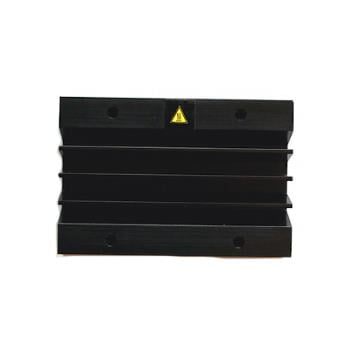
At the low end, the Jetson Nano operates within a very modest power envelope and can often be cooled passively using a small heat sink. This makes it suitable for compact enclosures, fanless designs, and educational environments where simplicity and low noise are important.
The Jetson Xavier NX and Orin NX sit in the middle of the power spectrum. These platforms typically require active cooling, especially under sustained AI workloads. Designs using these modules must account for airflow and thermal dissipation to maintain consistent performance and avoid throttling.
At the top of the range, the Jetson AGX Orin delivers significantly higher compute capability, but with correspondingly higher power and thermal demands. It requires robust active cooling and careful mechanical integration, making it best suited to industrial systems, autonomous machines, and deployments with reliable power delivery and ventilation.
In all cases, power consumption directly influences enclosure design, cooling strategy, and long-term reliability. Matching a Jetson module to the available thermal budget is just as important as selecting it based on raw AI performance.
Overview of the NVIDIA Jetson Lineup
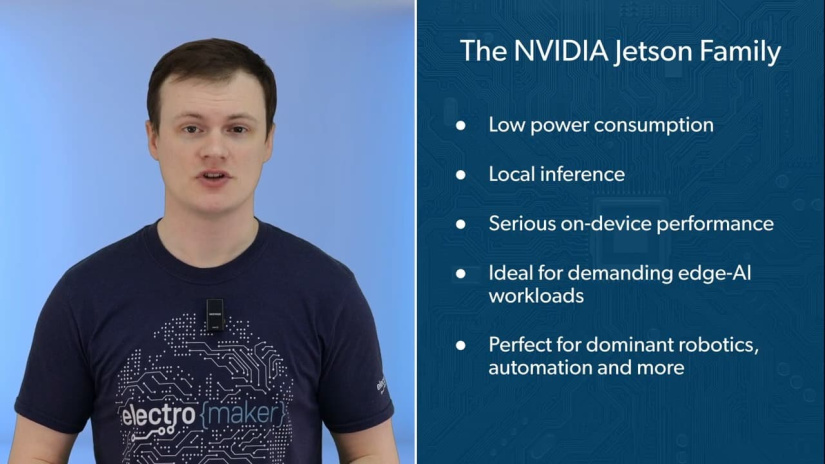
The NVIDIA Jetson family is structured as a tiered platform rather than a single device. Each module targets a specific level of performance, power consumption, and deployment complexity, allowing developers to select hardware that aligns closely with their application requirements.
The table below provides a high-level overview of where each Jetson module fits within the lineup. At this stage, the focus is on positioning and typical use cases rather than detailed specifications.
| Module | Performance tier | Typical use |
|---|---|---|
| Jetson Nano | Entry-level | Education, basic vision |
| Jetson Xavier NX | Mid-range | Production robotics, vision |
| Jetson Orin NX | High-performance | Advanced edge AI |
| Jetson AGX Orin | Top-tier | Autonomous systems |
NVIDIA Jetson Nano
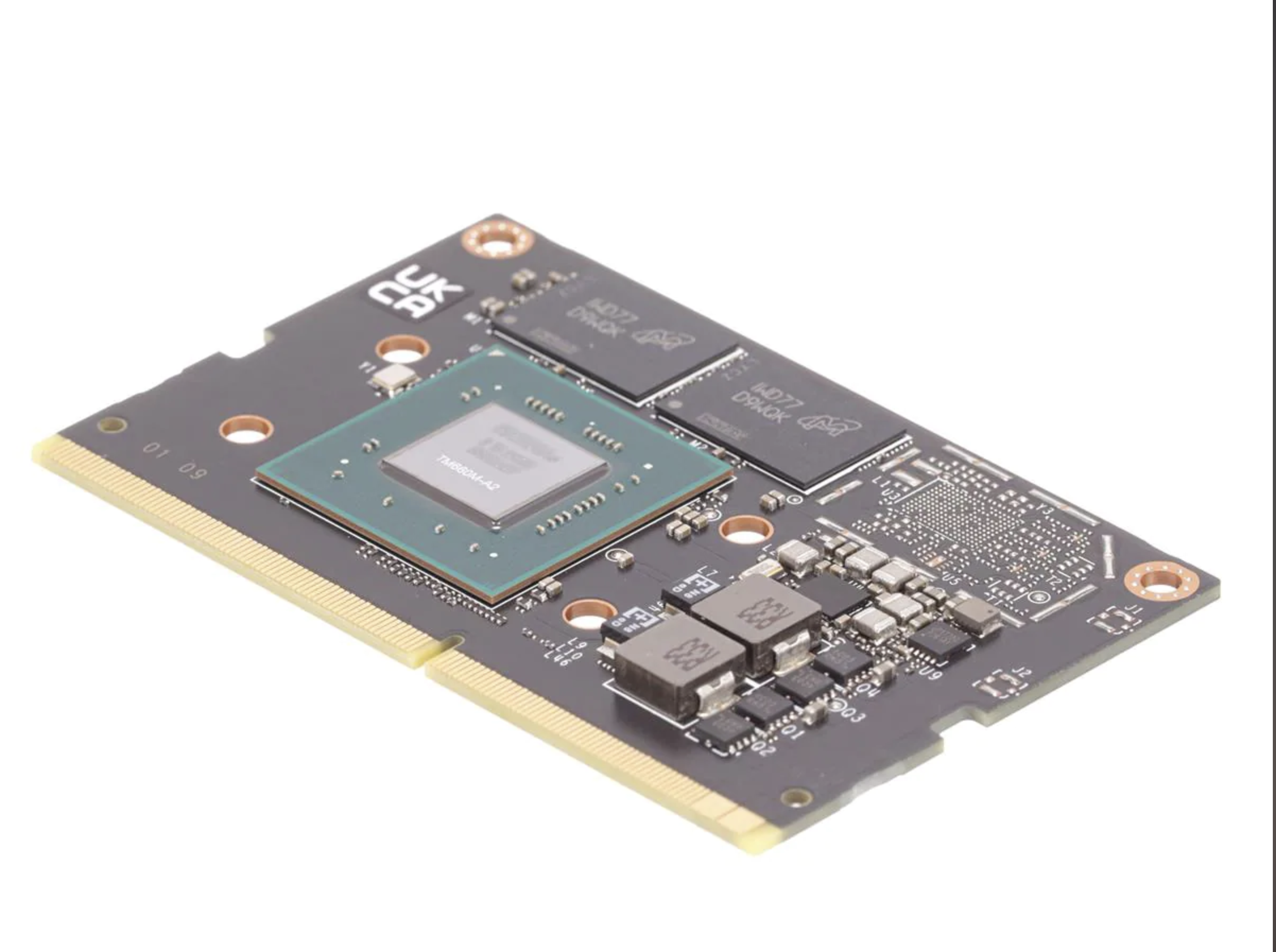
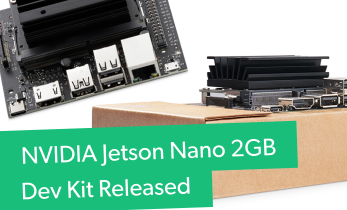
The Jetson Nano is the entry point to the Jetson ecosystem and is primarily used for learning, experimentation, and basic edge AI projects. It was designed to make GPU-accelerated inference accessible at low cost and low power.
Key characteristics:
- Architecture generation: Maxwell-based GPU
- Typical AI performance range: Entry-level inference
- Power envelope: Very low, often passively cooled
- Deployment maturity: Educational and legacy platform
While the Nano remains useful in classrooms and introductory projects, its limited performance and headroom make it unsuitable for new commercial designs or systems expected to scale over time.
Best for: Education, basic vision tasks, early AI experimentation.
NVIDIA Jetson Xavier NX
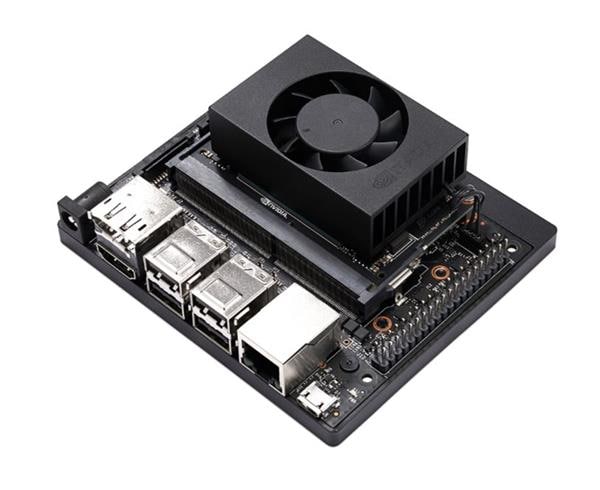
The Jetson Xavier NX represents the point where Jetson becomes a production-ready edge AI platform. It has been widely deployed in commercial systems and remains a reference point for balanced performance and efficiency.
Key characteristics:
- Architecture generation: Volta GPU with tensor cores
- Typical AI performance range: Mid-range edge inference
- Power envelope: Moderate, requires active cooling
- Deployment maturity: Proven in production systems
Although this module is now obsolete, its footprint compatibility influenced upgrade paths toward newer Orin-based designs. Existing systems continue to use it successfully in the field.
Best for: Existing commercial robotics, smart cameras, and industrial AI deployments.
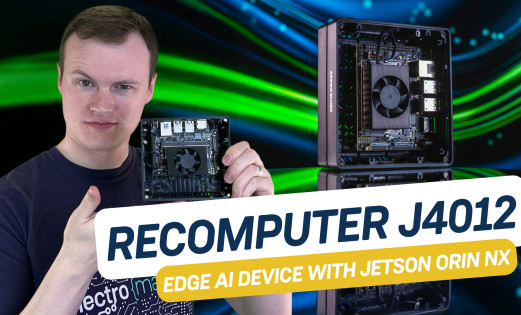
NVIDIA Jetson Orin NX

The Jetson Orin NX introduced a major generational leap in edge AI capability, enabling modern vision models and compact language models to run locally with improved efficiency.
Key characteristics:
- Architecture generation: Ampere-based GPU
- Typical AI performance range: High-performance edge inference
- Power envelope: Scalable from moderate to high
- Deployment maturity: Modern platform for future-focused designs
With flexible operating modes, the Orin NX allowed developers to trade power for performance as needed. Although now obsolete, it set the baseline for modern embedded AI expectations.
Best for: Advanced robotics, vision pipelines, and local inference systems in existing designs.
NVIDIA Jetson AGX Orin
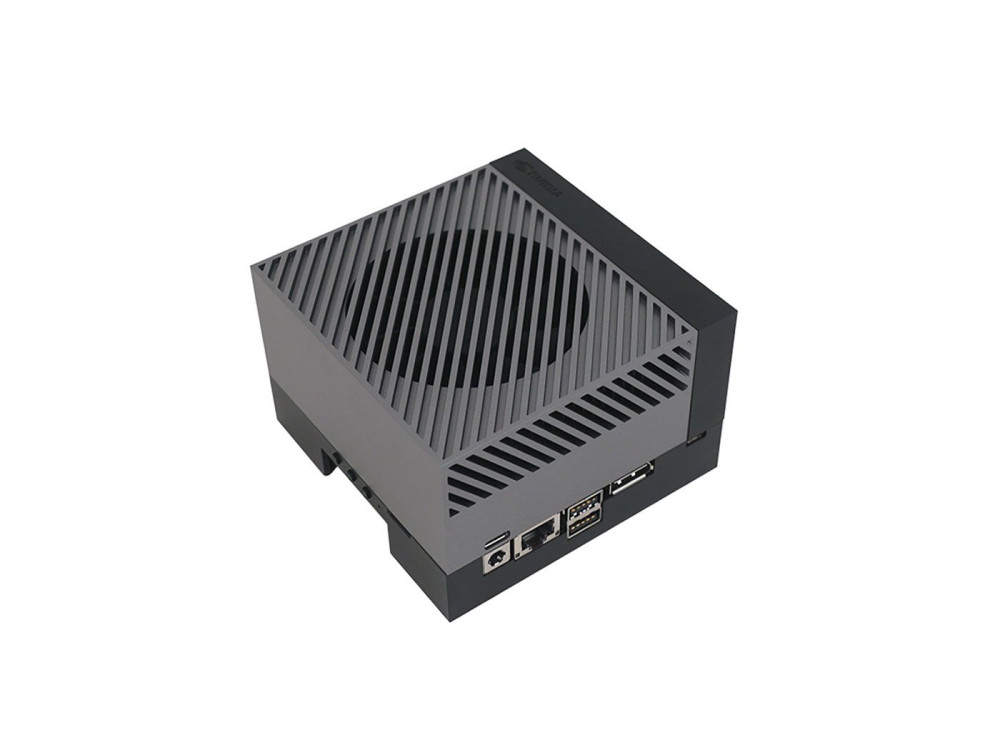
The Jetson AGX Orin sits at the top of the Jetson lineup and is designed for the most demanding embedded AI workloads. It delivers the highest level of compute available in a deployable Jetson form factor.
Key characteristics:
- Architecture generation: High-end Ampere-based platform
- Typical AI performance range: Top-tier embedded AI compute
- Power envelope: High, active cooling required
- Deployment maturity: Industrial and autonomous systems
This platform is intended for systems where performance takes priority over power constraints. Its higher thermal requirements mean careful mechanical and electrical design is essential.
Best for: Autonomous machines, multi-sensor fusion, industrial AI platforms, and long-term deployment.
This tiered approach makes it easier to narrow down suitable platforms before diving into detailed power, thermal, and performance considerations. As the sections that follow show, the differences between these modules become increasingly important as workloads scale from experimentation to full production deployment.
Form Factor, Cost, and Upgrade Considerations
Physical size, thermal design, and long-term cost all play an important role when selecting an embedded AI platform. While raw performance often draws the most attention, form factor compatibility and upgrade paths can have a significant impact on development time and total system cost.
- The Jetson Nano, Jetson Xavier NX, and Jetson Orin NX share the same system-on-module footprint.
- This shared form factor enables upgrades between these platforms without requiring a carrier board redesign.
- The Jetson AGX Orin uses a larger module and has different mechanical and thermal requirements.
- Overall system cost increases with performance, but higher-end modules offer greater long-term viability and software support.
For many projects, choosing a module that allows future upgrades can reduce risk and extend the usable life of a design. While lower-cost options may appear attractive initially, platforms with limited headroom can become a constraint as AI models and performance expectations continue to evolve.
How to Choose the Right Jetson Module
Selecting the right Jetson platform involves more than comparing raw AI performance figures. Real-world deployments introduce constraints around power, thermal design, and long-term support that can have a greater impact on success than peak compute capability alone.
Before choosing a Jetson module, consider the following factors:
- Power budget and cooling constraints within the target enclosure.
- Expected AI model size and complexity over the lifetime of the product.
- Latency, determinism, and reliability requirements for the application.
- Deployment lifespan and the need for ongoing software and security updates.
- Upgrade paths and scalability as performance demands increase.
Taking a forward-looking approach at this stage can help avoid costly redesigns later. A module that meets today’s requirements but lacks headroom may limit future updates, while a slightly more capable platform can extend the useful life of an embedded AI system.
Final Thoughts: Matching Jetson Hardware to Long-Term AI Goals
Each Jetson module serves a distinct role within the embedded AI landscape. Choosing the right platform depends on how much performance is required today, how those requirements may evolve, and whether the system is intended for learning, deployment, or long-term production use.
| Scenario | Recommended module |
|---|---|
| Learning and experimentation | Jetson Nano |
| Production edge AI today | Jetson Xavier NX |
| Future-ready edge inference | Jetson Orin NX |
| High-end autonomy | Jetson AGX Orin |
While the Jetson Nano remains a useful learning platform, it is no longer a strong choice for new commercial designs. The Xavier NX continues to offer a reliable balance of performance, power efficiency, and software support for production systems today. For applications that must remain relevant as AI models grow more demanding, the Orin family provides the necessary headroom, with the AGX Orin positioned at the top end for fully autonomous and sensor-rich systems.
GET A DISCOUNT ON ANY JETSON MODULE WITH SEEED STUDIO!
Spend $800, Get $50 off - Use Code JETSON50
Spend $1500, Get $100 - JETSON100
FAQs
Which NVIDIA Jetson module is best for robotics?
The best Jetson module for robotics depends on workload complexity. The Jetson Nano is suitable for educational and simple robotic projects. Commercial and industrial robots typically use the Jetson Xavier NX, while advanced robotics running modern vision models or local language processing are better suited to the Jetson Orin NX. High-end autonomous robots with multiple sensors often require the Jetson AGX Orin.
Can Jetson modules run local language models?
Yes, but capability varies by module. The Jetson Nano is limited to very small or experimental models. The Xavier NX can handle lightweight natural language processing tasks. The Orin NX and AGX Orin are designed to support compact local language models and transformer-based architectures for modern edge inference without cloud dependency.
What are the power and cooling requirements for Jetson platforms?
Power requirements range from approximately 5 W on the Jetson Nano to up to 60 W on the Jetson AGX Orin. Lower-power modules can often be passively cooled, while higher-performance platforms require active cooling and adequate airflow. Thermal design should be considered early to prevent performance throttling.
Are Jetson modules suitable for production deployment?
Yes. The Jetson Xavier NX, Orin NX, and AGX Orin are widely used in production systems across robotics, automation, and industrial AI. These platforms benefit from long-term software support and stable toolchains. The Jetson Nano is generally recommended for learning and prototyping rather than new commercial deployments.
How long does NVIDIA support Jetson software platforms?
NVIDIA provides extended software support for Jetson platforms through its JetPack ecosystem, including CUDA, TensorRT, and Linux-based operating systems. Higher-tier modules such as Xavier and Orin are designed for long deployment lifespans, making them suitable for products expected to remain in service for many years.

Residing on the south coast of England, Rich has spent the last few years building Electomaker.io from the ground up. He is usually found behind a laptop coordinating the rest of the EM team and occasionally finding time to contribute articles to the blog. When not tapping away at a laptop, he can be found either paddleboarding, at the beach, playing golf (badly), or camping with his family.











Leave your feedback...