


MSPM0G5187 Review: Bringing Real AI to Sub-$1 Microcontrollers
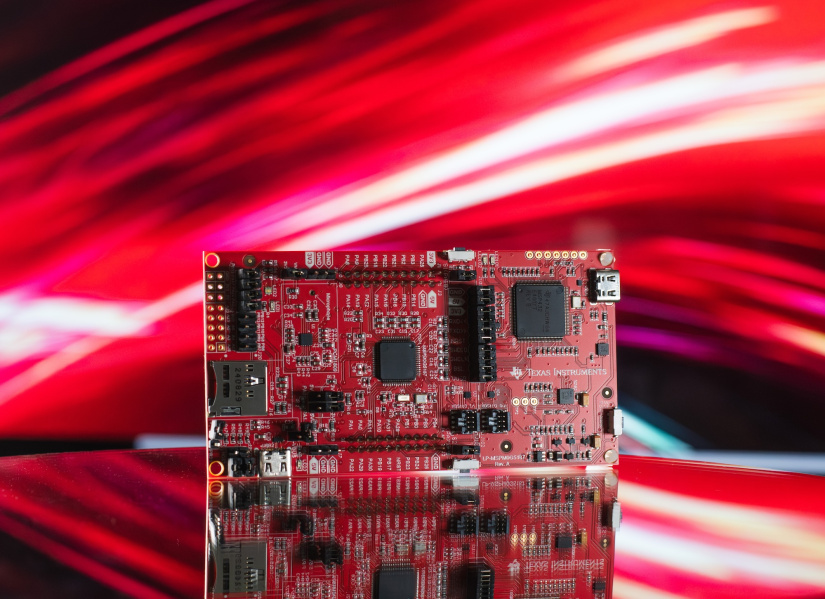
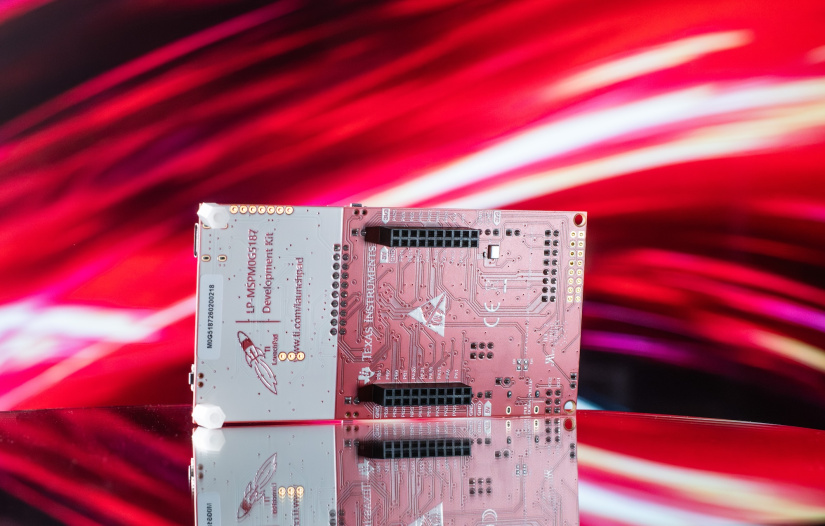
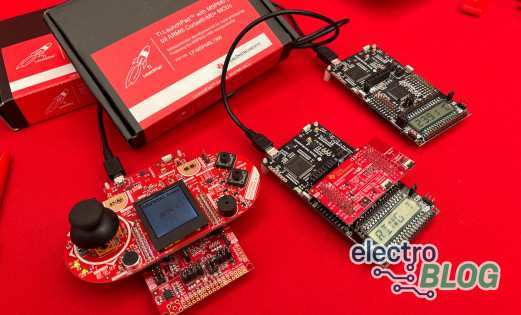
Today, we are taking a look at a seriously impressive little dev kit, the LP-MSPM0G5187 LaunchPad. At first glance, it looks like another capable microcontroller board. But once you dig into what it can actually do, things get very interesting, very quickly.
In this article, we will look at what makes the MSPM0G5187 stand out, why its on-chip TinyEngine™ NPU matters, and how Texas Instruments has made embedded AI development far more approachable than it has any right to be. We will also cover the hardware, software, and real-world applications that make this platform such a strong fit for both maker projects and commercial product development.

What is the MSPM0G5187?
The MSPM0G5187 is Texas Instruments’ answer to a question that has been floating around embedded design for years: how do you get useful AI onto genuinely low-cost microcontrollers? Not big processors. Not cloud-backed systems. Actual microcontrollers that can sit inside real products and make decisions locally.
And that is exactly why this device is so interesting. It combines an Arm® Cortex®-M0 CPU running at up to 80MHz with TI’s TinyEngine™ neural processing unit, giving developers a way to run small neural network models directly on-device. Add in 128KB of flash, 8KB of data flash, and up to 32KB of SRAM with ECC, and suddenly this is not just another MCU, it is a practical entry point into edge AI that still makes sense on cost-sensitive designs.
That last point matters. With pricing aimed at sub-$1 levels in volume, the MSPM0G5187 lands in a space where it is attractive not just to makers experimenting on the bench, but also to engineers trying to build intelligent features into products without wrecking the bill of materials.
Why the MSPM0G5187 Stands Out
Now, to be clear, this is not the kind of chip you use to run giant language models, generate surreal cat videos, or pretend your toaster needs a data center. That is not the point. The MSPM0G5187 is built for compact, efficient machine learning workloads like classification, prediction, and fault detection using real sensor data collected at the edge.
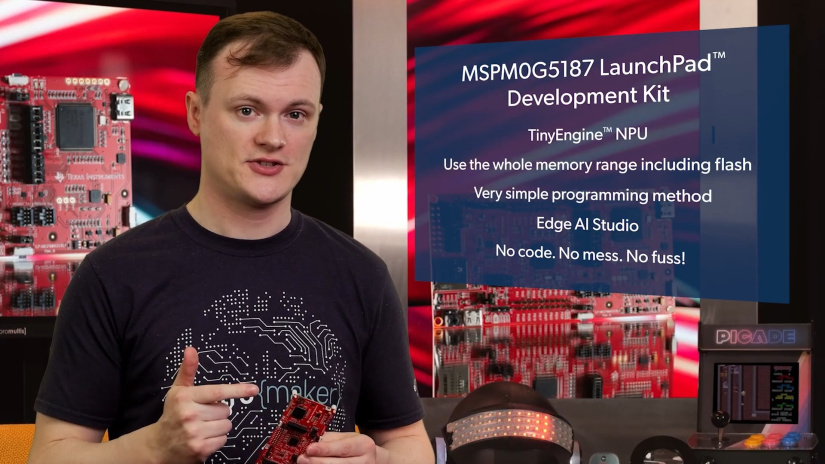
That is where the on-chip TinyEngine™ NPU starts to make a lot of sense. Instead of leaning entirely on the CPU for inference, the device includes a dedicated hardware accelerator designed for neural network processing. It supports multiple weight precisions, including 8-bit, 4-bit, and 2-bit operation, and gives the platform the kind of performance boost that makes embedded AI feel practical instead of theoretical.
Even better, the NPU has access to the internal memory bus, which opens up more of the available memory space for model storage and execution. For a tiny MCU, that is a big deal. It means you have more flexibility when balancing model size, memory use, and application complexity.
Simplified AI development, finally
Of course, powerful hardware is only half the story. The real reason this platform feels different is the software flow. Normally, embedded AI can turn into an exhausting chain of data collection, cleanup, model training, export conversion, code generation, integration, and firmware flashing. If you enjoy that sort of thing, fair enough. Most people do not.
TI has taken a much more sensible route with Edge AI Studio. You connect your hardware, stream sensor data into the GUI, label what is happening, and work through the setup using a visual workflow. The platform can then help train and deploy a model for the target device. No messy hand-built pipeline. No needless ceremony. Just a far more direct route from raw sensor input to working edge inference.
And honestly, that is what has been missing for a long time. Embedded AI has had enough clever silicon for years. What it has lacked is usability. Here, TI has clearly spent time solving that part of the problem as well.
MSPM0G5187 features and specs
Once you get into the hardware, the MSPM0G5187 starts looking even more compelling. You are getting a lot of device for a part that is still firmly aimed at low-cost embedded systems. It is not just the AI acceleration that stands out either. The whole MCU is built like something TI expects people to use in serious designs, because they almost certainly do.
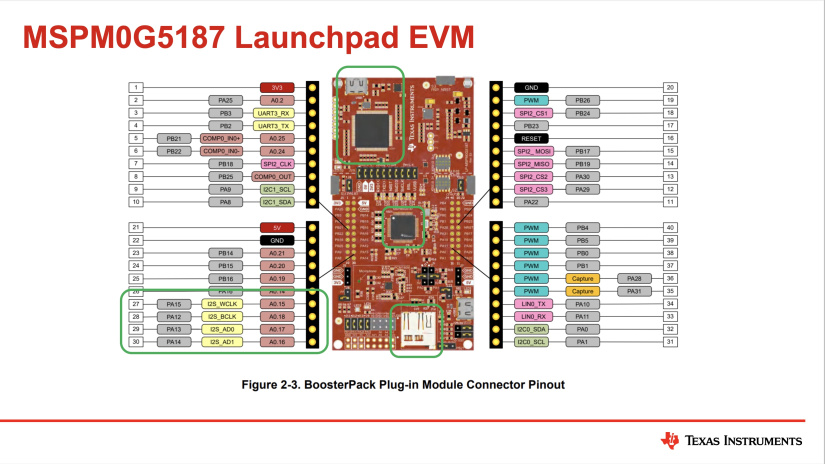
- Arm® Cortex®-M0 CPU running at up to 80MHz
- TinyEngine™ NPU running at 80MHz for neural network inference
- 128KB of flash, 8 KB of data flash bank, and up to 32KB SRAM
- 12-bit ADC with up to 1.6MSPS and up to 26 external channels
- High-performance analog and digital peripherals including comparator, timers, UART, I2C, SPI, USB 2.0, and digital audio
- Security features including AES acceleration, secure key storage, CRC, and configurable protection for code and data
- Up to 59 GPIOs, including 5V-tolerant open-drain I/O options and high-speed I/O
That is already a healthy feature set for a general-purpose MCU, but the AI side is what changes the equation. TI positions the MSPM0G5187 as the first device in the MSP portfolio with a TinyEngine™ NPU, and that instantly gives it a different role compared to more conventional Arm® Cortex®-M0+ devices.
If you want the wider picture, it is also worth looking at the broader MSP-M0 portfolio, which shows how TI is scaling these Arm® Cortex®-M0+ solutions across package sizes, memory configurations, and peripheral mixes.
The LP-MSPM0G5187 development kit
The LP-MSPM0G5187 does a solid job of turning the MCU into something you can actually get moving with quickly. It integrates the hardware you would expect from a useful development platform, including debugger support, USB connectivity, access to GPIO, LEDs for quick feedback, and support for LaunchPad and BoosterPack pin conventions.
That last bit matters more than it might seem. The standard header format makes it easier to expand the platform with add-on modules, which is particularly helpful when you want to start feeding real-world sensor data into an ML workflow instead of staring at synthetic datasets and pretending that counts as prototyping.
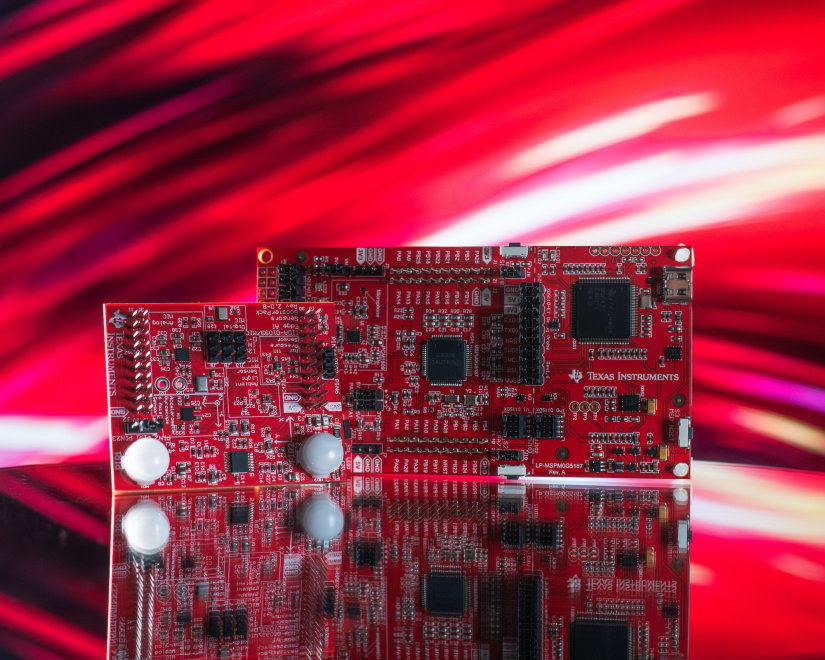
The board is also a natural partner for TI’s sensor expansion hardware. If you want to build edge AI applications around motion, environmental sensing, light, magnetic field data, or audio, this is where the platform starts becoming genuinely useful instead of just technically impressive.
Software ecosystem and development flow
The other half of the story is the software stack, and thankfully it is not an afterthought. The MSPM0 Software SDK provides code examples, evaluation tools, drivers, middleware, and documentation for the MSPM0 family. That gives you a practical route into both standard MCU development and AI-focused experimentation.
For developers who want more control, the ecosystem also supports Code Composer Studio, TI’s Theia and Eclipse-based flows, and third-party environments such as IAR and Keil. So while the visual tooling is the standout feature here, you are not boxed into a single style of development.
Then there is Edge AI Studio, which really is the star if your goal is to collect data, label behaviour, train models, and deploy them onto hardware with as little friction as possible. If you would rather spend your time building a product than writing yet another fragile preprocessing script, this is the bit that will probably win you over.
For engineers who want to go deeper into the device itself, the MSPM0G5187 Technical Reference Manual is also worth keeping nearby.
What projects can you build with the MSPM0G5187?
With 128KB of flash, up to 32KB of SRAM, a dedicated NPU, and a very healthy collection of on-chip peripherals, the MSPM0G5187 is clearly aimed at more than one neat demo. It is one of those parts that makes you immediately start listing project ideas, because the jump from “interesting dev kit” to “useful product platform” is surprisingly short.
It can work across sensor-driven systems, low-power embedded controllers, audio-triggered applications, motion analysis, and fault detection. In other words, it is a pretty comfortable fit anywhere you want small local models making quick decisions on real signals.
Intelligent power tools
One of the most obvious applications is predictive maintenance in handheld tools. Give the system access to vibration, tilt, and current data, and you can start training models to spot wear patterns in drills, saws, or other power tools. A device like this could warn users about degrading blades, failing bearings, or tired brushes before the tool gives up at exactly the worst possible time.
That sort of local inference is ideal here. You do not need cloud connectivity for a tool to notice that it sounds wrong, vibrates differently, or is drawing current in a pattern that suggests a problem. You just need a small model, a decent stream of sensor data, and hardware that can react quickly.
Smart electrical fault detection
This platform also looks like a strong candidate for intelligent protection systems. A conventional breaker is excellent at handling overcurrent. What it does not do especially well is identify dangerous behaviour like arcing or wiring faults that sit outside those simpler rules.
Train a model on current and sensor patterns associated with abnormal conditions, and suddenly you have a much smarter system that can spot issues a traditional breaker may miss. That could be useful in consumer products, industrial gear, and building systems where early fault detection is far more valuable than waiting for something to fail loudly.
Smarter motion and occupancy sensing
Another very natural fit is intelligent motion sensing. TI’s sensor ecosystem already points in this direction, and it is easy to see why. A smart PIR-based system that can distinguish people from pets, ignore irrelevant movement, and reduce false alarms is much more useful than a blunt sensor that panics every time the dog strolls past the hallway.
That sort of application is exactly where small edge models shine. You are not trying to do something absurd. You are just trying to make a familiar sensor system more selective, more reliable, and less annoying.
Sensor-rich edge AI nodes
If you want a faster route into data collection and experimentation, TI’s supporting sensor hardware makes the platform even more interesting. The sensor expansion options bring together a range of useful inputs including IMU data, pressure, temperature, humidity, ambient light, microphone input, and magnetic field sensing. That gives developers a much richer set of signals to train against, especially for classification and anomaly detection work.
For example, the sensor reference hardware highlighted by TI includes combinations of PIR sensing, microphones, humidity and temperature sensing, ambient light measurement, 6-axis motion sensing, barometric pressure, and 3D Hall-effect sensing. That is a strong spread for anyone building context-aware edge devices, whether the end product is a smart lock, motion detector, condition monitor, or environmental node.
Resources for getting started
If you want to explore the platform properly, the best place to start is the official MSPM0G5187 product page and the LP-MSPM0G5187 LaunchPad page. From there, you can dig into the hardware, board resources, and supporting documentation.
For software and examples, head over to the MSPM0 Software SDK, which bundles code examples, tools, and supporting resources for development. If your focus is specifically AI model evaluation, training flow, and deployment, then Edge AI Studio is the place you will want to spend time.
And if you are the sort of engineer who likes knowing exactly what the silicon is doing before trusting it with anything important, the Technical Reference Manual is there waiting for you.
Final thoughts
The MSPM0G5187 is not trying to compete with giant AI accelerators or pretend every problem needs a massive model. That is exactly why it works. It is focused on the kind of AI that actually makes sense in embedded systems, small models, real sensor data, fast local decisions, and no need to bounce everything through the cloud.
From a maker perspective, it opens the door to projects that would previously have felt too awkward, too expensive, or too time-consuming to justify. From a commercial perspective, it means intelligent behaviour can start appearing in products that have no business carrying a huge compute budget. And when the silicon itself is targeting sub-$1 pricing in volume, that changes the conversation very quickly.
More than anything else, though, what TI seems to have got right here is the usability. Adding an NPU to a microcontroller is one thing. Building a workflow that makes data capture, model training, and deployment feel approachable is something else entirely. The MSPM0G5187 and its surrounding ecosystem manage to do both, and that makes this one of the most exciting microcontroller platforms to land in this space for a long time.

Robin Mitchell is an electronic engineer who has been involved in electronics since the age of 13. After completing a BEng at the University of Warwick, Robin moved into the field of online content creation developing articles, news pieces, and projects aimed at professionals and makers alike. Currently, Robin runs a small electronics business, MitchElectronics, which produces educational kits and resources.












Leave your feedback...