





Maker Faire Shenzhen 2025: Standout AI, Robotics, & Sensing
Following up on my visit to Maker Faire Shenzhen 2025, I wanted to report on some standout projects that caught my eye on the show floor. First up, DFRobot’s LattePanda MU–based MV100 local AI machine alongside HuskyLens 2 and the UniHiker K10 chatbot.
DFRobot’s Edge AI Line-up: LattePanda MU, UNIHIKER K10, and HuskyLens 2
DFRobot has been part of the global maker landscape for more than a decade, and their presence at Maker Faire Shenzhen 2025 highlighted just how quickly AI-focused hardware is becoming accessible to hobbyists, educators, and embedded developers. Their booth brought together compact edge AI computers, on-device vision systems, and impressive chatbot hardware, all tightly aligned with this year’s theme, “AI Without Borders, Rebirth of All Things.”
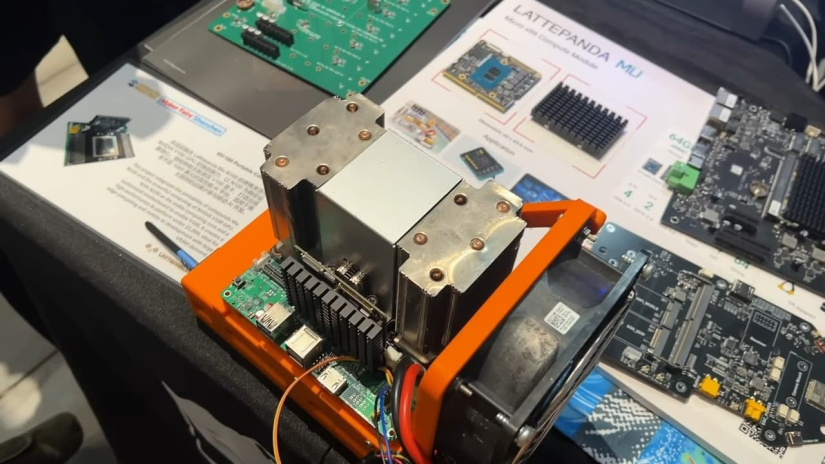
DFRobot booth at Maker Faire Shenzhen 2025
Local Vision-Language Model Demo
Thier eye-catching demo combined image capture, local processing, and text-to-speech into a single pipeline. A connected camera would record video, a local model on the LattePanda MU analyzed the scene, and the system wrote its interpretation on a screen in English.
This vision + language + text chain all running locally is a clear example of embodied AI in a maker-scale package. Instead of relying on remote APIs, everything occurred on the hardware in front of attendees, showing exactly how edge AI is shifting from abstract datasets to real-world, interactive systems.
UNIHIKER K10 and HuskyLens 2: Accessible AI for Education and Makers
DFRobot also brought two accessible AI platforms aimed at beginners, educators, and rapid prototyping.
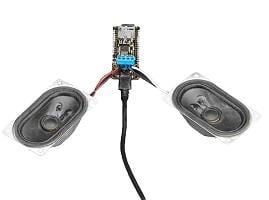
UniHiker K10 is a compact board that functions like an AI chatbot. Popular in China as an educational tool, it can take photos, provide interactive chat responses, and act as a lightweight AI companion device. Its simplicity makes it ideal for teaching modern AI behavior without needing complex setup or external services.
HuskyLens 2, meanwhile, represents DFRobot’s next generation of AI vision sensors. Built around a K230-class vision SoC offering around 6 TOPS of AI compute, HuskyLens 2 enables on-device object recognition, tracking, gesture detection, and other vision tasks. The hardware is designed to be plug-and-play, giving makers a straightforward way to embed computer vision into robots, wearables, automation rigs, or classroom exercises.
Together, UniHiker K10 and HuskyLens 2 show how DFRobot is lowering the barrier to hands-on AI experimentation. These tools embody the idea of AI as something you can pick up, connect, and use immediately, no cloud infrastructure required.
Smarter Motion and Sensing: Gearotons Servos and AnyShakes Seismic Platform
Not every standout project at Maker Faire Shenzhen 2025 revolved around AI PCs or language models. Two of the most technically compelling demos focused instead on precision motion and environmental sensing, showing how makers are pushing innovation at both robotic and geological scales. From compact smart servos to open-source seismic stations, these projects demonstrate how deeply embedded hardware continues to evolve.
Integrated Smart Servos from Gearotons
Gearotons is a Shenzhen-based startup developing compact, affordable servo systems designed for makers, educators, and robotics builders. Founder Tom, who has lived and worked in Shenzhen for more than a decade, introduced a line of smart servos that combine motor, driver, motion controller, and encoder into a single, streamlined housing.
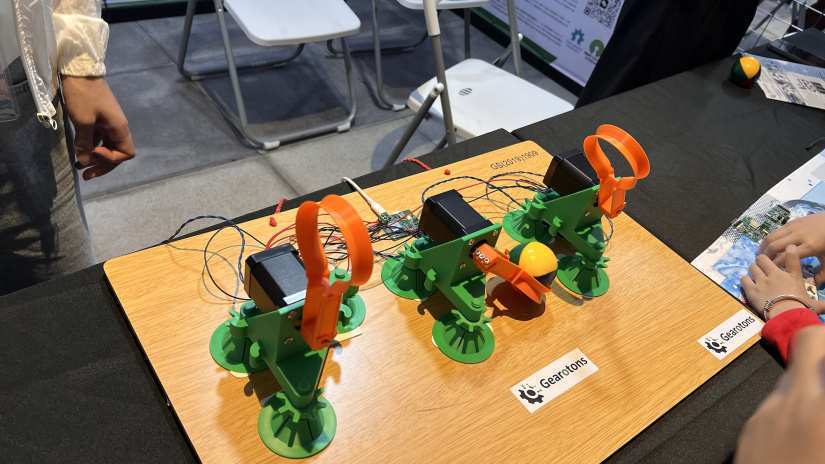
Unlike traditional setups that require external driver boards or exposed electronics, Gearotons servos are fully self-contained. This simplifies mechanical integration and reduces the wiring overhead that often slows down early prototyping. Each servo includes closed-loop feedback thanks to its integrated encoder, allowing the system to detect real-world conditions, such as when the juggling demo dropped a ball and the motor immediately responded to the change.
For control, the servos support everything from a low-cost ESP32 to a Raspberry Pi or PC via RS485 using an adapter. Despite the feature set, pricing starts between $20 and $35 USD, placing them well within the reach of hobbyists and education labs wanting reliable, feedback-driven motion systems.
In terms of applications, these servos are ideal for small robotic arms, animatronics, CNC-style motion rigs, research prototypes, and any automated fixture that needs smooth and intelligent movement. Their fully integrated design echoes a broader trend at MFSZ25: smarter, safer motion systems that make robotics experimentation more accessible than ever.
AnyShake: Open Source Seismic Monitoring You Can Build On
At the opposite end of the spectrum from robotics and motion control, AnyShake showcased how open hardware can be used for high-precision scientific monitoring. The project began as a university research effort and has since evolved into a complete seismic sensing platform, combining open-source hardware with a flexible software ecosystem.
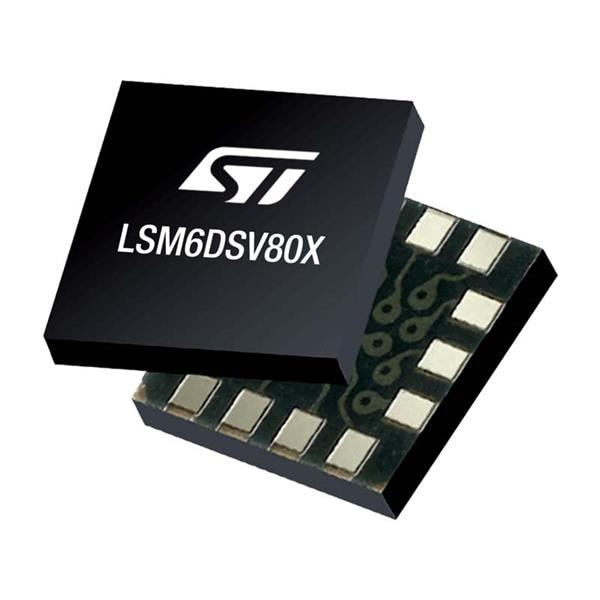
The system uses three-axis geophones along with an LSM6DSR accelerometer/gyroscope module to detect ground vibrations. The main board integrates GNSS for accurate timing and station positioning, includes three analog input channels, provides robust RS485 output for field deployments, and runs on a 12 V DC supply, making it suitable for remote installations or long-term monitoring setups.
On the software side, AnyShake offers real-time waveform streaming and station status monitoring through its online dashboard. Users can dig into historical seismic data and export events in common formats such as MiniSEED, SAC, or even audio for quick inspection. The platform also supports integration with professional-grade analysis tools like SeisComP, bridging the gap between DIY instrumentation and real-world seismology workflows.
This project demonstrates how maker-style engineering can support serious scientific and infrastructure applications. It aligns well with the Greater Bay Area’s focus on resilient, high-tech systems and shows how open hardware continues to influence fields that were once dominated by proprietary equipment.
Ultrabar X: A Smart Desk Control Center for Your Hardware Life
While many booths at Maker Faire Shenzhen 2025 focused on robotics, AI compute, or scientific sensing, Ultrabar X offered something immediately relatable to anyone who works at a desk. Created by Shenzhen-based manufacturer Sanitron, the Ultrabar X is described as a “desk control center”, a sleek, customizable bar designed to streamline everything from smart home tasks to PC workflows and maker project automation.
Ultrabar X combines programmable buttons, configurable controls, and smart sensors into a single device that sits neatly along the front edge of your desk. Whether you’re running a workshop PC, managing a stack of dev boards, or simply looking to simplify your daily workspace interactions, the device acts as a bridge between your digital environment and the physical tools you use every day.
Custom Buttons, Sensors, and Interaction
One of the core features of Ultrabar X is its highly flexible button layout. Each button can be configured through the companion software to perform different actions, allowing users to tailor the bar to their workflow. Common examples include muting calls, launching applications, triggering lighting scenes, controlling media playback, or automating lab equipment.
Ultrabar X also supports sensor-driven interactions. A dedicated knock sensor module can be placed anywhere on the desk. It detects taps and knocks, which can then be mapped to actions like toggling lights, pausing music, or switching work modes. For a more passive form of automation, an integrated infrared presence sensor monitors when you sit at your desk. This can be used to log working time or trigger actions the moment you arrive, such as waking your PC or activating a specific lighting scene.
This blend of tactile and sensor-based control is closely aligned with maker culture. Many hobbyists and hardware developers build their own custom stream decks, keypads, and automation rigs. Ultrabar X takes that concept and delivers it in a polished, ready-made form, while still leaving room for deeper customization and experimentation.
Kickstarter Launch and Maker Potential
Ultrabar X launched on Kickstarter just days before the interview was recorded, and it’s easy to see why it generated interest among attendees. It provides a clean, premade front end that can slot into home labs, workshop PCs, streaming setups, or development benches.
For makers looking to integrate Ultrabar X into more complex automations, the possibilities are wide open. Potential back-end integrations include:
- Home Assistant for smart home environments
- Custom HTTP or MQTT bridges for IoT workflows
- Node-RED flows for visual automation and rapid prototyping
Its presence at Maker Faire reinforces a trend visible throughout the event: Shenzhen startups are increasingly turning niche workflow hacks into refined, consumer-ready products. Ultrabar X is another example of hardware that blends everyday usability with the flexibility and hackability makers look for.
From Maker Faire Booths to Future Projects
Together, these four interviews paint a clear picture of where maker hardware is heading. Edge AI platforms such as the LattePanda MU, MV100, HuskyLens 2, and UniHiker K10 show how language models and embedded vision are becoming tools you can run directly on your bench or robot. Gearotons’ integrated smart servos highlight a new generation of motion systems that are compact, affordable, and capable of real-world feedback. AnyShake proves that open-source hardware can support high-precision scientific monitoring, bridging DIY engineering with professional seismology. And Ultrabar X demonstrates how everyday desktop workflows can benefit from customizable, sensor-rich interaction tools.
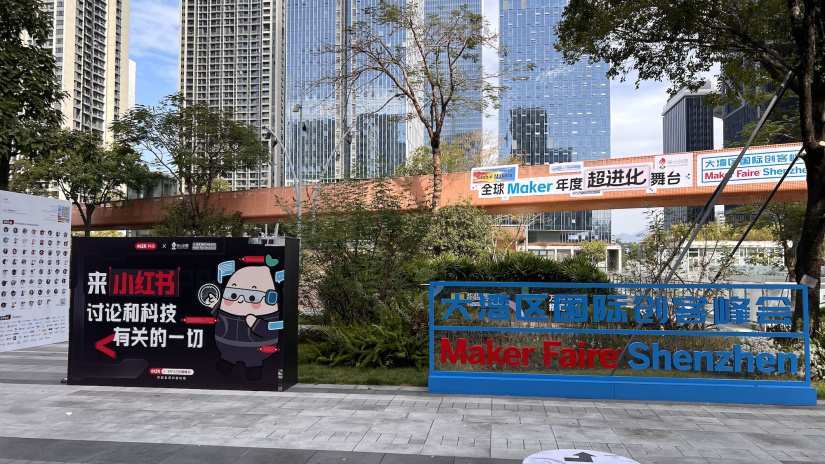
Each of these projects reflects a broader shift visible across Maker Faire Shenzhen 2025: AI and intelligent sensing are no longer specialist technologies; they’re becoming standard components in maker builds, educational kits, and hobby projects.
If you’d like to explore these innovations firsthand, you can watch all four interviews and many more in our Maker Faire Shenzhen 2025 playlist. We’d also love to hear what you would build with platforms like these, share your ideas with the Electromaker community, and stay tuned for additional interview-driven coverage and project deep dives from the show.

Residing on the south coast of England, Rich has spent the last few years building Electomaker.io from the ground up. He is usually found behind a laptop coordinating the rest of the EM team and occasionally finding time to contribute articles to the blog. When not tapping away at a laptop, he can be found either paddleboarding, at the beach, playing golf (badly), or camping with his family.







Leave your feedback...