





Morse Micro HaLowLink 2: The Long Range Wi Fi Gateway for IoT
The Morse Micro HaLowLink 2 is a gateway that gives Wi Fi a practical long-range twist. Built for makers, engineers and anyone working with connected devices, it offers an approach to wireless networking that focuses on reliability and distance rather than speed.
Most IoT devices do not need multi-gigabit bandwidth. They need stable communication over large areas, strong wall penetration and the ability to operate in remote or industrial locations. Traditional Wi Fi struggles here because it was designed for phones, laptops and streaming instead of sensors and embedded systems. Wi Fi HaLow addresses this with a sub-GHz design that trades high throughput for extended range, lower power use and broader coverage.
The HaLowLink 2 brings this technology into a ready to deploy gateway. By combining HaLow for long range links with standard Wi Fi and Ethernet for everyday networking, it bridges the gap between conventional equipment and modern IoT needs. It is a practical solution for anyone building large installations, remote monitoring setups or connected environments where traditional Wi Fi falls short. Learn more at the Morse Micro HaLowLink page.
What is the Morse Micro HaLowLink 2?
The Morse Micro HaLowLink 2 is a dual purpose wireless gateway that creates a dedicated Wi Fi HaLow network while also supporting traditional 2.4 GHz Wi Fi and standard Ethernet devices. It acts as both a long range access point for sub GHz IoT nodes and a bridge that connects those devices back to existing networks, servers or the wider internet. This makes it a flexible tool for engineers and makers who want reliable communication across large areas without abandoning the hardware they already use.
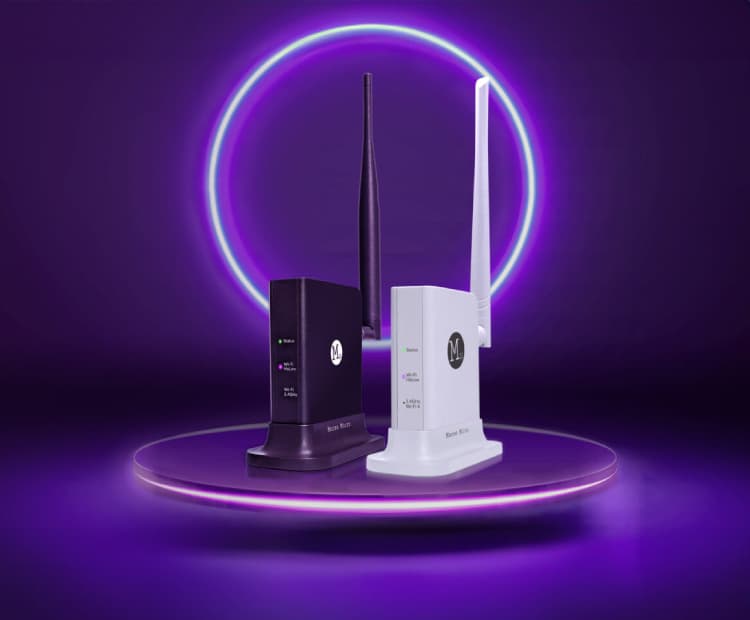
Wi Fi HaLow, also known as IEEE 802.11ah, operates in the sub GHz band. This lower frequency gives it far better range and penetration than standard Wi Fi. Instead of chasing high throughput, HaLow delivers stable links at lower data rates, which is exactly what sensors, cameras, meters and controllers require. By avoiding the congestion of higher frequency bands, it provides communication that reaches hundreds of metres, and under the right conditions, close to a kilometre.
Traditional Wi Fi is excellent for streaming, conferencing and browsing. However, it falls short when deployed across large industrial sites, farms, warehouses or outdoor areas. Coverage gaps, interference and short range limit its usefulness. The HaLowLink 2 solves these problems by pairing long range HaLow connectivity with the convenience of familiar networking interfaces.
Inside the gateway, the AzureWave AW HM677 module provides HaLow capability using Morse Micro’s MM610x silicon. The system is powered by a MediaTek platform running OpenWrt 23.05, giving users a familiar, configurable environment for network management. Alongside its HaLow radio, the gateway includes a standard 2.4 GHz 802.11n interface, ensuring compatibility with everyday Wi Fi devices while maintaining a robust link for IoT nodes.

Why HaLowLink 2 Is a Strong Choice for IoT
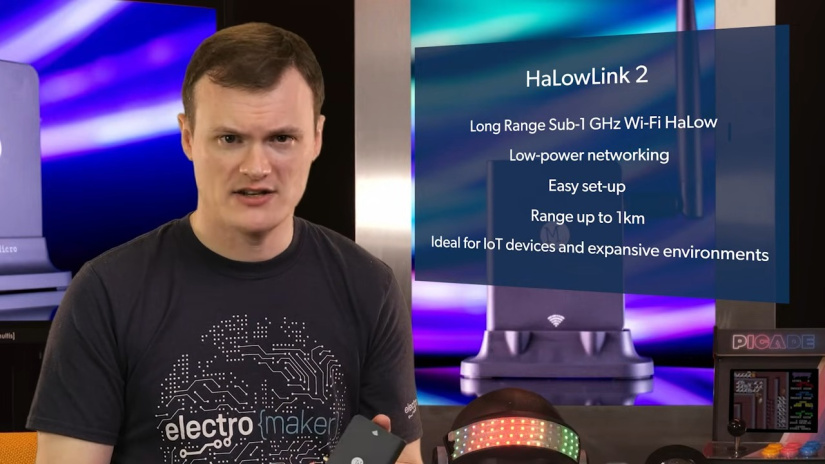
Traditional Wi Fi was designed with laptops, phones and high bandwidth applications in mind. It is excellent for streaming video or transferring files, but it is far less suitable for the growing number of IoT devices that only need modest data rates. Sensors, controllers, meters and cameras rarely require gigabit speeds. Instead, they need stable, predictable communication that can reach far beyond the range of standard 2.4 GHz or 5 GHz Wi Fi.
This is where WiFi HaLow stands out. By operating in the sub GHz band, HaLow prioritises distance, wall penetration and power efficiency over raw throughput. It delivers steady connections across very large areas, often hundreds of metres, and under the right conditions close to a kilometre. For IoT networks that depend on reliability rather than speed, this shift in design makes practical sense.
Long Range Stability for Real IoT Environments
The HaLowLink 2 gateway embraces this approach and turns it into a ready to deploy solution. Its long range radio can cover farmland, warehouses, factory floors, construction sites and remote installations with ease. The lower frequency signals travel further, pass through structures more effectively and remain stable in environments where conventional Wi Fi struggles. For industrial and outdoor projects, this extra resilience can be the difference between a system that works occasionally and one that works consistently.
Alongside improved range, HaLow offers lower power consumption which is ideal for battery powered IoT devices. The HaLowLink 2 creates a network that supports these nodes over long distances without the need for repeaters or dense access point placement. This makes it a dependable choice for engineers building reliable long range Wi Fi systems where uptime and coverage matter far more than headline speeds.
Hardware Overview and Specifications
The HaLowLink 2 combines long range wireless capability with a practical hardware design that fits neatly into existing network setups. It brings together a capable MediaTek platform, Morse Micro’s HaLow technology and OpenWrt management to create a flexible gateway for real world IoT deployments.
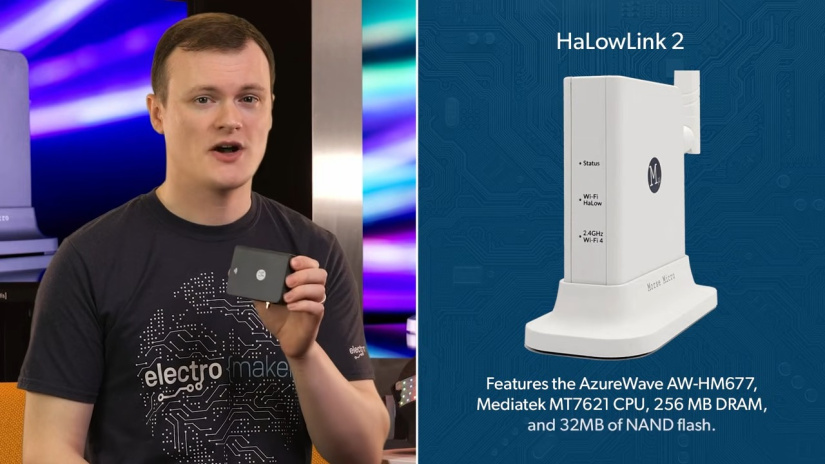
Here is a closer look at the key hardware features and specifications.
- CPU: MediaTek MT7621 for efficient routing and wireless management
- HaLow Radio: AzureWave AW HM677 module featuring Morse Micro MM610x silicon
- Memory: 256 MB DRAM
- Storage: 32 MB NAND flash
- Wireless Capability:
- Sub GHz 802.11ah Wi Fi HaLow for long range IoT connectivity
- 2.4 GHz 802.11n Wi Fi for everyday devices and network bridging
- Software: OpenWrt 23.05 for advanced configuration and extensibility
- I O Interfaces:
- 2 x Ethernet ports for WAN and LAN
- USB C for power
- SMA connector for the region specific antenna
- Region Support:
- HaLowLink 1 supports the United States, Canada and Australia
- HaLowLink 2 extends support to the United States, Canada, Australia, the United Kingdom, Europe and Japan
Unique Feature: Paired HaLowLink Bridge Mode
One of the standout capabilities of the HaLowLink 2 is its ability to operate in a paired configuration (view the product brief here). When two units are linked together, they create a secure point to point wireless bridge that behaves much like a virtual Ethernet cable. This connection is isolated from other traffic, operates over long distances and provides a stable link for devices that need reliable communication without the complexity of running physical cables.
In paired mode, the HaLowLink 2 acts as a long range Ethernet replacement. It is particularly useful for camera backhauls, where video data needs to be transmitted across large outdoor areas without relying on cellular or costly trenching work. The same setup suits remote sensors positioned far from network infrastructure, as well as temporary or mobile installations such as construction sites, field research stations or event networks.
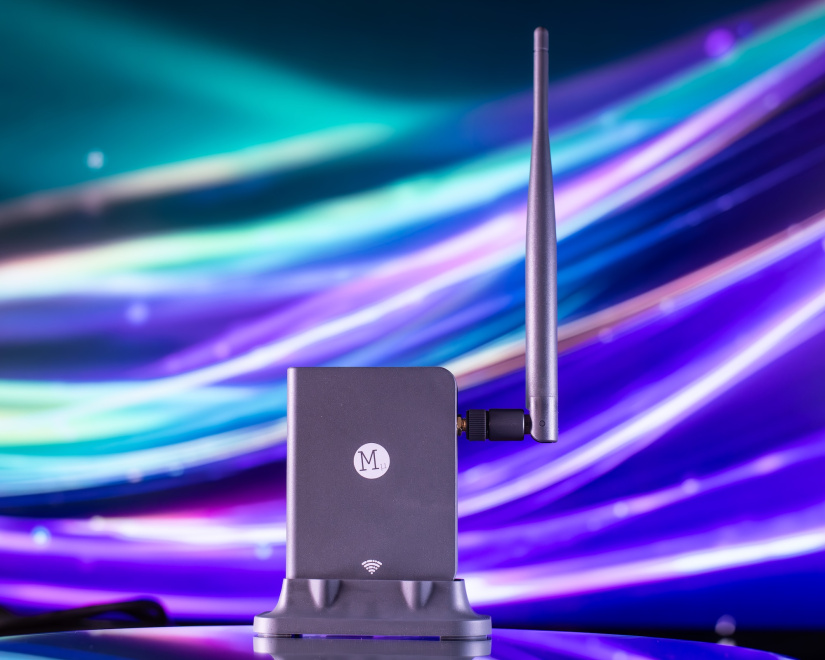
The secured link created by two HaLowLink 2 units functions in a manner similar to a VLAN, with traffic kept separate from general network activity. This helps protect sensitive data and ensures that bandwidth is reserved for the devices on the link. For engineers who need a dependable point to point wireless solution, this feature offers a practical and straightforward alternative to wired connections.
Practical Applications and Project Ideas
The HaLowLink 2 is built for projects that need stable long range connectivity without relying on cellular networks or dense access point layouts. Its sub GHz capability makes it a strong fit for industrial, agricultural and outdoor environments where standard Wi Fi falls short.
Large industrial sites often struggle with coverage gaps and interference. HaLow’s extended reach reduces the number of access points required and keeps sensors and controllers connected across wide areas. Remote camera setups also benefit, as the HaLowLink 2 can push video back to a central network from locations that would otherwise require expensive cabling.
Agricultural and wildlife applications gain similar advantages. Devices such as soil sensors, weather stations and monitoring cameras remain linked even when positioned far from infrastructure. In smart city and warehouse deployments, the lower frequency signal penetrates structures more effectively, improving performance for scanners, meters and automated systems.
Here is a condensed overview of suitable use cases.
- Industrial monitoring across large facilities with many low bandwidth IoT nodes.
- Long distance camera links for farms, security or infrastructure inspection.
- Agriculture networks including soil, irrigation and environmental sensors.
- Wildlife and nature reserve monitoring using low power remote equipment.
- Self powered field devices on solar or battery systems.
- Smart city installations such as parking sensors or lighting control.
- Warehouses and factories where thick structures weaken standard Wi Fi.
- Point to point bridging where laying Ethernet is impractical.
Why Makers and Engineers Should Care
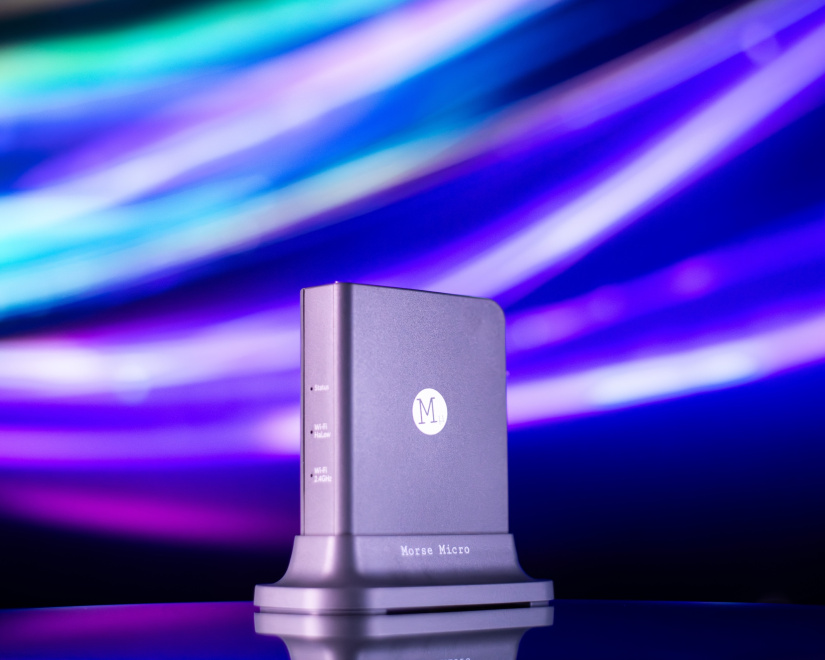
The HaLowLink 2 offers a combination of range, flexibility and simplicity that makes it a useful addition to both professional and hobbyist projects. Unlike consumer Wi Fi extenders that focus on boosting short range signals, this gateway is designed specifically for technical deployments where reliability and coverage matter.
Because it includes both Wi Fi HaLow and 2.4 GHz Wi Fi, the HaLowLink 2 fits neatly into existing networks. Makers can connect everyday devices while still benefiting from the extended reach of sub GHz HaLow links. Its OpenWrt foundation gives advanced users access to configuration tools, scripting options and package support that go far beyond typical router interfaces.
The long range advantages solve many common IoT challenges. Sensors and controllers can remain connected across fields, factory floors or remote sites without requiring multiple access points or complicated infrastructure. Its low power design also makes it suitable for installations that rely on solar or battery power.
Because it uses standard Ethernet and familiar Wi Fi protocols, the HaLowLink 2 works well alongside existing networking gear. For anyone building large sensor networks, remote camera systems or dependable long distance links, it offers a practical and robust solution that is easy to integrate and simple to manage.
Quick Specifications Recap
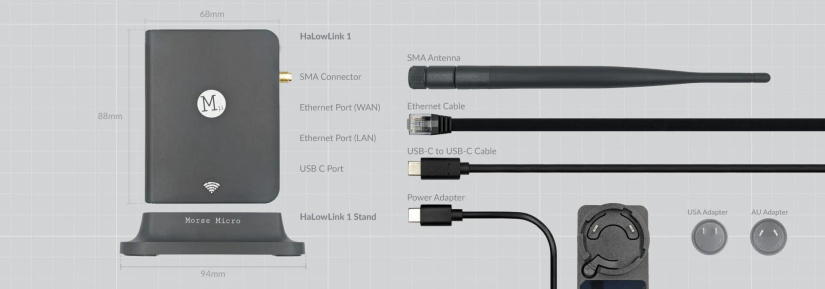
For a clear overview, here are the core specifications of the Morse Micro HaLowLink 2 at a glance.
- Processor: MediaTek MT7621
- HaLow Radio: AzureWave AW HM677 with Morse Micro MM610x chipset
- Memory: 256 MB DRAM
- Storage: 32 MB NAND flash
- Wireless: Sub GHz 802.11ah HaLow and 2.4 GHz 802.11n
- Software: OpenWrt 23.05
- Interfaces: 2 x Ethernet ports (WAN and LAN), USB C power, SMA antenna connector
- Region Support:
- HaLowLink 1: United States, Canada, Australia
- HaLowLink 2: United States, Canada, Australia, United Kingdom, Europe, Japan
Final Thoughts
The Morse Micro HaLowLink 2 offers a practical rethink of how wireless networking should work for IoT. Instead of focusing on high speed connections over short distances, it prioritises stability, coverage and efficiency. This approach makes it a valuable gateway for developers building large sensor networks, industrial engineers managing remote equipment, and anyone working on outdoor or long distance monitoring projects.
Its combination of Wi Fi HaLow, standard 2.4 GHz Wi Fi and OpenWrt management creates a flexible platform that works well with existing hardware while extending connectivity far beyond the limits of traditional Wi Fi. Whether you are deploying cameras across farmland, gathering environmental data in nature reserves or experimenting with long range projects as a maker, the HaLowLink 2 provides a dependable foundation.
If you are ready to explore long range wireless networking or want to build IoT systems that stay connected even in challenging environments, the HaLowLink 2 is a strong choice. You can learn more and view the full product range at the official Morse Micro HaLowLink page.
FAQs
What is Wi Fi HaLow
Wi Fi HaLow is a version of Wi Fi based on the IEEE 802.11ah standard. It operates in the sub GHz band, offering longer range, lower power use and stronger wall penetration than traditional Wi Fi. This makes it ideal for IoT devices that need reliable communication rather than high throughput.
How far can the HaLowLink 2 reach
The HaLowLink 2 can achieve ranges close to one kilometre under suitable conditions. Actual distance varies depending on obstacles, antenna placement, environmental interference and regional regulations.
Is the HaLowLink 2 compatible with standard routers
Yes. Alongside its HaLow radio, the gateway provides 2.4 GHz Wi Fi and Ethernet, allowing it to connect to or extend existing networks just like a traditional router.
What throughput can I expect
HaLow trades bandwidth for distance, so speeds range from hundreds of kilobits per second to tens of megabits per second depending on configuration and range. This is more than sufficient for sensors, monitoring systems and remote control applications.
Can two HaLowLink 2 units form a point to point link
Yes. Two units can be paired to create a secure point to point bridge that acts like a virtual Ethernet cable. This is useful for camera feeds, remote sensors and building to building links where cabling is impractical.
Which countries support Wi Fi HaLow
HaLowLink 2 supports operation in the United States, Canada, Australia, the United Kingdom, Europe and Japan. Local regulations determine the exact channel and power limits available.
Can the HaLowLink 2 run custom OpenWrt packages
Yes. The gateway runs OpenWrt 23.05 which allows users to install compatible packages, write scripts and customise system behaviour to suit advanced networking needs.
Is the HaLowLink 2 suitable for outdoor use
The gateway can be used outdoors when placed in an appropriate weatherproof enclosure. This is common for long range camera systems, agricultural nodes and nature monitoring equipment.
Can HaLow replace Ethernet in industrial sites
While it does not match Ethernet speeds, HaLow can replace physical cabling in situations where range, reliability or installation difficulty make wiring impractical. The point to point mode offers a secure link suitable for many industrial applications.



Matt Walker is a key contributor at Electromaker. With extensive experience in digital marketing, he crafts high-impact strategies that boost visibility for tech brands. His campaigns help businesses stay ahead in the fast-moving world of electronics and embedded systems.








Leave your feedback...