





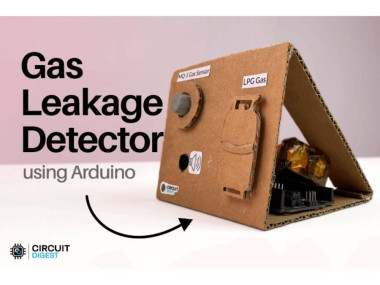
Arduino-based Gas Leakage Detector Project Explanation

Made by electroscope_archive / Environmental Sensing / Sensors
About the project
Build a simple gas detector using Arduino Uno and the MQ-5 sensor to detect LPG, propane, and methane. This is beyond perfect for beginners.
Project info
Items used in this project
Hardware components

|
USB Cable or 9V Battery | x 1 | |
|
|
Jumper Wires | x 1 | |
|
|
Breadboard | x 1 | |
|
|
10kΩ Resistor | x 1 | |
|
|
220Ω Resistor | x 1 | |
|
|
LED | x 1 | |
|
|
Buzzer | x 1 | |
|
|
MQ-5 Gas Sensor Module | x 1 | |
|
|
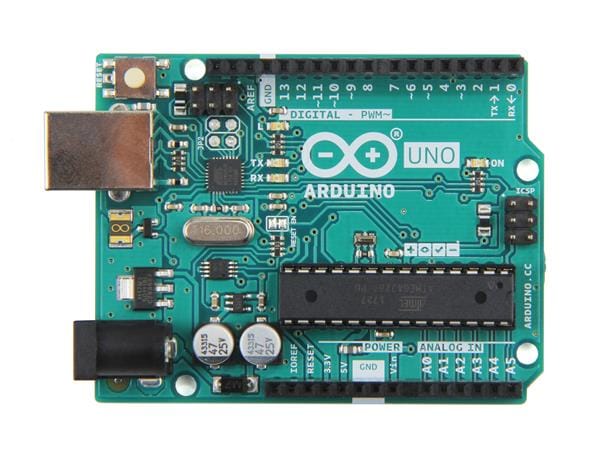
Arduino Uno | x 1 |
View all
Story
A gas leak detector is a perfect project choice for someone who wants to explore concepts of sensor interfacing, Arduino programming, and circuit design. In this Arduino project, we will build a tool that has the ability to sense gas leaks and notify users.
The MQ-5 sensor performs the task of monitoring gas levels. It sends a signal to the Arduino if a leak is detected. The Arduino then activates the buzzer and LED, warning users. Once the gas level returns to a normal level, the alert is turned off. Tuning of the sensor's potentiometer is needed to ensure accurate detection.
Circuit Overview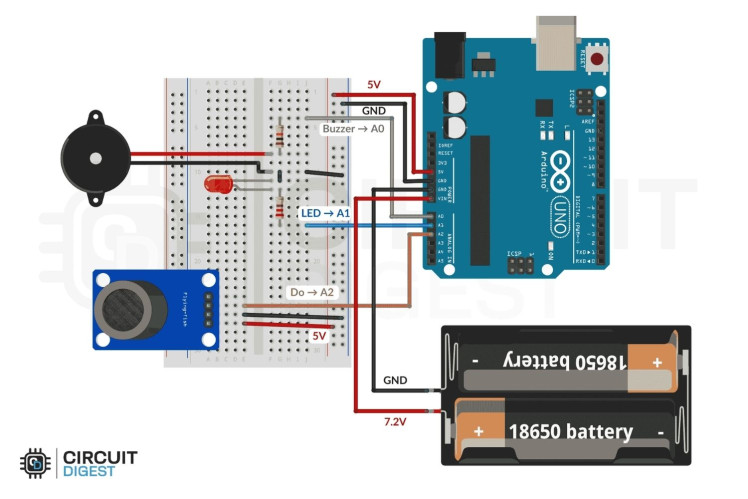
Connect the MQ-5 digital output to Arduino pin A2, the buzzer to A0 (with optional 10kΩ resistor), and the LED to A1 via a 220Ω resistor. You can power the system with a 7.2V battery or USB.
CodeThe code reads the MQ-5 sensor’s digital output and activates alerts when a gas leak is detected(LOW signal). When conditions return to normal (HIGH signal), the alerts are deactivated. Both code and schematics are available in the relevant sections.
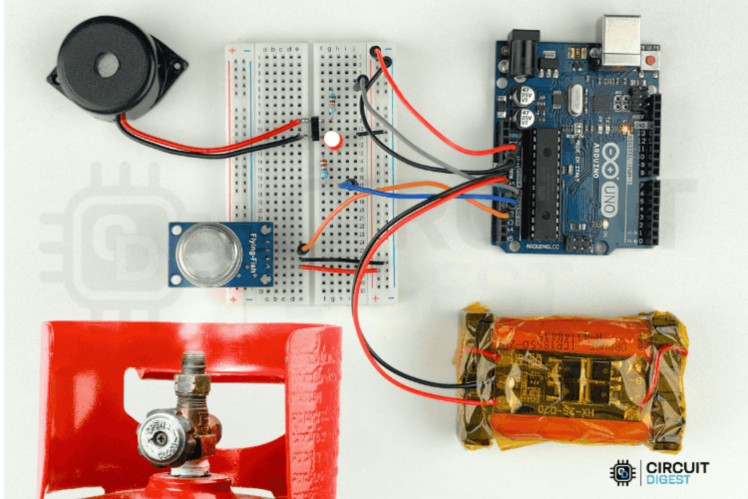
- Home/Kitchen Safety: For monitoring gas stoves or LPG cylinders.
- Commercial Use: It's an affordable option for restaurants or food trucks.
- Educational Projects: This is its most important application. It's a great way to learn Arduino programming and sensor interfacing.
- RV/Camping: Portable gas safety for outdoor setups.
While this project is ideal for educational purposes, it is important to note that it just won't cut it for high risk environments. However, the concepts learnt from here will apply in a lot of commercial grade safety systems, so consider this a starting point and let the tinkerer in you innovate from there.
The complete guide for this project is available here: Gas Leakage Detector Using Arduino
Schematics, diagrams and documents
Code
Credits
Related products













Leave your feedback...