





DFRobot Private LoRaWAN Gateway Review: A Fully Local IoT Server with Node-RED
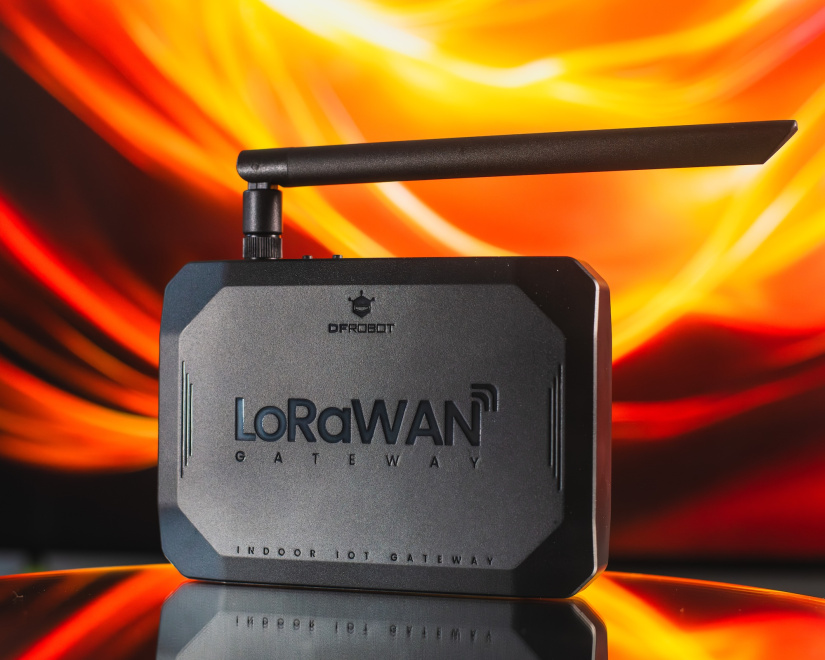
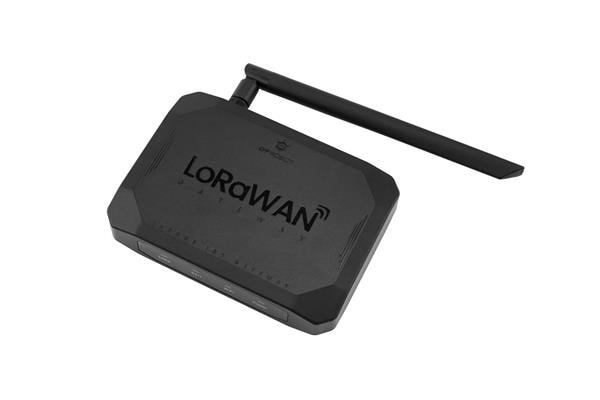
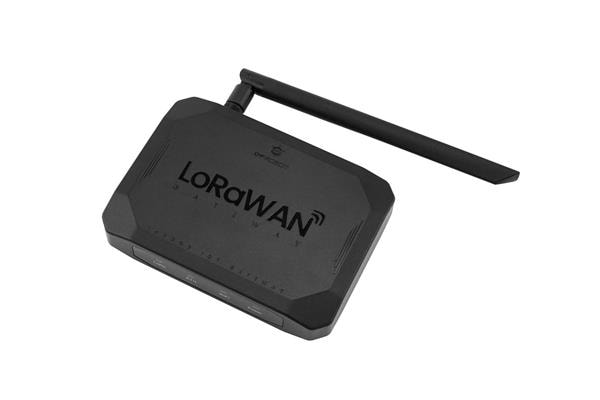
Today, we are taking a look at the DFRobot Private LoRaWAN Gateway with Built-in Local Server and Node-RED. At first glance, it looks like a fairly normal indoor LoRaWAN gateway. But once you get into what it actually does, this thing becomes far more interesting.
This product is a self-contained local IoT server, complete with SIoT, Node-RED, automatic data parsing, Ethernet, Wi-Fi, and long-range LoRaWAN communication of up to 4km. In other words, it gives you the bones of a full private IoT network in one box.

What is the DFRobot Private LoRaWAN Gateway?
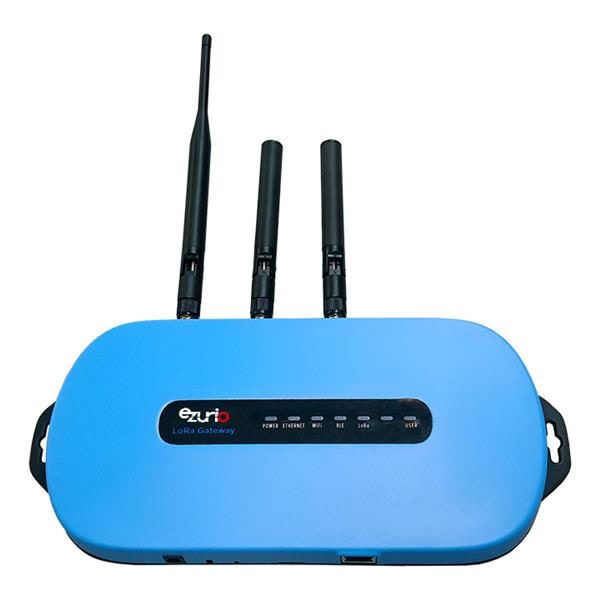
The DFRobot Private LoRaWAN Gateway is an indoor LoRaWAN gateway designed for long-range, low-power sensor networks. The version covered here operates on the EU868 frequency band, making it suitable for regions that support 868MHz LoRaWAN deployments.
Now, normally, a LoRaWAN gateway is mostly a middleman. It receives packets from sensors, forwards them to a network server, and then you rely on another system to process, store, visualise, or act on that data.
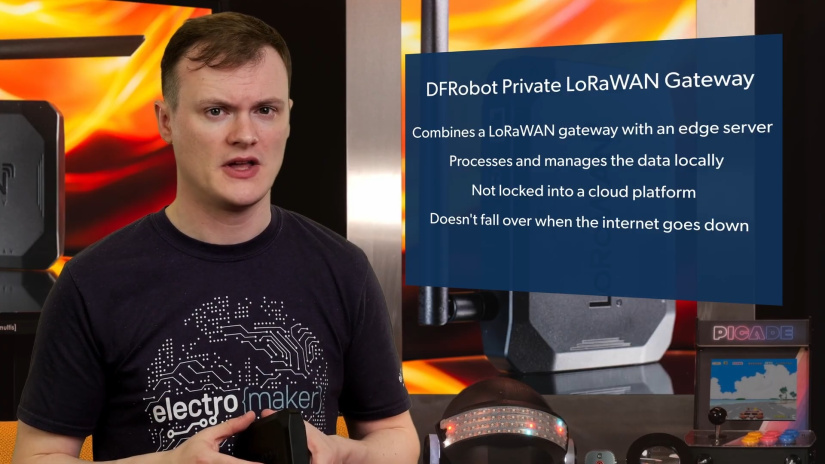
This one takes a much more sensible approach. It includes a built-in SIoT local server, Node-RED, and a data parser, which means it can manage data locally instead of immediately pushing everything into the cloud. That turns a LoRaWAN setup from a cloud-dependent system into something far more self-contained.
And that matters. Because once the gateway can handle data locally, your IoT network is no longer completely tied to an external platform, monthly subscription, or internet connection just to keep doing basic things.
Why this gateway stands out
The big idea here is simple: local control.
Most gateways act like pass-through devices. They receive data, forward it somewhere else, and then quietly sit in the corner pretending they are not the boring part of the system. The DFRobot gateway is different because it brings the server side of the IoT stack onto the device itself.
That gives you several very practical advantages. Your sensor data can stay inside your own network. Your automations can continue running without depending on a remote service. And you are not forced into paying cloud fees just to make a soil sensor talk to a relay.
That last bit is especially important for real-world deployments. If your smart irrigation system, greenhouse monitor, or security sensor network stops working every time the internet drops, then it is not really that smart. It is just fragile with extra steps.
Built-in Node-RED makes automation much easier
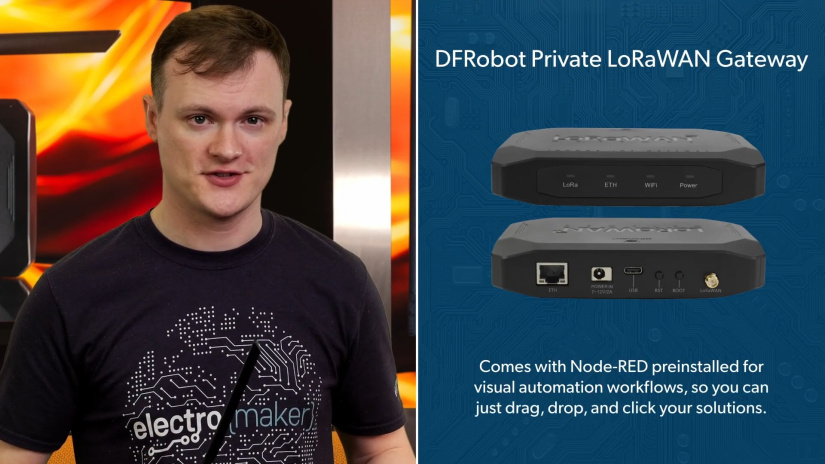
One of the most useful features is pre-installed Node-RED. If you have not used it before, Node-RED is a flow-based, low-code tool for building IoT logic visually.
Instead of writing a full backend, setting up services, handling message routing, and then wondering why your JSON object is having a bad day, you can build automations by dragging nodes into place and connecting them together.
For example, you could read soil moisture data from a LoRaWAN sensor, check whether the value has dropped below a set threshold, and then send a command to open a relay connected to a water valve. That is exactly the sort of task Node-RED is good at, and having it built directly into the gateway makes the whole process much cleaner.
DFRobot Private LoRaWAN Gateway features and specs
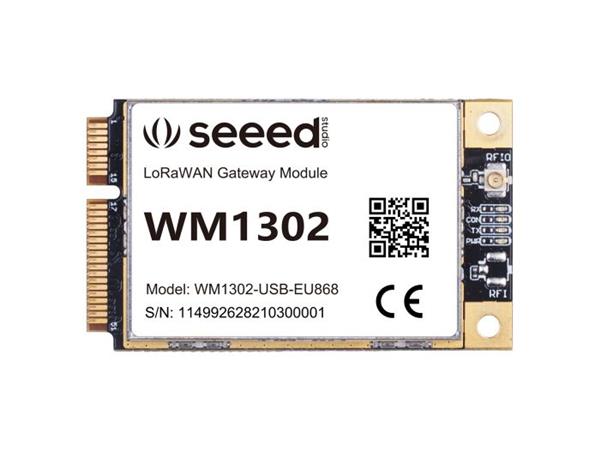
Under the hood, the gateway is built around the Semtech SX1302 8-channel LoRa concentrator chip. This gives it the ability to handle multiple LoRaWAN devices at once, which is exactly what you want when building a distributed sensor network.
It also uses a quad-core Cortex-A35 processor running at up to 1.3GHz, backed by 512MB of DDR4 RAM and 16GB of eMMC storage. That is not desktop-class hardware, obviously, but for running local IoT services, Node-RED flows, parsing sensor data, and managing a private LoRaWAN network, it is more than enough.
- LoRa concentrator: Semtech SX1302 8-channel chip
- Operating frequency: EU868MHz
- LoRaWAN classes: Class A and Class C
- Receive sensitivity: -140dBm at 292bps
- Maximum transmission power: 27dBm
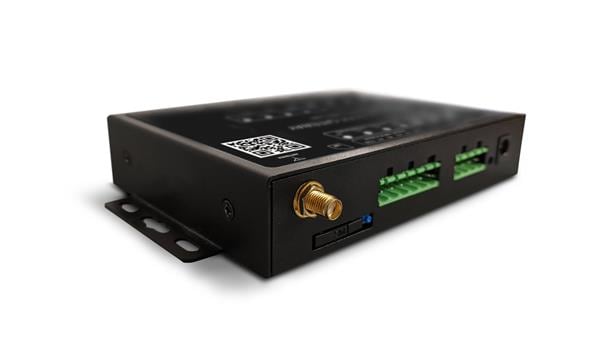
- Antenna: SMA connector with 5dB gain antenna
- Processor: Quad-core Cortex-A35 up to 1.3GHz
- Memory: 512MB DDR4 RAM
- Storage: 16GB eMMC
- Networking: 2.4GHz Wi-Fi, AP hotspot mode, and 100Mbps Ethernet
- Power input: USB Type-C 5V 2A or DC 7V to 12V 2A
- Software: Built-in SIoT local server, Node-RED, and automatic data parser
The automatic data parser is a particularly nice touch. Instead of leaving you to stare at raw hexadecimal values and question your career choices, the gateway can convert incoming data into readable values. So something like a raw temperature payload can become a usable sensor reading that is much easier to feed into dashboards, logic flows, and automation rules.
Connectivity that actually fits normal networks
For network access, you get both 2.4GHz Wi-Fi and a 100Mbps Ethernet port. Yes, it is 2026 and plenty of us are now surrounded by gigabit networking, unless you live out in the sticks, in which case you may still be quietly negotiating with your router like it is a temperamental farm animal.
Still, for this type of gateway, 100Mbps Ethernet is perfectly reasonable. LoRaWAN is not about high-throughput video streams or massive data transfers. It is about small packets, long range, low power, and reliable sensor communication.
What can you build with it?
The obvious answer is a LoRaWAN sensor network, but that undersells it a little. Because this gateway includes the local server, automation tools, and data handling layer, it can form the centre of a private IoT system that does not need to depend on cloud services for basic operation.
Smart agriculture and irrigation
Smart agriculture is probably one of the clearest use cases. You can deploy soil moisture sensors, temperature sensors, humidity sensors, and other environmental nodes across a field or greenhouse, then feed that data back to the gateway over LoRaWAN.
From there, Node-RED can handle the automation. If soil moisture drops below a certain level, the gateway can send a downlink command to trigger a relay and open a water valve. If temperature or humidity moves outside a safe range, it can raise an alert or trigger another local action.
The important part is that this does not need to rely on 4G, 5G, or a cloud dashboard just to function. For rural deployments, greenhouses, remote plots, and farms with patchy connectivity, that is a very big deal.
Environmental monitoring
This gateway also makes sense for environmental monitoring. Air quality sensors, pollution monitors, weather stations, water level sensors, and distributed temperature nodes can all report back to a single local hub.
Because LoRaWAN is designed for long-range, low-power communication, you can spread sensors across a larger area without running cables everywhere or giving each sensor a power-hungry network connection.
That makes it useful for school projects, research setups, community monitoring systems, industrial sites, and outdoor sensing applications where Wi-Fi simply does not reach far enough.
Home automation without handing everything to the cloud
For home automation, the DFRobot gateway is interesting because it lets you build systems that stay local. You could connect long-range mailbox sensors, garden sensors, gate sensors, shed monitors, or driveway devices back to a private dashboard inside your own network.
That means your data does not need to leave your home unless you choose to send it elsewhere. For anyone who cares about privacy, reliability, or simply not having another smart home service disappear behind a subscription, that is a very welcome approach.
Education and prototyping
This is also a strong platform for learning. LoRaWAN, MQTT, local servers, data parsing, and Node-RED workflows are all useful technologies, but they can be awkward to teach if the setup requires too many moving parts.
With this gateway, students and developers can experiment with a real LoRaWAN network, local message handling, visual automation, and sensor-driven logic from one device. That makes it far more approachable than building the same stack manually from scratch.
Local IoT beats cloud dependency
The biggest win here is not one single spec. It is the overall architecture.
By combining a LoRaWAN gateway, SIoT local server, Node-RED, MQTT-style local messaging, and automatic parsing into one unit, DFRobot has made something that feels far more complete than a basic gateway.
That gives you:
- Better privacy: Sensor data can remain inside your local network
- No cloud fees: You are not forced into paid hosting just to run basic automations
- Offline operation: Local rules can keep working even without internet access
- Lower latency: Decisions can happen locally instead of waiting on a remote service
- Simpler deployment: Node-RED and SIoT are already built in
And honestly, this is how a lot more IoT hardware should work. Not everything needs to phone home. Not every sensor reading needs a cloud account. Sometimes you just want a moisture sensor to tell a relay to open a valve without involving half the internet.
Things to keep in mind
There are a few practical points worth noting before you build around it.
First, this specific model is the EU868 version, so you need to make sure it matches the LoRaWAN frequency plan for your region. LoRaWAN frequencies are not universal, and choosing the wrong band is a quick way to make your deployment more painful than necessary.
The US version can be found here.
Second, this is an indoor gateway. That does not mean it cannot support outdoor sensors, because that is very much the point, but the gateway itself needs to be installed somewhere suitable and protected.
Finally, while Node-RED makes automation much easier, you will still get the most out of this device if you have at least a basic understanding of IoT concepts, LoRaWAN devices, payloads, and network configuration.
Resources for getting started
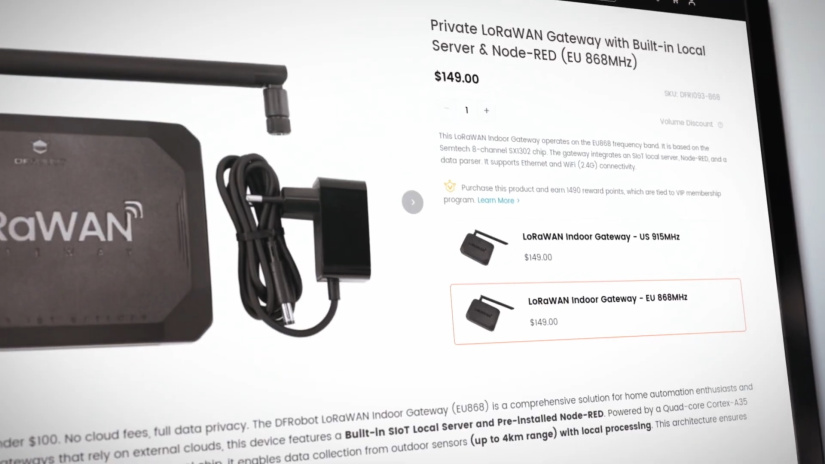
If you want to dig into the device properly, start with the official DFRobot product page. That covers the hardware, use cases, specifications, and compatible accessories in the wider LoRaWAN series.
For setup and configuration, the DFRobot wiki is the place to go. It covers the gateway interface, application tools, Node-RED, network tools, SIoT local server functionality, and options for connecting to external platforms such as TTN, LORIOT, and AWS if you decide you want to go beyond a fully local setup.
Final thoughts
With the DFRobot Private LoRaWAN Gateway with Built-in Local Server and Node-RED, you get long-range LoRaWAN communication, local data processing, built-in automation, structured data handling, and a private server environment that does not force you into cloud dependency. That makes it a very sensible option for smart agriculture, environmental monitoring, education, home automation, and private IoT networks.
The best part is simple: your system can keep working locally. No cloud dependency. No monthly platform fee just to move sensor data around. No unnecessary complexity. Zero. Zip. Nada.
For anyone building a serious LoRaWAN project where reliability, privacy, and control actually matter, this is a very solid piece of kit.

Residing on the south coast of England, Rich has spent the last few years building Electomaker.io from the ground up. He is usually found behind a laptop coordinating the rest of the EM team and occasionally finding time to contribute articles to the blog. When not tapping away at a laptop, he can be found either paddleboarding, at the beach, playing golf (badly), or camping with his family.








Leave your feedback...