





Top SBC Picks in 2025 for Engineers & Developers
Choosing a Single-Board Computer in 2025: It’s Not Just About GHz
Single-board computers have come a long way from their hobbyist roots. In 2025, they’re no longer just compact development boards with a few GPIO pins. Many have evolved into production-ready platforms with onboard AI accelerators, integrated 5G, and full-stack support for cloud, fleet management, and OTA updates. For engineers and developers building connected products, selecting the right SBC involves far more than checking CPU benchmarks or RAM specs.
In this guide, we’re highlighting six standout SBCs that cover a range of architectures, price points, and ecosystems. Each offers a different approach to development, deployment, and scalability, from fully integrated IoT platforms to community-supported boards that offer flexibility with a bit more DIY. Whether you're optimizing for AI workloads, x86 compatibility, or embedded Android, there's an option here built to support real-world engineering needs.
Top SBCs for Engineers & Developers – Quick Specs Overview
Choosing the right single-board computer means understanding how each board performs not just in isolation, but in the context of your project’s needs. Here’s a quick technical overview of some of the top SBCs for 2025, covering hardware, connectivity, ecosystem support, and availability.
| Board | Best Use Case | CPU/GPU | Connectivity | Software Support | Available @ | Price (USD) |
|---|---|---|---|---|---|---|
| Particle Tachyon | IoT at scale, 5G, ML at edge | Qualcomm Kryo 8-core + 12 TOPS NPU | 5G, Wi-Fi 6E, BLE | Particle OS, OTA, Cloud, Ubuntu 24.04 | Particle | $299 |
| Raspberry Pi 5 | General-purpose dev & media | Quad-core Cortex-A76, 2.4GHz | USB 3, HDMI, PCIe | Raspberry Pi OS, Linux, Android | Electromaker | $99 |
| NVIDIA Jetson Orin | Edge AI/ML, Robotics | Up to 275 TOPS, Ampere GPU | Ethernet, USB-C, M.2 | Jetpack SDK, NVIDIA ISAAC, Ubuntu | Electromaker / NVIDIA | $499 |
| LattePanda Sigma | Windows x86, HMI, Edge Apps | Intel i5-1340P, Iris Xe | 2×2.5GbE, Thunderbolt, M.2 | Win 11, Ubuntu, Proxmox | Electromaker | $777 |
| Khadas VIM3 | Embedded Android UIs, ML demos | Amlogic A311D + 5 TOPS NPU | M.2, HDMI, CSI, Wi-Fi | Android, Linux, OOWOW | Khadas | $105 |
| Khadas VIM4 | Multimedia Android kiosks, Touch UIs | A311D2 + 3.2 TOPS NPU | HDMI In/Out, Wi-Fi 6, M.2 | Android, Linux, OOWOW | Khadas | $189 |
| Banana/Orange Pi | Budget prototyping, Android | RK3588, RK3566, T527M, etc. | Ethernet, Wi-Fi, HDMI, GPIOs | Mixed Android/Linux, limited support | Electromaker / OEMs | Varies ($45–$129) |
Detailed SBC Profiles
With so many single-board computers available in 2025, understanding how each one fits into your project requirements is essential. Below, we've broken down our top picks using a consistent format that focuses on real-world usability, not just raw specs. These boards were selected based on their architecture, connectivity options, software ecosystem, and how well they support development, deployment, and scaling.
Whether you're looking for a fully integrated IoT platform with built-in 5G or a powerful x86 machine for edge Windows applications, each board below is built to solve a different kind of engineering challenge. From AI-enabled SBCs to Android-first media boards and budget-friendly prototyping options, you'll find a match for almost every use case.
Each product card includes key specs, support highlights, and links to purchase or explore further. Use this section as a practical guide to help decide which board is best suited for your next project.
Particle Tachyon – Production-Ready SBC with Built-In 5G + AI
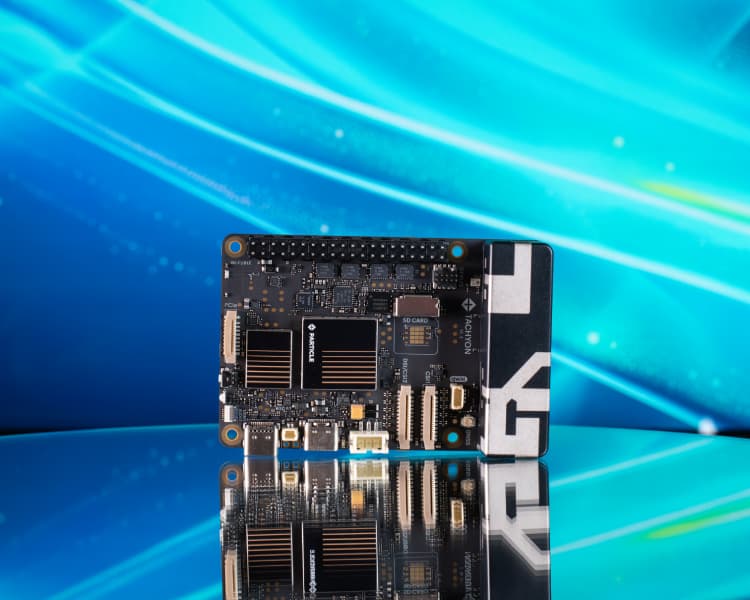
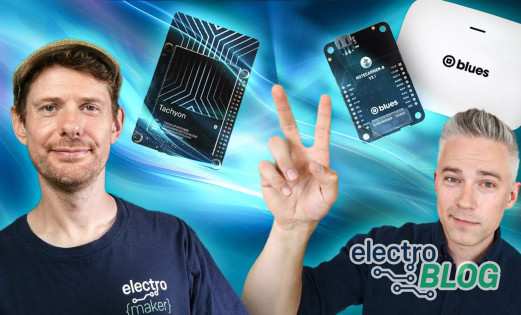
The Particle Tachyon is the first production-grade SBC to combine 5G cellular, AI acceleration, and cloud-native device management in a compact credit-card-sized board. Designed for engineers building connected products at scale, it bridges the gap between development and deployment like no other.
At the hardware level, Tachyon is built on Qualcomm’s Dragonwing platform with an octa-core Kryo CPU, 12 TOPS-capable NPU, and Adreno 643 GPU. This allows real-time AI inferencing, edge classification, and responsive multimedia processing, all within a low-power embedded design.
Out of the box, it supports 5G Sub-6 connectivity via an integrated EtherSIM, along with Wi-Fi 6E, Bluetooth, USB-C, and PCIe for high-speed expansion. These features make it especially suited to edge deployments where consistent, high-bandwidth connectivity is essential.
On the software side, it runs Ubuntu 24.04 LTS and fully integrates with the Particle Cloud platform. Features include OTA firmware updates, remote device monitoring, webhook-based integrations, secure provisioning, and diagnostic tools, all built-in and ready for production use.
For rapid prototyping and hardware reuse, the board includes a standard 40-pin GPIO header compatible with Raspberry Pi HATs. Combined with open-source development tools, Particle Device OS, and long-term platform support, Tachyon is ready for deployment in critical IoT systems.
Best For: Fleet-scale IoT products, AI-enabled smart devices, secure remote monitoring, and embedded ML inferencing.
Specs Summary:
- Dragonwing Kryo 8-core CPU
- 12 TOPS NPU (Adreno 643 GPU)
- 5G Sub-6, Wi-Fi 6E, Bluetooth
- USB-C, PCIe, 40-pin GPIO
- Ubuntu 24.04, Particle OS, EtherSIM+

Raspberry Pi 5 – The Developer’s Default
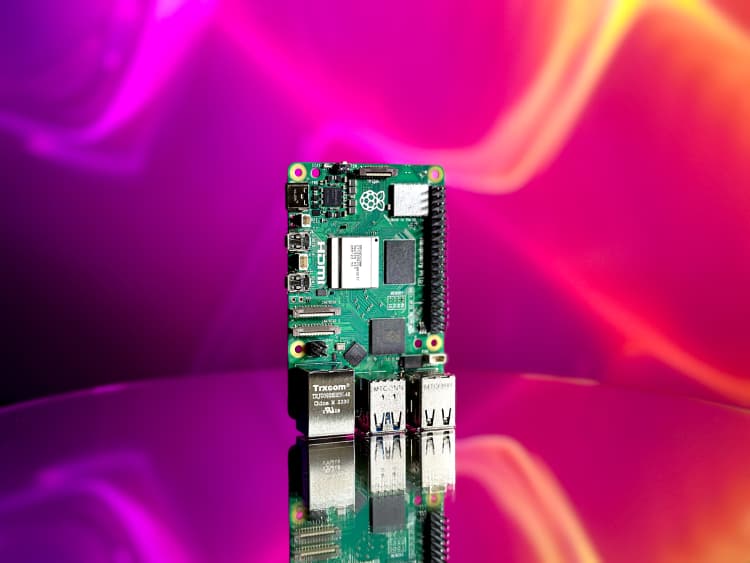
The Raspberry Pi 5 is the evolution of the world’s most widely adopted single-board computer, offering increased performance, expanded I/O, and broader software compatibility. For general-purpose development, rapid prototyping, and education, it's still the first board many engineers reach for in 2025.
Powered by a quad-core Cortex-A76 processor running at 2.4GHz and available with up to 8GB of LPDDR4X RAM, the Pi 5 handles modern desktop Linux tasks, media applications, and lightweight development with ease. Dual 4K micro-HDMI ports, PCIe support, USB 3.0, and Gigabit Ethernet round out a robust set of I/O for a board this size.
What makes the Raspberry Pi 5 stand out is the ecosystem. An enormous community, countless tutorials, and wide OS support (Raspberry Pi OS, Ubuntu, LineageOS, Android variants) make it accessible even to first-time developers. Hardware add-ons, displays, and HATs are widely available and mature.
That said, deploying at scale with the Pi 5 involves manual lift. There’s no built-in 4G/5G, no cloud-native stack, and OTA, fleet, or security systems will need to be architected separately. It excels as a dev or edge device but isn't turnkey for connected product deployment.
Best For: Quick prototyping, media centers, hobbyist projects, educational tools, and testing new ideas.
Specs Summary:
- Quad-core Cortex-A76 @ 2.4GHz
- 4GB or 8GB LPDDR4X RAM
- Dual 4K micro-HDMI, USB 3.0, PCIe, Gigabit Ethernet
- Raspberry Pi OS, Ubuntu, Android builds
NVIDIA Jetson Orin – AI Powerhouse for Vision & Robotics
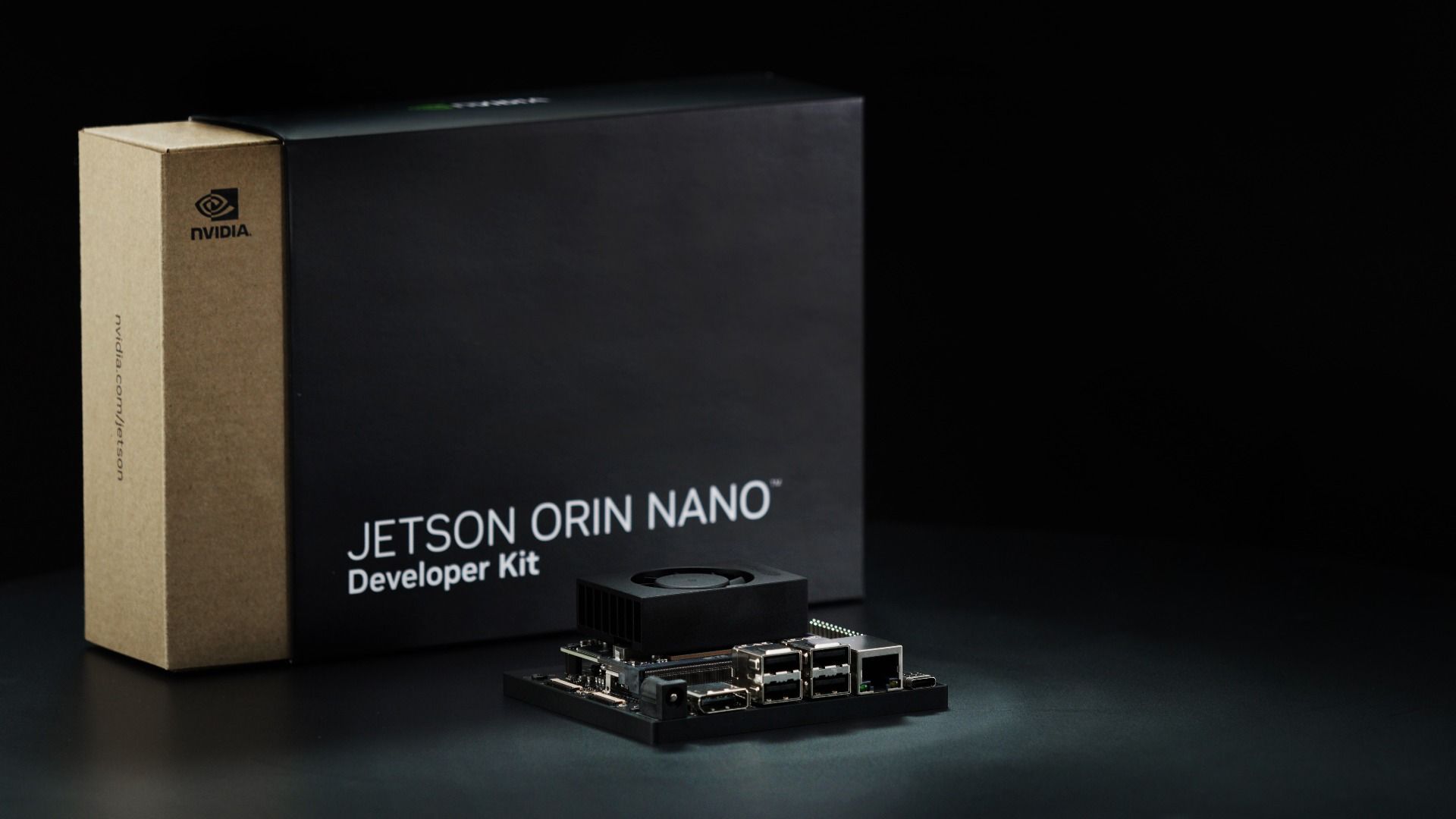
The NVIDIA Jetson Orin platform represents the current benchmark for edge AI performance. Designed with robotics, computer vision, and autonomous systems in mind, it delivers staggering inferencing power, from the compact Orin Nano with 67 TOPS to the flagship AGX Orin with up to 275 TOPS of AI throughput.
Built on NVIDIA’s Ampere architecture and equipped with Tensor Cores, the Jetson Orin series handles real-time object detection, segmentation, and model deployment at the edge. Whether you're training on-device or just running optimized models, it offers a GPU-class experience in embedded form.
Software support is a major part of the Orin advantage. The Jetpack SDK provides full-stack AI development tools with tight integration into frameworks like Isaac for robotics, Metropolis for smart cities, and ROS2 for automation. It also supports containerized workflows and Ubuntu-based environments for maximum flexibility.
Designed to run in industrial, robotics, and automotive scenarios, Jetson Orin excels in environments where latency and real-time inferencing are critical. However, its performance footprint does come at the cost of higher power draw and price, making it ideal for high-compute edge workloads rather than low-power IoT.
Best For: Robotics, computer vision, autonomous machines, and AI model deployment at the edge.
Specs Summary:
- Ampere GPU + Tensor Cores
- 67–275 TOPS AI performance (Nano to AGX)
- Multiple I/O options: USB-C, Ethernet, M.2
- Jetpack SDK, Ubuntu, ROS2, container support
LattePanda Sigma – Windows x86 SBC for Pro-Grade Edge Apps
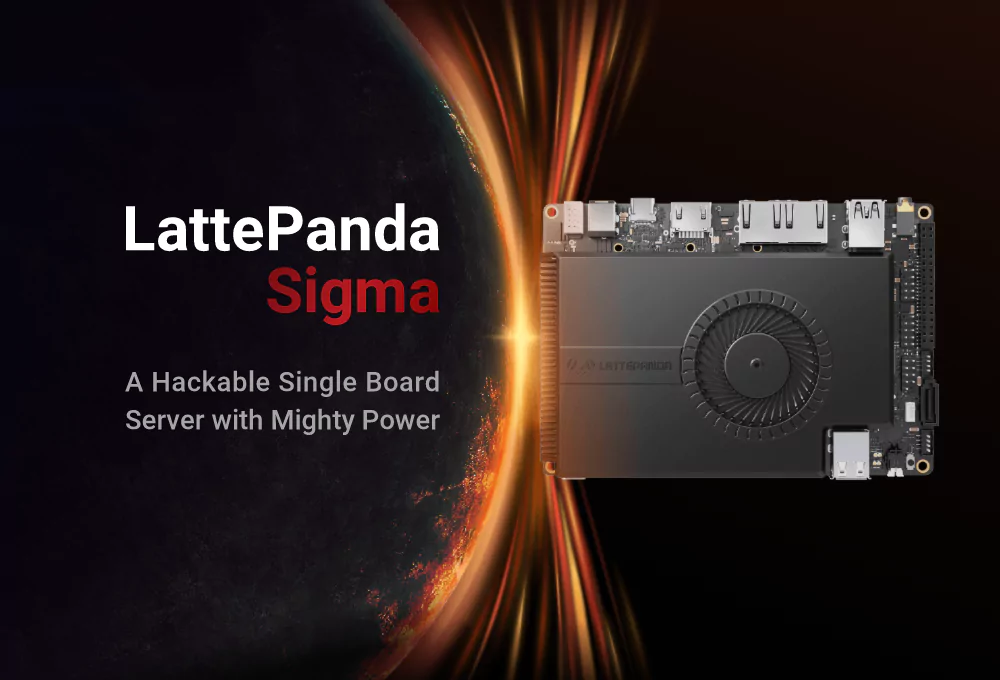
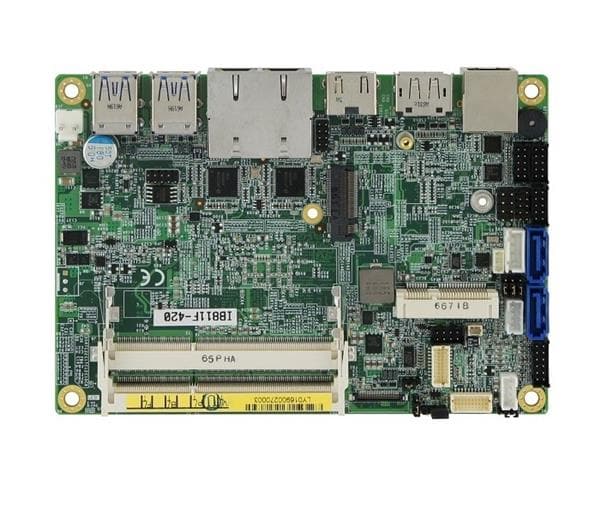
The LattePanda Sigma is a desktop-class SBC designed for developers who need to run full Windows or Linux environments at the edge. Built around an Intel Core i5-1340P processor and backed by 32GB of LPDDR5 RAM, it provides serious computing muscle for complex workloads.
Featuring Intel Iris Xe graphics and dual 2.5GbE Ethernet ports, Sigma is suited to high-bandwidth industrial applications, edge servers, and custom HMI setups. With Thunderbolt 4, M.2 NVMe and SATA support, and PCIe 4.0 lanes, it integrates seamlessly with advanced peripherals and storage options.
The Sigma is one of the few SBCs offering true x86 compatibility in a maker-friendly form factor. If your application depends on proprietary Windows software, full-stack development tools, or virtualization platforms like Proxmox, this board delivers unmatched flexibility without sacrificing performance.
While it lacks native 4G/5G or embedded OTA tooling, Sigma makes up for it with compatibility with existing Windows fleet management tools. It’s best suited to environments where standard PC infrastructure meets embedded deployment.
Best For: Industrial control, HMI panels, edge data collection, custom Windows/Linux-based deployments.
Specs Summary:
- Intel Core i5-1340P, 12-core (4P+8E)
- 32GB LPDDR5 RAM
- Iris Xe GPU, Dual 2.5Gb Ethernet
- Thunderbolt 4, M.2 NVMe + SATA, PCIe 4.0
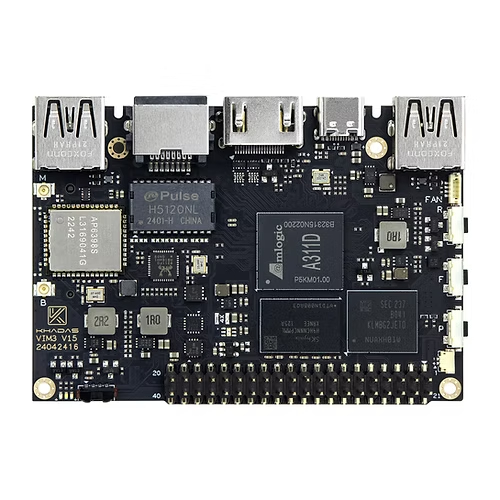
Khadas VIM3 – Compact Android SBC with NPU for Embedded UIs
Khadas VIM4 – Premium Android SBC with HDMI I/O and AI Acceleration
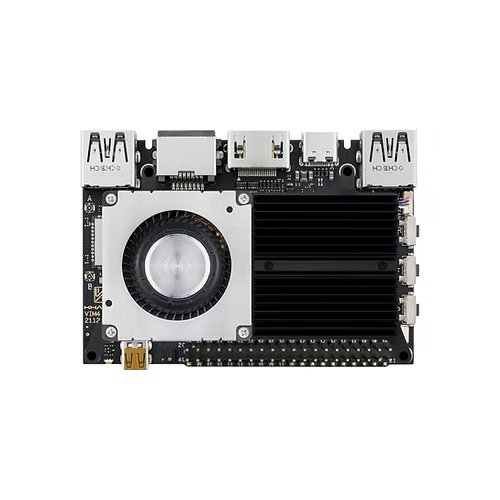
The Khadas VIM3 and VIM4 are compact SBCs designed for high-performance Android-based multimedia and embedded UI applications. They’re equipped with integrated NPUs for on-device machine learning, making them ideal for real-time inference, smart interfaces, and ML-enhanced media processing.
The VIM3 features an Amlogic A311D CPU paired with a 5 TOPS NPU, 4K HDMI output, and M.2 expansion. Meanwhile, the VIM4 upgrades to the A311D2 chip with a 3.2 TOPS NPU, HDMI input/output, 8GB of RAM, and Wi-Fi 6 support. Both boards support dual-camera MIPI CSI interfaces, RTC, and hardware-level acceleration for multimedia applications.
For Android-first developers, the VIM series supports streamlined OS deployment using Khadas' OOWOW system, allowing simple flashing of Android, Ubuntu, and other supported images. Combined with built-in tools and a clean SDK, they’re an efficient starting point for UI-heavy embedded systems.
While they lack fully integrated OTA/cloud platforms, the VIM boards shine in custom kiosk, signage, and media control environments where developers want tight control of the OS and interface stack.
Best For: Embedded Android kiosks, ML demos, media-rich UI systems, and edge vision projects.
Specs Summary:
- VIM3: Amlogic A311D, 5 TOPS NPU, 4K HDMI, M.2 slot
- VIM4: A311D2, 3.2 TOPS NPU, HDMI In/Out, Wi-Fi 6, 8GB RAM
- Dual-camera MIPI CSI, RTC, Android/Linux OS support
- OOWOW deployment tool for fast flashing
Banana Pi / Orange Pi / Rockchip SBCs – Capable but Community-Dependent
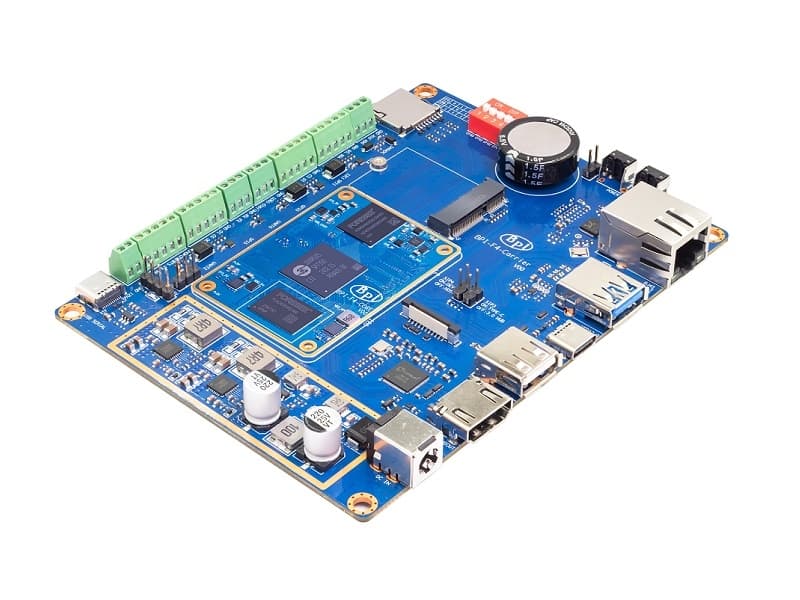
The Banana Pi and Orange Pi families include a wide range of low-cost, high-spec SBCs based on Rockchip and Allwinner processors such as the RK3588, T527M, and A20. Boards like the Banana Pi M5 Pro and Orange Pi 5 Plus deliver impressive on-paper performance, offering up to 32GB RAM, dual Gigabit Ethernet, integrated NPUs, SATA interfaces, and Android/Linux dual support.
These boards are designed with flexibility in mind. From retro gaming to custom Android signage, they offer strong multimedia and ML capabilities with good thermals and power efficiency. Android 12, Debian, Ubuntu, and Armbian images are often available, sometimes even preinstalled, with GPU acceleration and AI inference tools supported on many models.
However, these SBCs come with important caveats. Documentation can be outdated or incomplete, SDK support is inconsistent, and community forums often vary in responsiveness. Production usage may require custom driver patches and considerable time spent integrating firmware, software updates, and deployment infrastructure.
Best For: Advanced tinkerers, Android developers, budget-conscious prototypers, and internal-use tools where long-term support isn’t critical.
Specs Summary (Typical High-End Models):
- Rockchip RK3588 / Allwinner A20 / T527M SoCs
- Up to 32GB LPDDR4/5 RAM, M.2, SATA, USB 3.0
- Android 12 / Linux (Ubuntu, Armbian) support
- Dual Ethernet, HDMI, GPIO, optional NPU up to 6 TOPS
Picking the Right Board – What Matters Most in 2025
Choosing a single-board computer in 2025 means thinking far beyond GHz and GPIOs. While hardware specs are important, the long-term viability of your project often hinges on things like over-the-air update support, cloud integration, power efficiency, and community tooling. Here’s a quick recap to help align your project’s needs with the right SBC.
| Requirement | Best Board |
|---|---|
| OTA + Cloud Stack (Built-in) | Particle Tachyon |
| Linux Support + Community | Raspberry Pi 5 |
| Edge AI & ML Acceleration | NVIDIA Jetson Orin |
| x86 Compatibility (Windows/Ubuntu) | LattePanda Sigma |
| Android UI / Touchscreen Devices | Khadas VIM3 / VIM4 |
| Low-Cost Prototyping | Banana Pi / Orange Pi |
Pro Tip: Plan for deployment from the start. A board’s community, OS support, and update tooling are just as critical as CPU architecture, especially if you're shipping thousands of units.
Don’t just choose an SBC for what it can do out of the box. Choose it for what it can become as your project scales.



Residing on the south coast of England, Rich has spent the last few years building Electomaker.io from the ground up. He is usually found behind a laptop coordinating the rest of the EM team and occasionally finding time to contribute articles to the blog. When not tapping away at a laptop, he can be found either paddleboarding, at the beach, playing golf (badly), or camping with his family.




Leave your feedback...